
Koi-Koi yaku: every scoring combination and its points
Last updated
Koi-Koi (often written koi koi) is scored with yaku, named sets of cards worth from 1 to 10 points before extra cards and doubling. This game has 15: 13 you build from your captures, such as Gokō (10) and Inoshikachō (5), and 2 lucky hands that can only be dealt (6 each). The points are those of Nintendo’s published Koi-Koi table; where this game combines yaku differently, Nintendo’s rule is given beside ours.
Koi-Koi points table
Card values (20, 10, 5 and 1) never score by themselves: only yaku do. A yaku made of named cards is complete once you hold them all; the ones marked +1 then gain a point for every further card of the kind. The round’s score is the sum of every yaku the winner holds, then doubled or multiplied as the scoring page explains.
| Yaku | Points | Cards |
|---|---|---|
| Five Lights (Gokō)五光 gokō | 10 | All five lights |
| Four Lights (Shikō)四光 shikō | 8 | Four lights, not the Rain |
| Rain Four Lights (Ame Shikō)雨四光 ame shikō | 7 | The Rain and three other lights |
| Three Lights (Sankō)三光 sankō | 5 | Three lights, not the Rain |
| Flower Viewing (Hanami de ippai)花見で一杯 hanami de ippai | 5 | Curtain + Sake cup |
| Moon Viewing (Tsukimi de ippai)月見で一杯 tsukimi de ippai | 5 | Moon + Sake cup |
| Boar, Deer, Butterflies (Inoshikachō)猪鹿蝶 inoshikachō | 5 | Boar + Deer + Butterflies+1 per other animal |
| Red Poem Tanzaku (Akatan)赤短 akatan | 5 | The poem tanzaku of Pine, Plum and Cherry+1 per other tanzaku |
| Blue Tanzaku (Aotan)青短 aotan | 5 | The blue tanzaku of Peony, Chrysanthemum and Maple+1 per other tanzaku |
| Red & Blue Tanzaku (Akatan Aotan no Chōfuku)赤短・青短の重複 akatan aotan no chōfuku | 10 | All six of them (instead of Akatan and Aotan)+1 per other tanzaku |
| Animals (Tane)タネ tane | 1 | Any 5 animals, the Sake cup included+1 per animal after the 5th |
| Tanzaku (Tan)タン tan | 1 | Any 5 tanzaku+1 per tanzaku after the 5th |
| Plains (Kasu)カス kasu | 1 | Any 10 plains, the Lightning included+1 per plain after the 10th |
| Four of a Month (Teshi)手四 teshi | 6 | Dealt all 4 cards of one month |
| Four Pairs (Kuttsuki)くっつき kuttsuki | 6 | Dealt 4 pairs of different months |
Names follow the game’s own screens: the five 20-point cards are the lights, the 10-point cards the animals (tane), the 5-point cards the tanzaku, and the 1-point cards the plains (kasu). Gokō, Shōbu and Inoshikachō are written with macrons here; you will also see them as Goko, Shobu and Inoshikacho.
Light yaku: Gokō, Shikō, Ame Shikō and Sankō
The five lights are the Crane (January), the Curtain (March), the Moon (August), the Rain (November) and the Phoenix (December). Only one light yaku counts at a time: the one that uses the most lights. The Rain, the Willow card with the calligrapher Ono no Michikaze (Ono no Tōfū) under his umbrella, counts differently: four lights with the Rain are Ame Shikō (7) instead of Shikō (8), the Rain and two other lights make no yaku, and all five are still Gokō (10). The light yaku in detail.
Five Lights (Gokō)
10 points五光 gokō
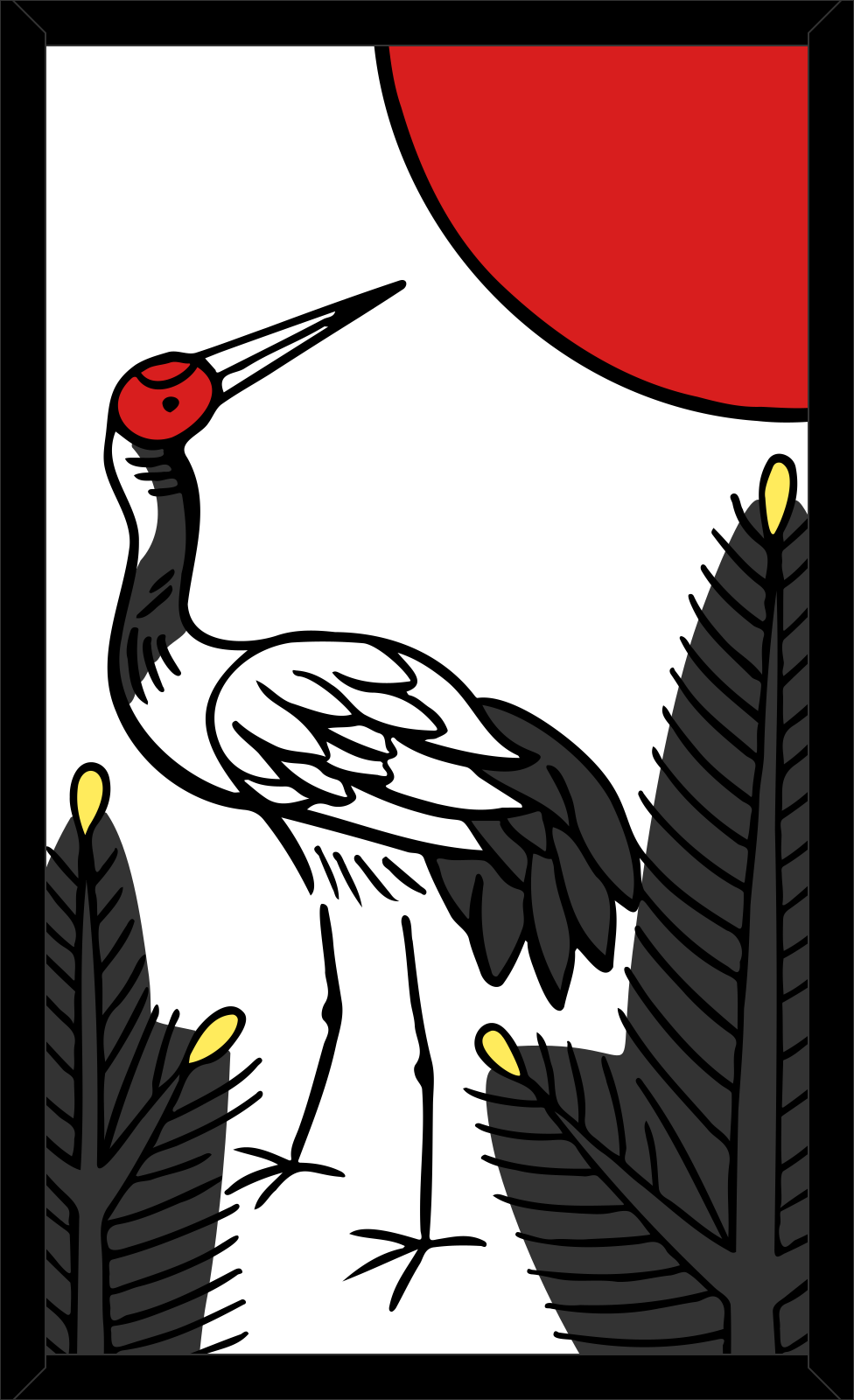
Crane松に鶴January · Light (hikari) · 20 pts 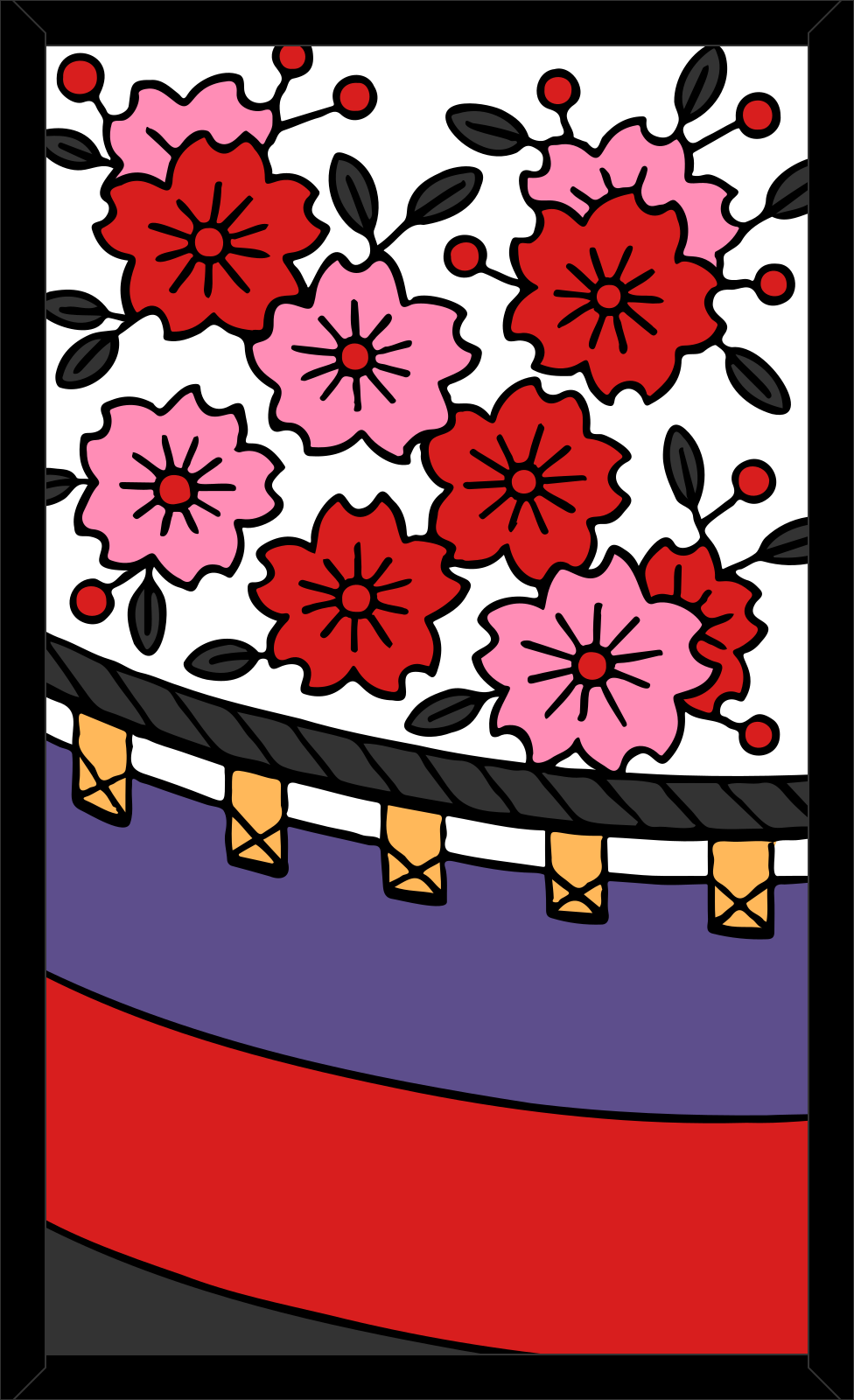
Curtain桜に幕March · Light (hikari) · 20 pts 
Moon芒に月August · Light (hikari) · 20 pts 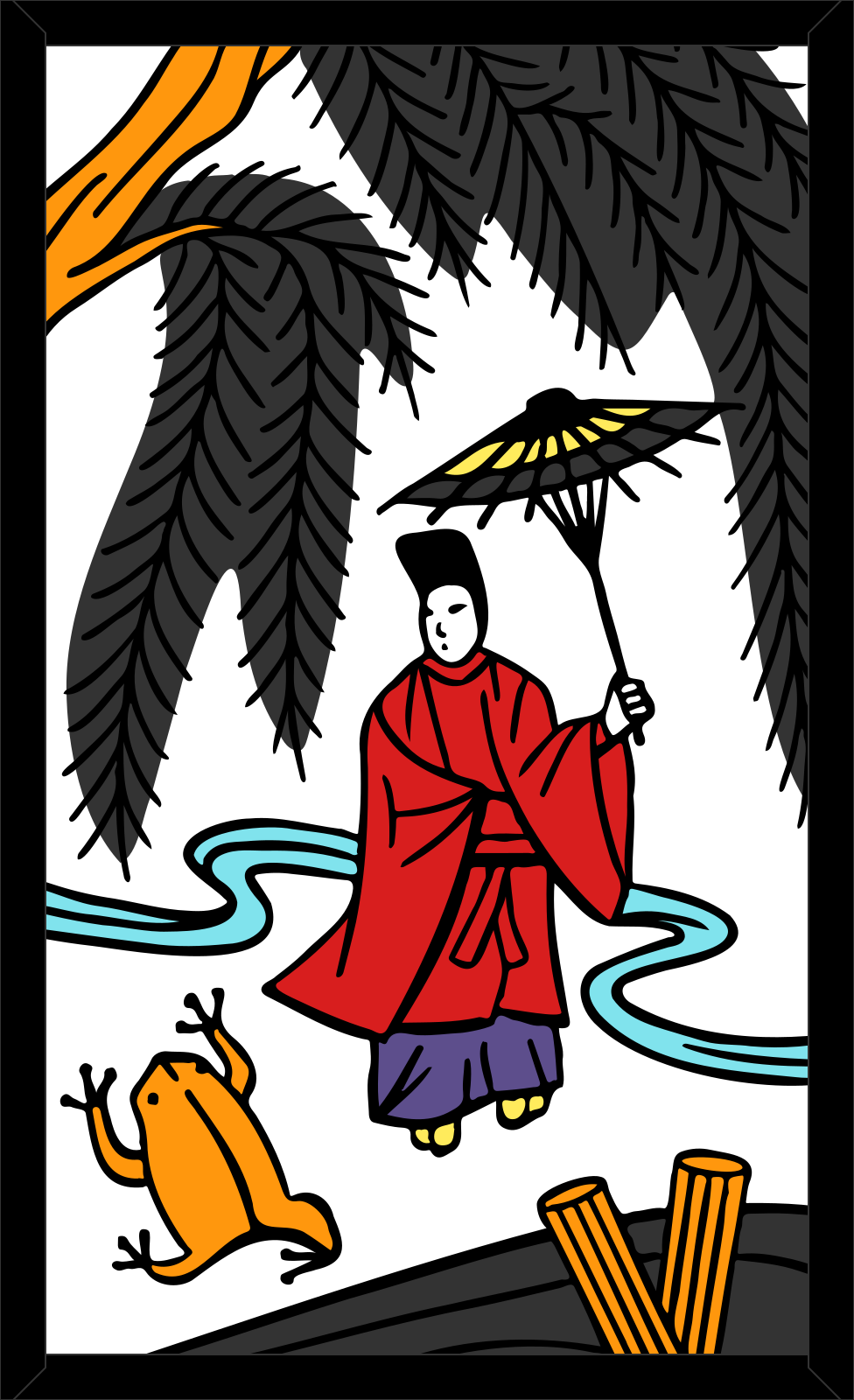
Rain柳に小野道風November · Light (hikari) · 20 pts 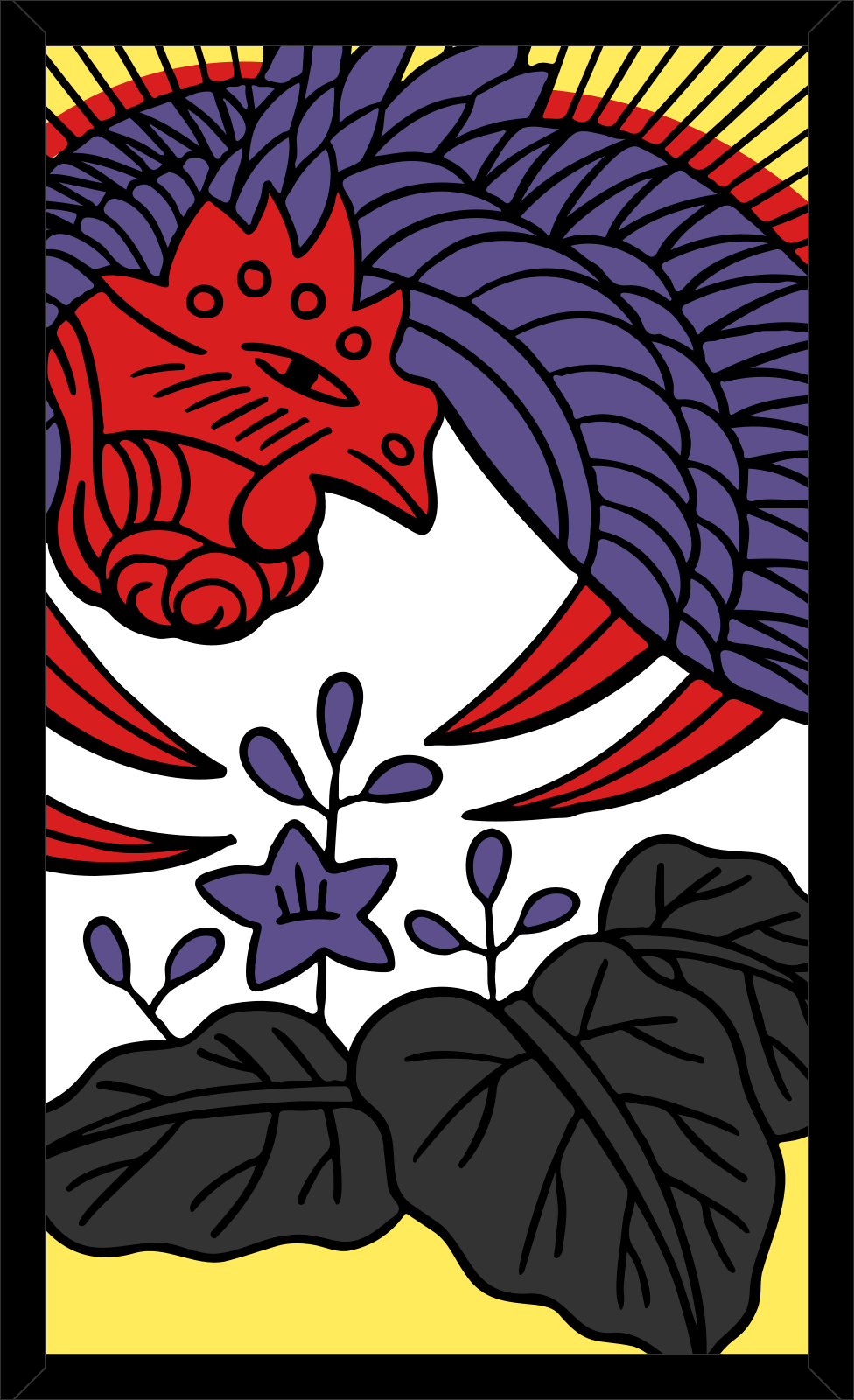
Phoenix桐に鳳凰December · Light (hikari) · 20 pts
All five lights. Gokō takes the place of every smaller light yaku, so it is worth 10, never 10 + 8 + 5. It still adds up with Hanami and Tsukimi, which use the Curtain and the Moon: with the Sake cup as well, the total is 10 + 5 + 5 = 20.
Four Lights (Shikō)
8 points四光 shikō
Crane Curtain Moon Phoenix
The four lights other than the Rain. At 8 points it reaches this game’s doubling line on its own, so a Shikō with no other yaku scores 16 with the default room setting (and 16 under Nintendo’s rule, which doubles from 7).
Rain Four Lights (Ame Shikō)
7 points雨四光 ame shikō
Crane Curtain Moon Rain
The Rain with three of the other lights. It is worth 7, one below this game’s doubling line, so on its own it stays at 7.
Three Lights (Sankō)
5 points三光 sankō
Crane Curtain Moon
Any three lights except the Rain. The Rain with two other lights makes no yaku at all: it needs a fourth light to count, as Ame Shikō.
Sake cup yaku: Hanami and Tsukimi
The Chrysanthemum’s Sake cup turns two lights into a party: a drink under the cherry blossoms, or under the full moon. The same cup serves both, so the Curtain, the Moon and the Sake cup together score 5 + 5 = 10.
Flower Viewing (Hanami de ippai)
5 points花見で一杯 hanami de ippai
Curtain桜に幕March · Light (hikari) · 20 pts 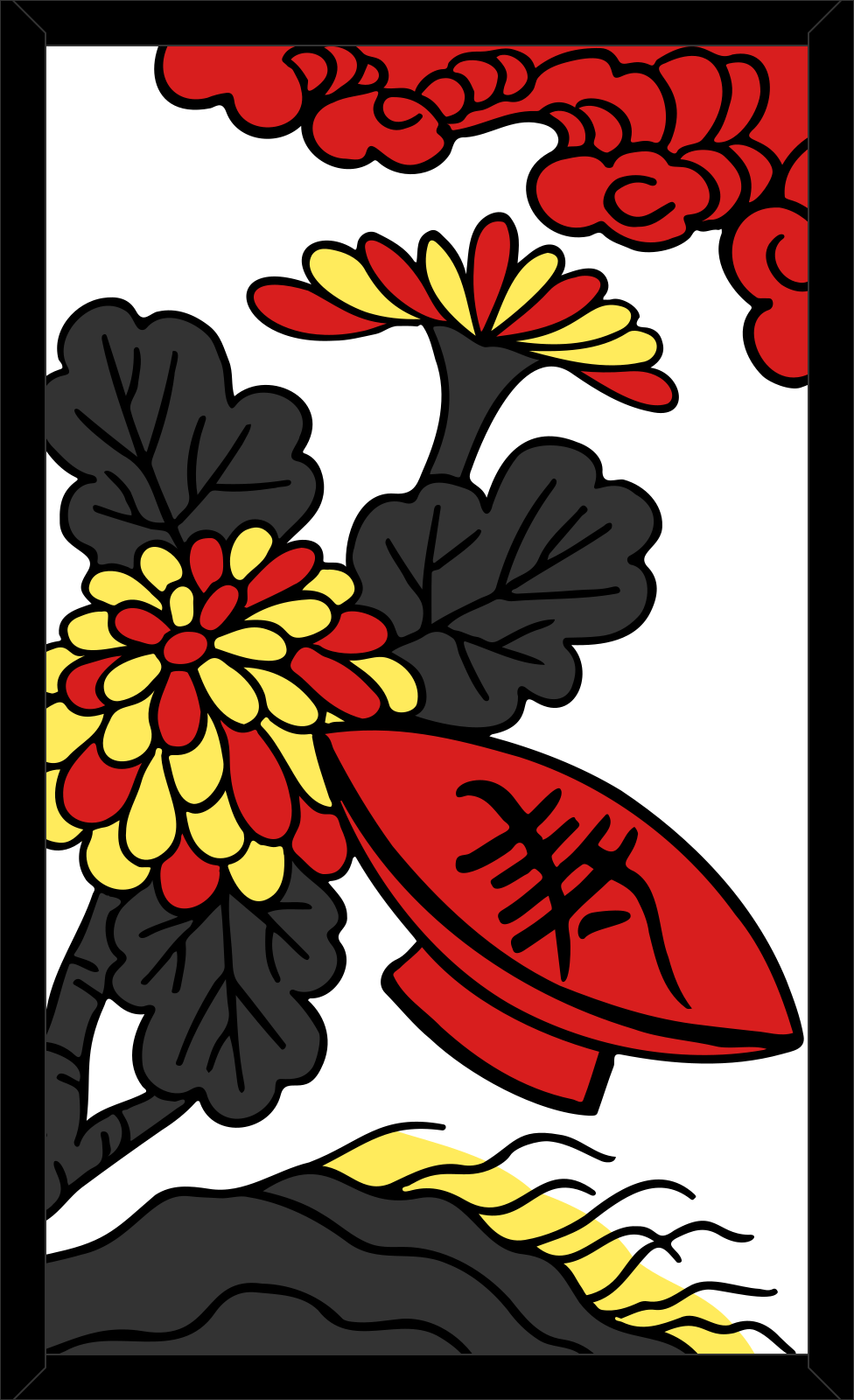
Sake cup菊に盃September · Animal (tane) · 10 pts
The Curtain and the Sake cup: Hanami de ippai, “a cup under the blossoms”, also called hanami-zake. More on Hanami de ippai.
Moon Viewing (Tsukimi de ippai)
5 points月見で一杯 tsukimi de ippai
Moon芒に月August · Light (hikari) · 20 pts Sake cup菊に盃September · Animal (tane) · 10 pts
The Moon and the Sake cup: Tsukimi de ippai, “a cup under the moon”, or tsukimi-zake. More on Tsukimi de ippai.
Both viewing yaku are always on in this game. Some house rules let a Willow (rain) card spoil them, once captured or while it lies on the table depending on the table: that is ame-nagare, and this game does not use it.
Animal yaku: Inoshikachō and Tane
Boar, Deer, Butterflies (Inoshikachō)
5 points, +1 per other animal猪鹿蝶 inoshikachō
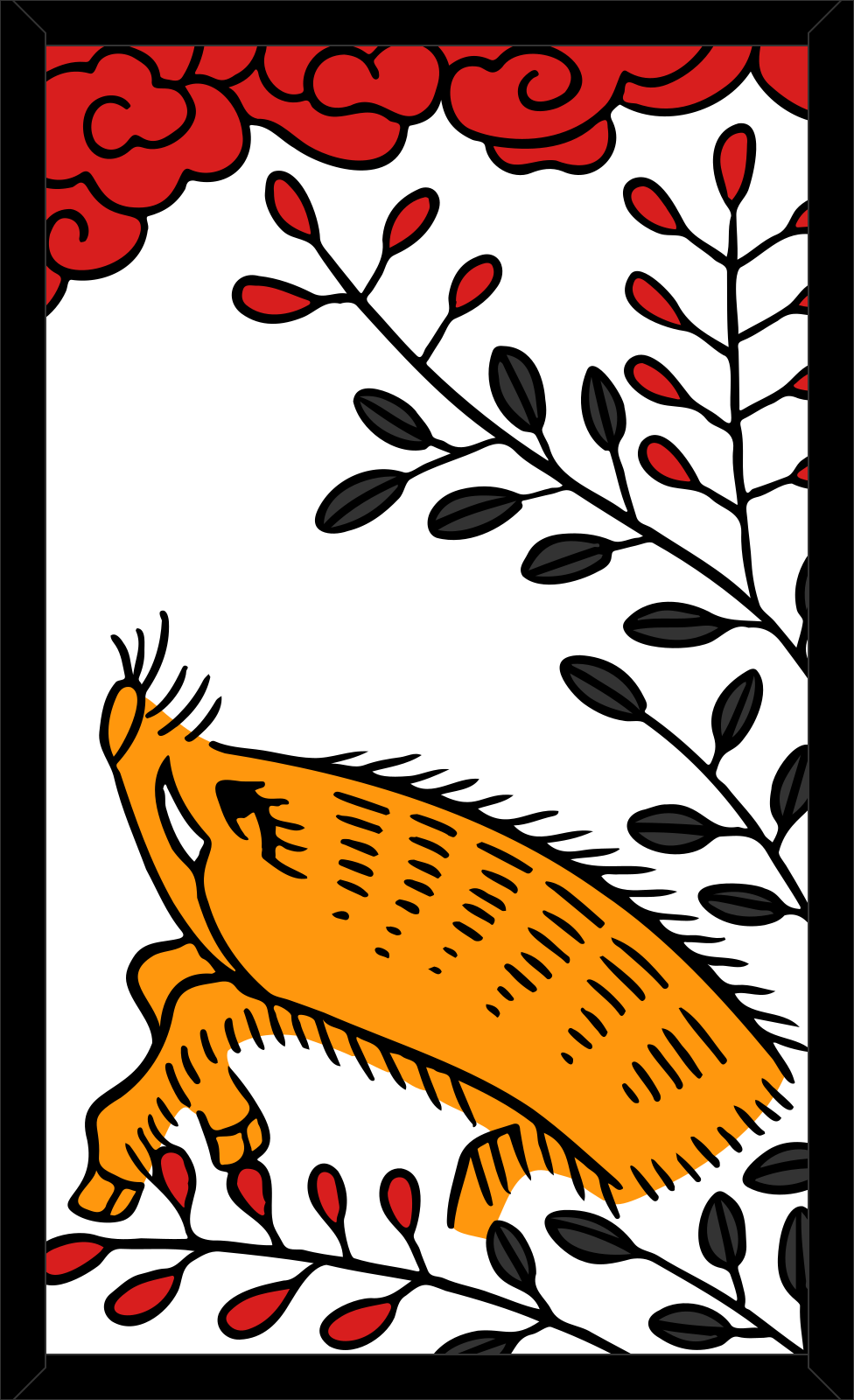
Boar萩に猪July · Animal (tane) · 10 pts 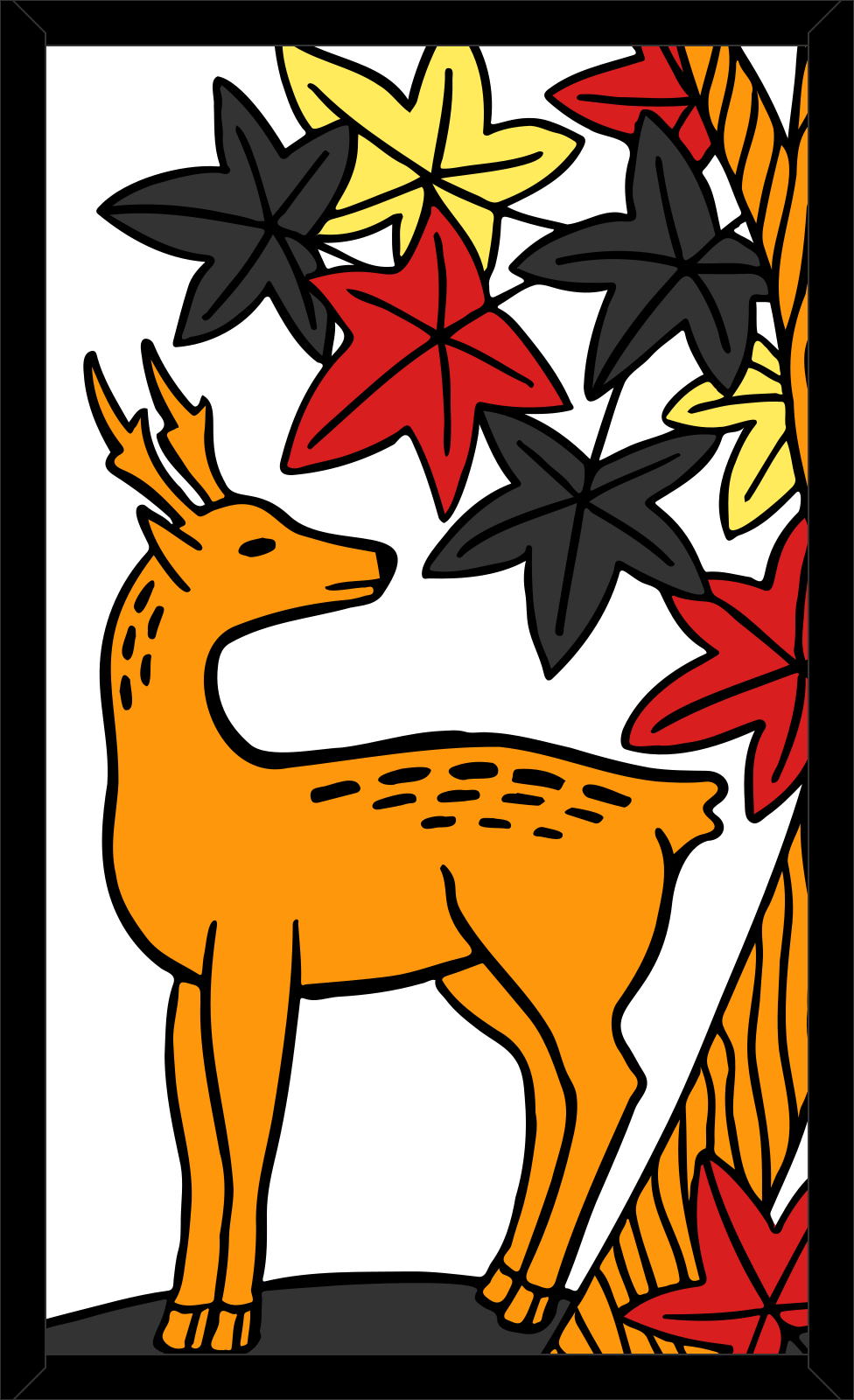
Deer紅葉に鹿October · Animal (tane) · 10 pts 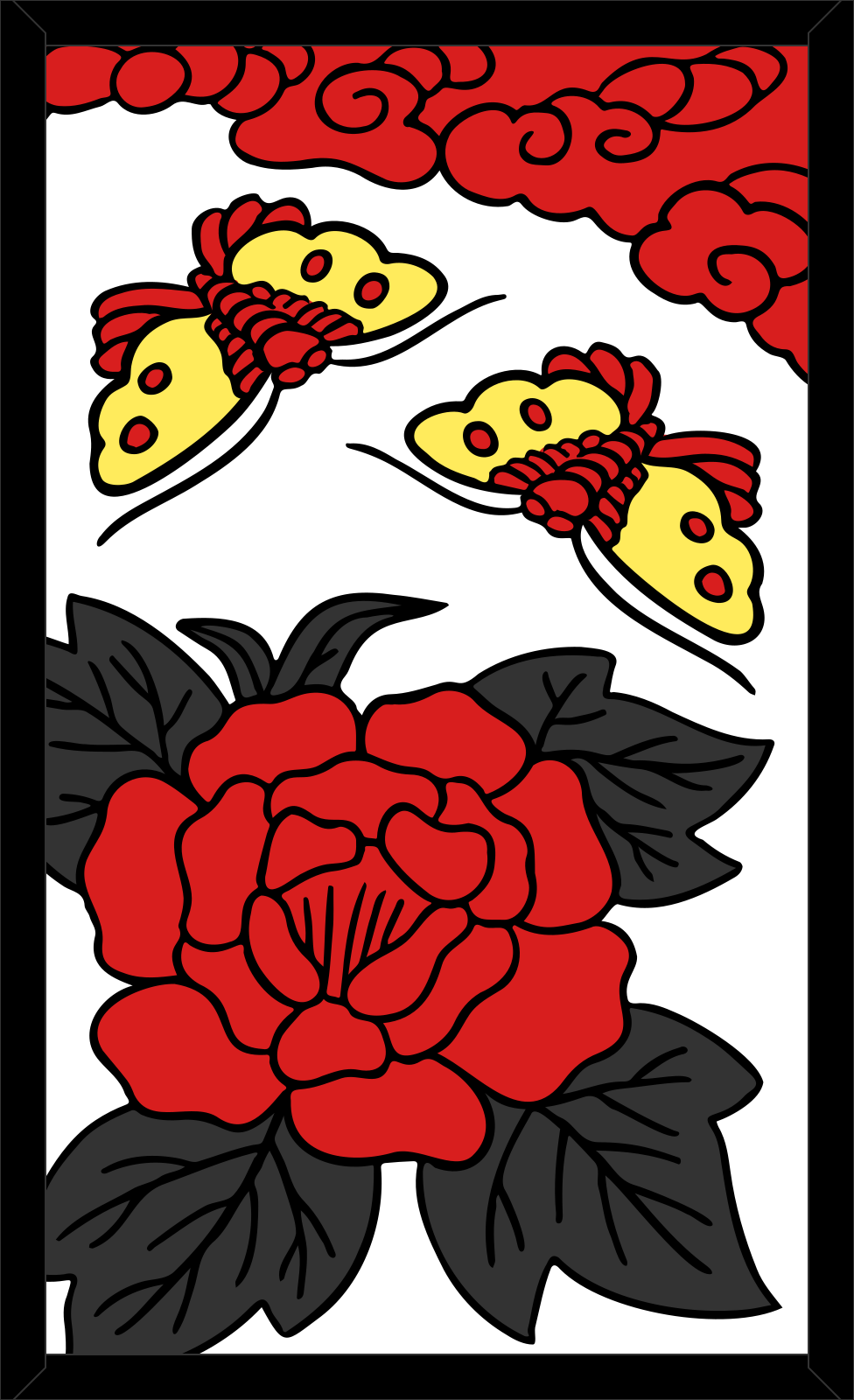
Butterflies牡丹に蝶June · Animal (tane) · 10 pts
The Boar of July (bush clover), the Deer of October (maple) and the Butterflies of June (peony): 5 points, and 1 more for each other animal you hold. In this game Tane counts beside it: with five animals you score both.
Animals (Tane)
1 point, +1 per animal after the 5thタネ tane
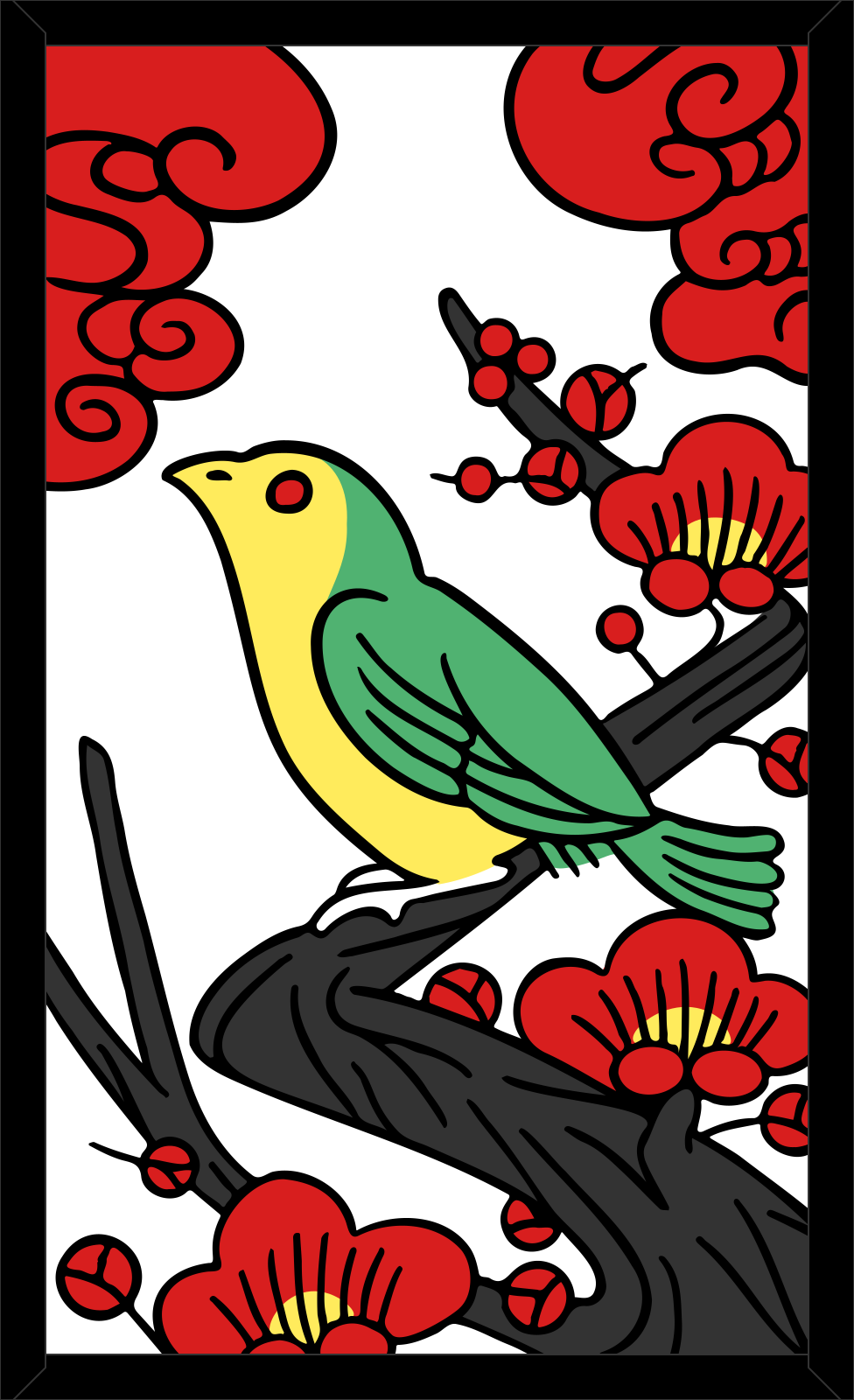
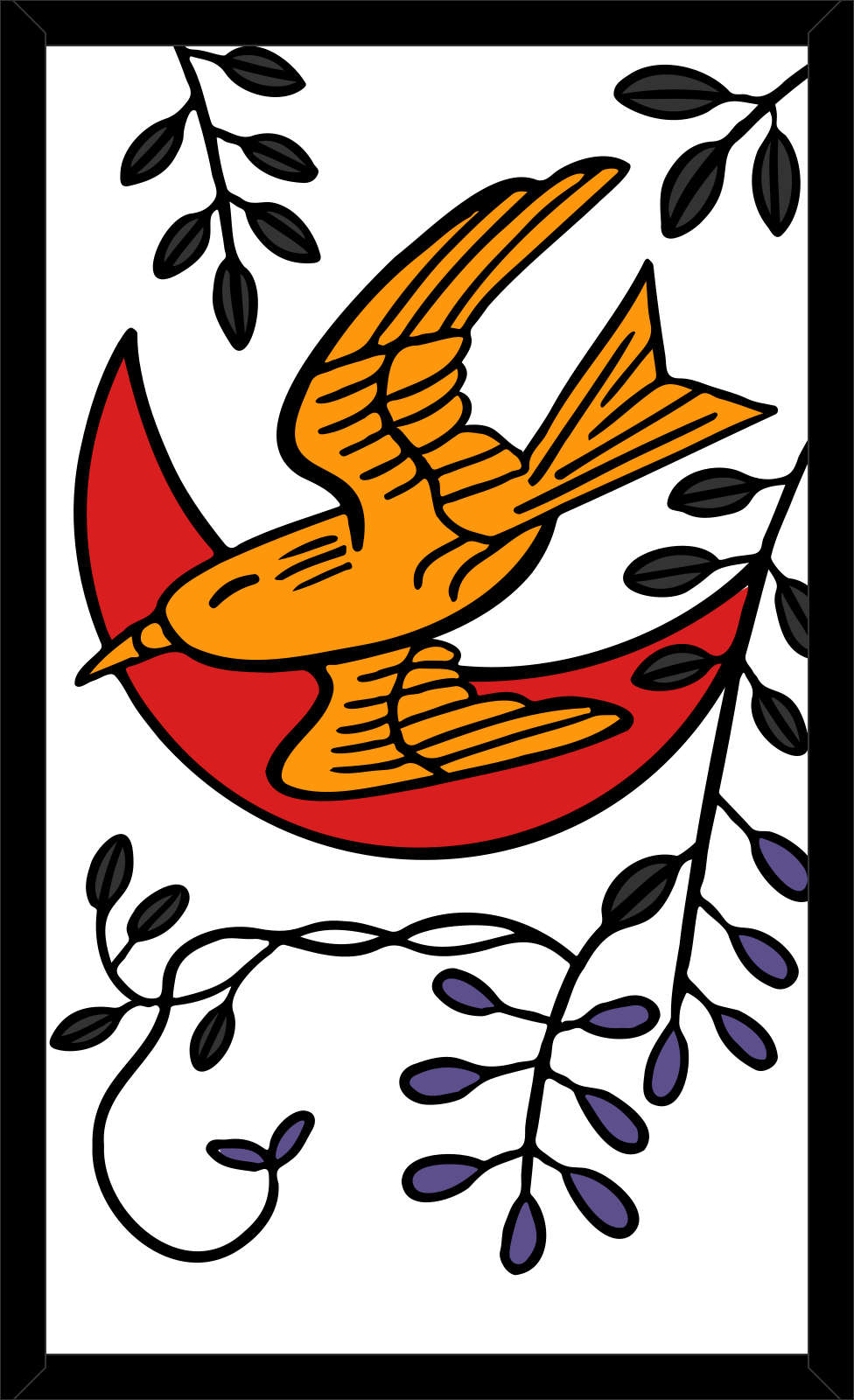
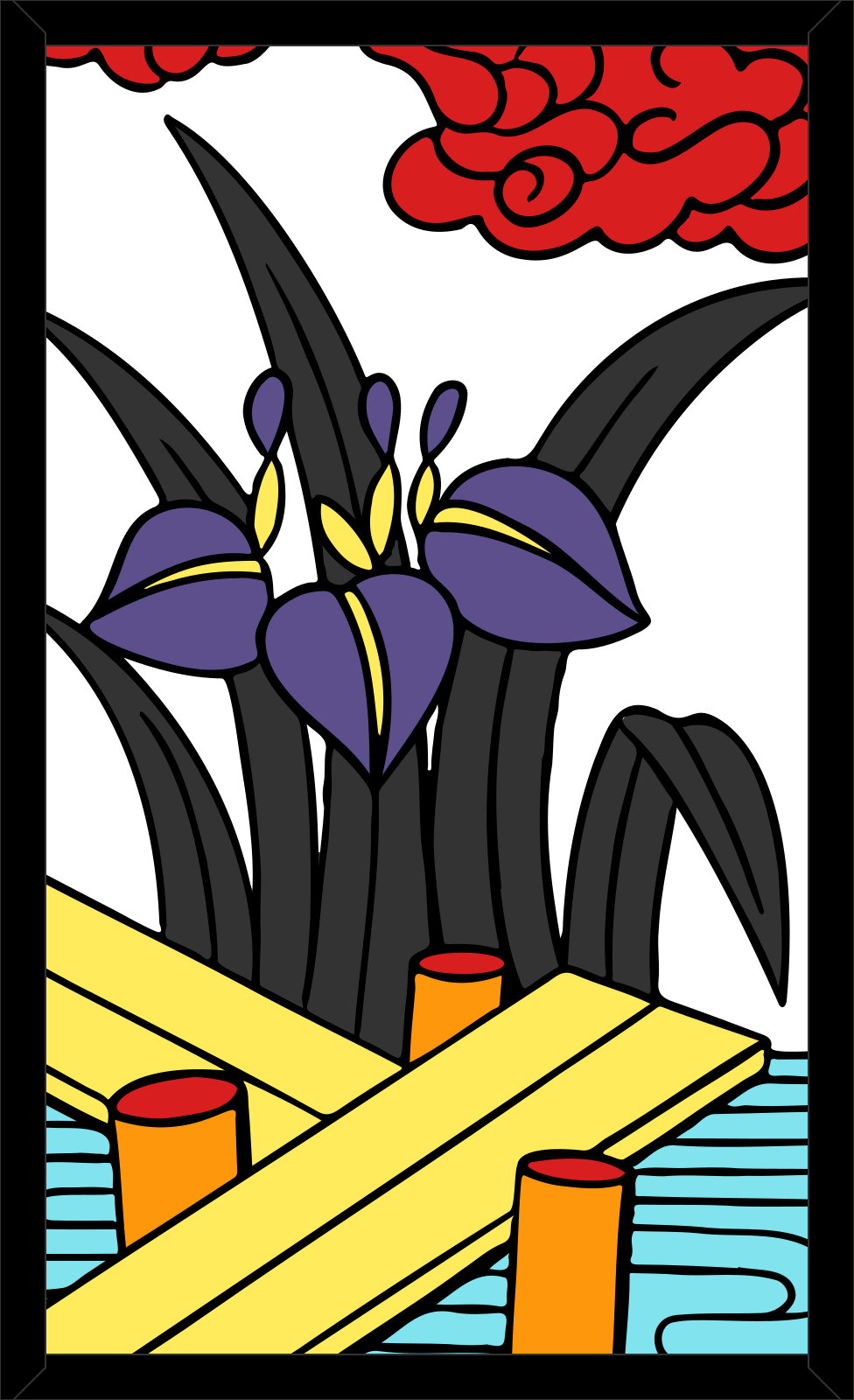
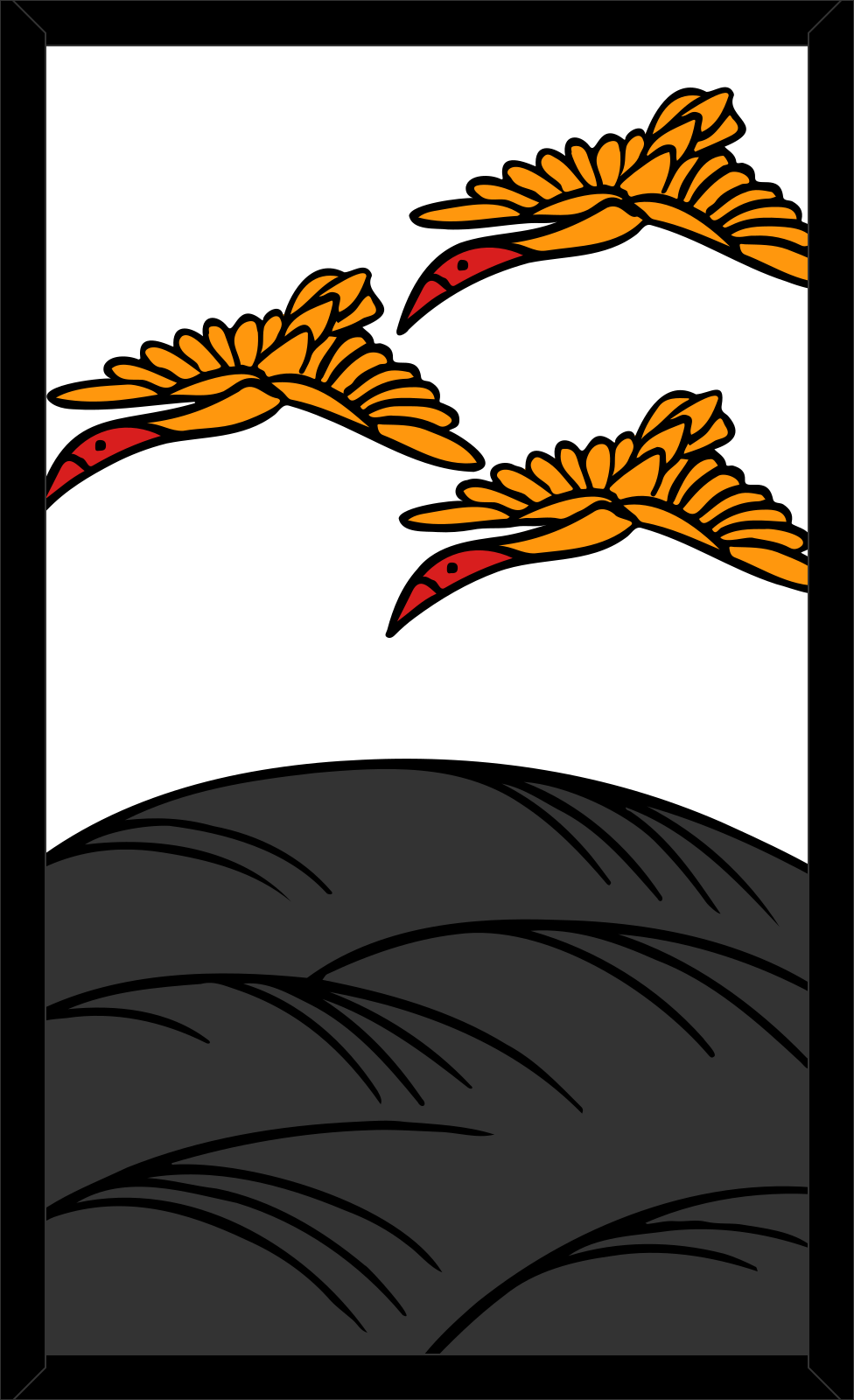
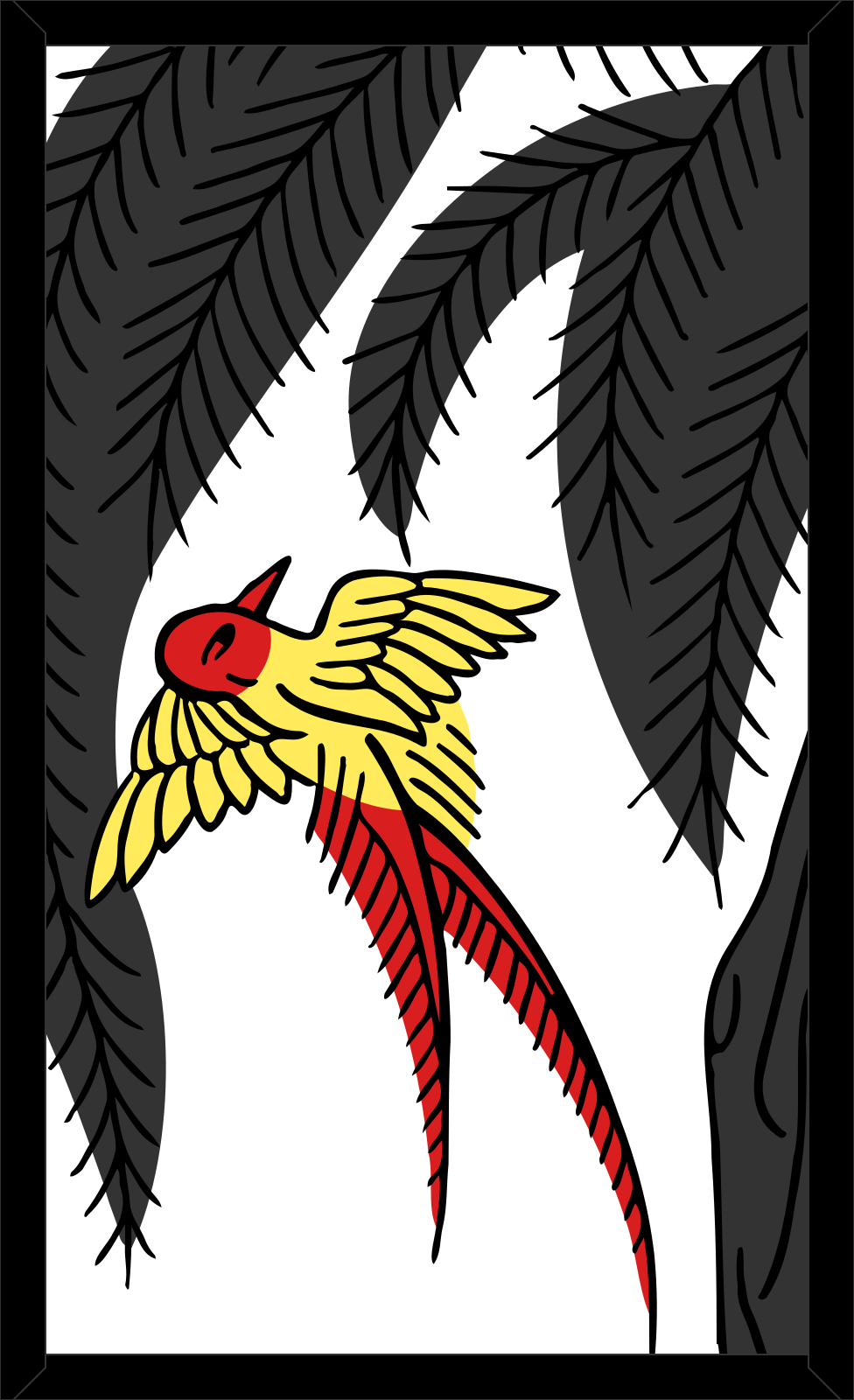
Any five of the nine animal cards shown above, the Sake cup among them: 1 point, and 1 more for each animal after the fifth, so all nine are worth 5. It adds up with Inoshikachō, Hanami and Tsukimi, which share its cards. Tane, Tan and Kasu in detail.
Tanzaku yaku: Akatan, Aotan, Chōfuku and Tan
There are ten tanzaku: three red ones with a poem (January to March), three blue ones (June, September, October) and four plain red ones (April, May, July, November). Akatan and Aotan in detail.
Red Poem Tanzaku (Akatan)
5 points, +1 per other tanzaku赤短 akatan
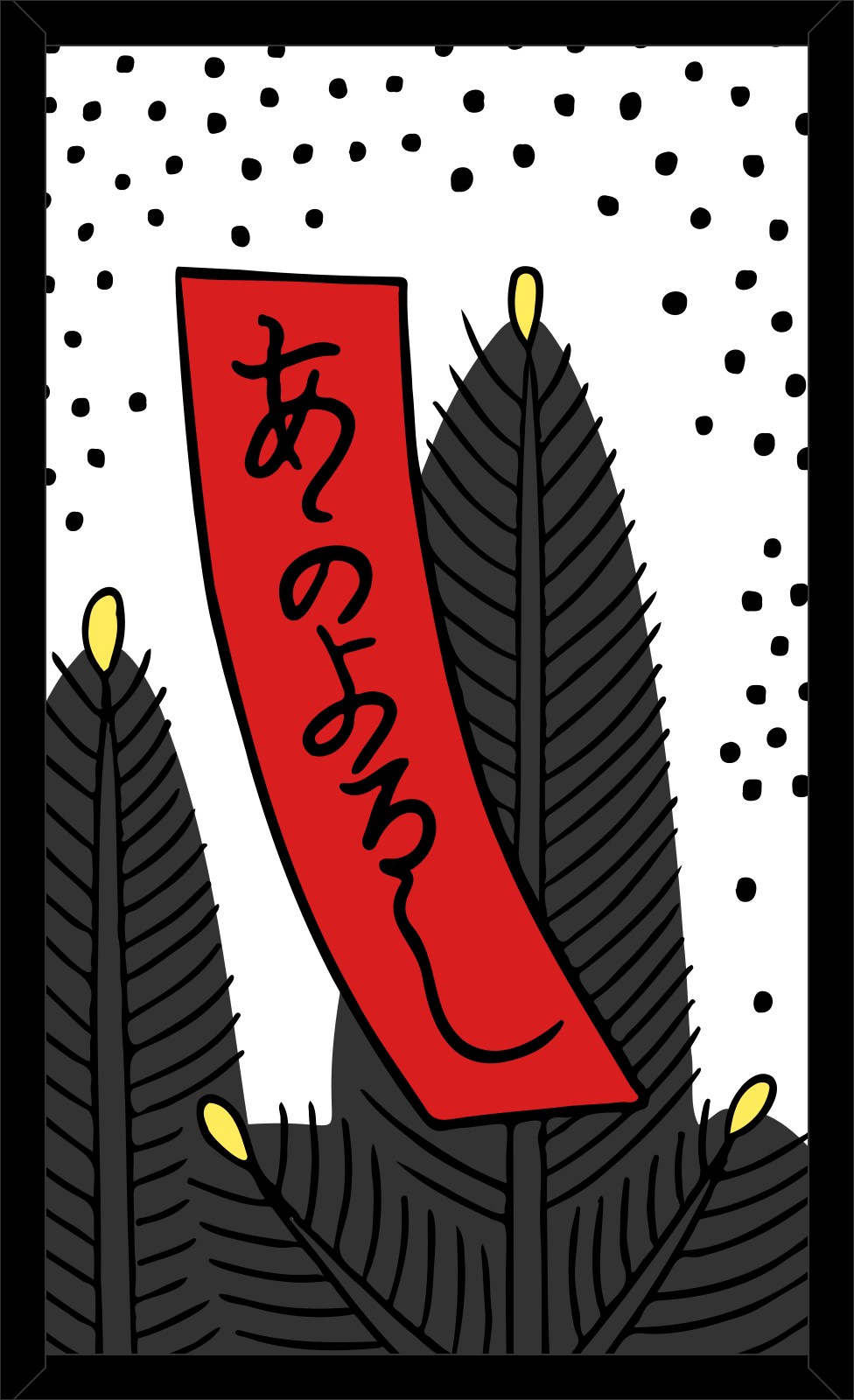
Red poem tanzaku松に赤短January · Tanzaku (ribbon) · 5 pts 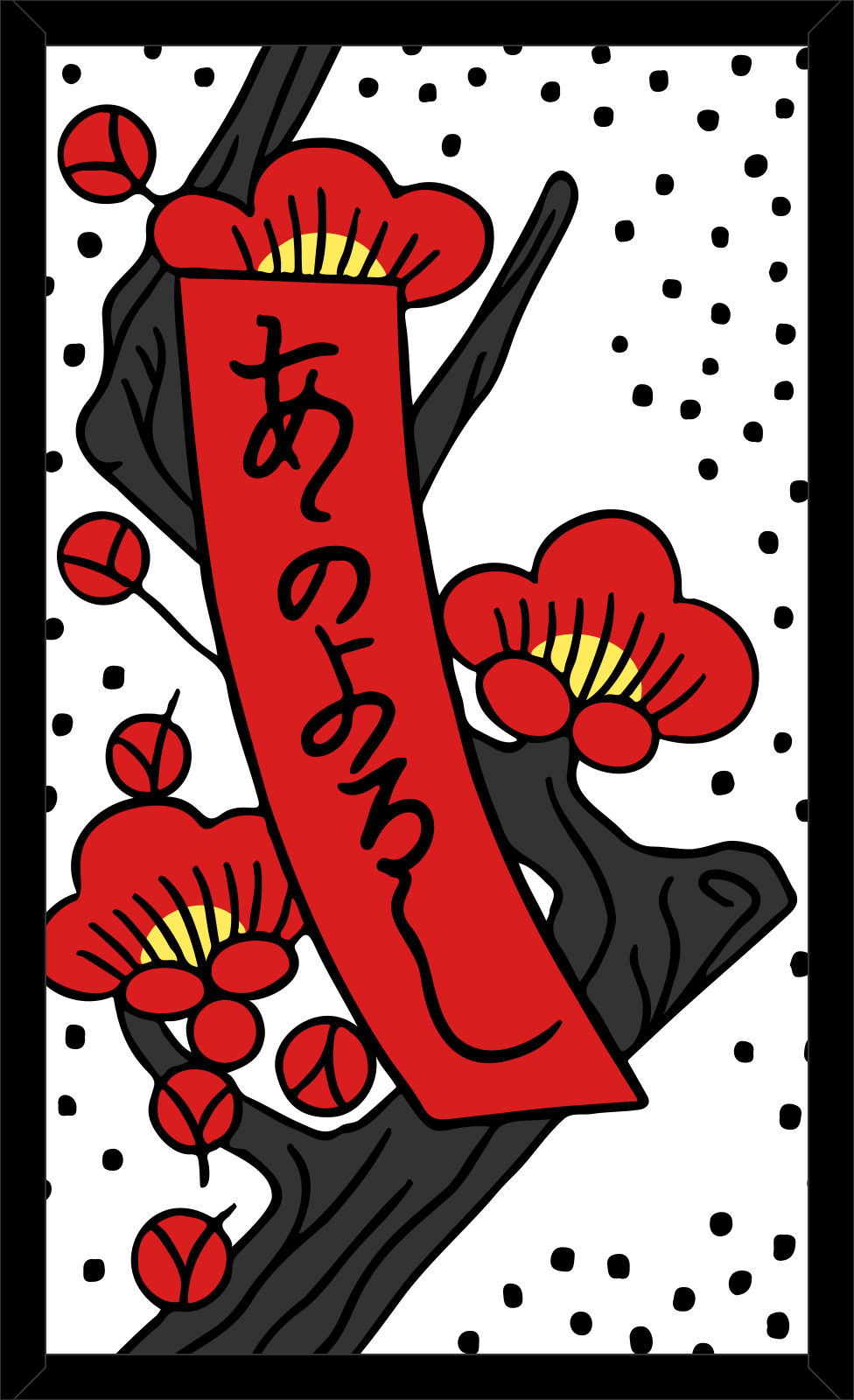
Red poem tanzaku梅に赤短February · Tanzaku (ribbon) · 5 pts 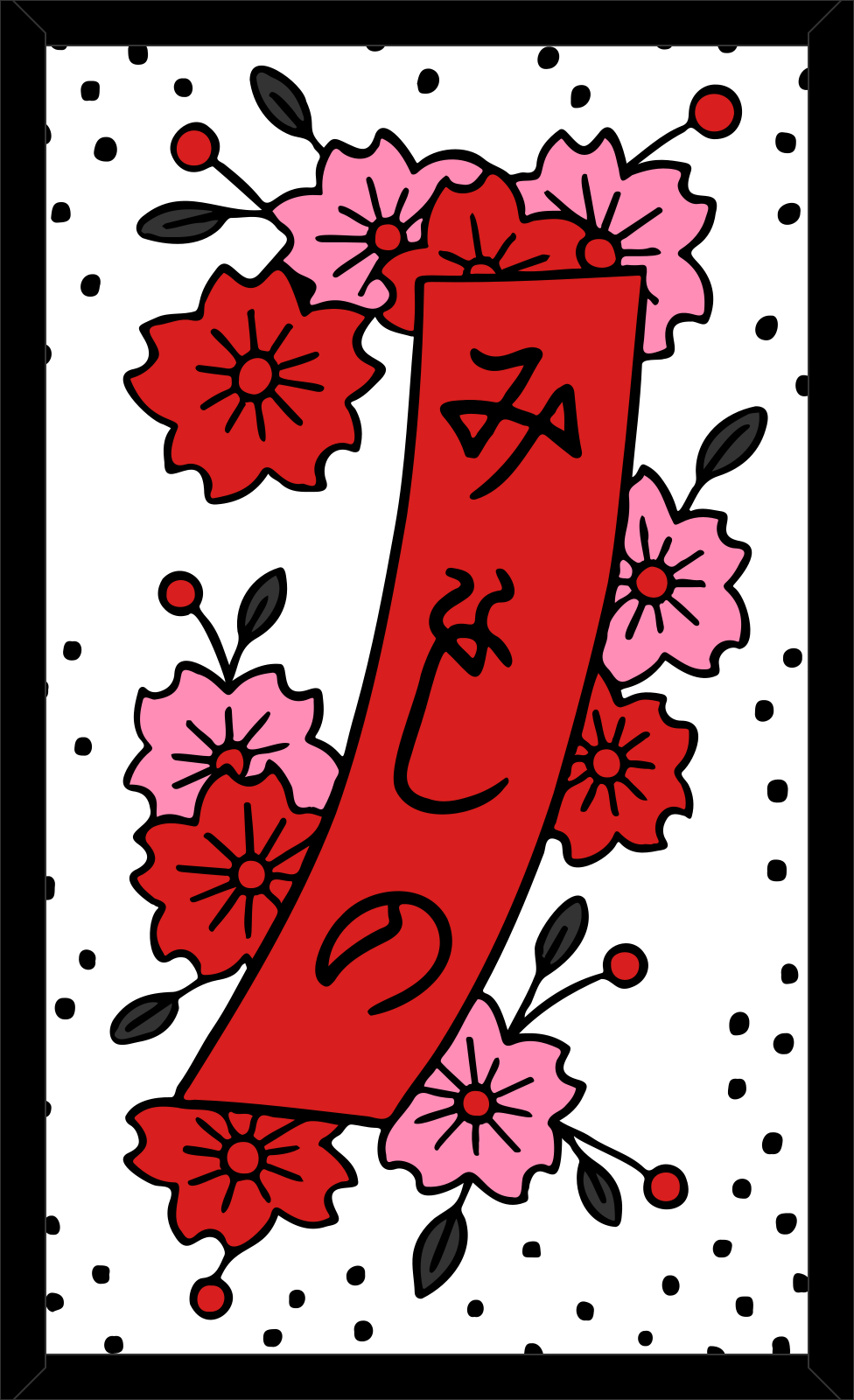
Red poem tanzaku桜に赤短March · Tanzaku (ribbon) · 5 pts
The poem tanzaku of the Pine, the Plum and the Cherry. The Pine and Plum strips read akayoroshi, the Cherry strip miyoshino. 5 points, and 1 more for each other tanzaku.
Blue Tanzaku (Aotan)
5 points, +1 per other tanzaku青短 aotan
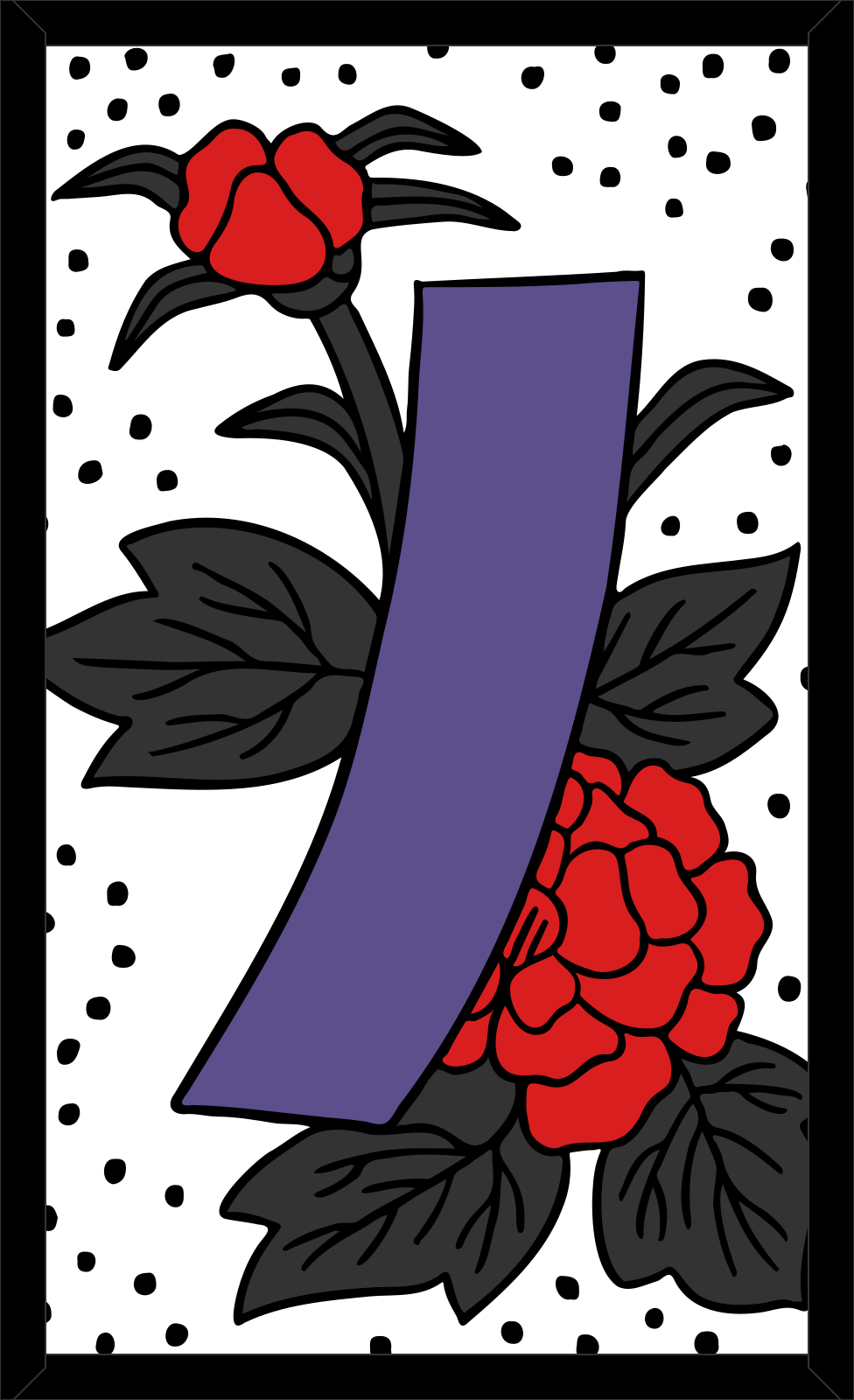
Blue tanzaku牡丹に青短June · Tanzaku (ribbon) · 5 pts 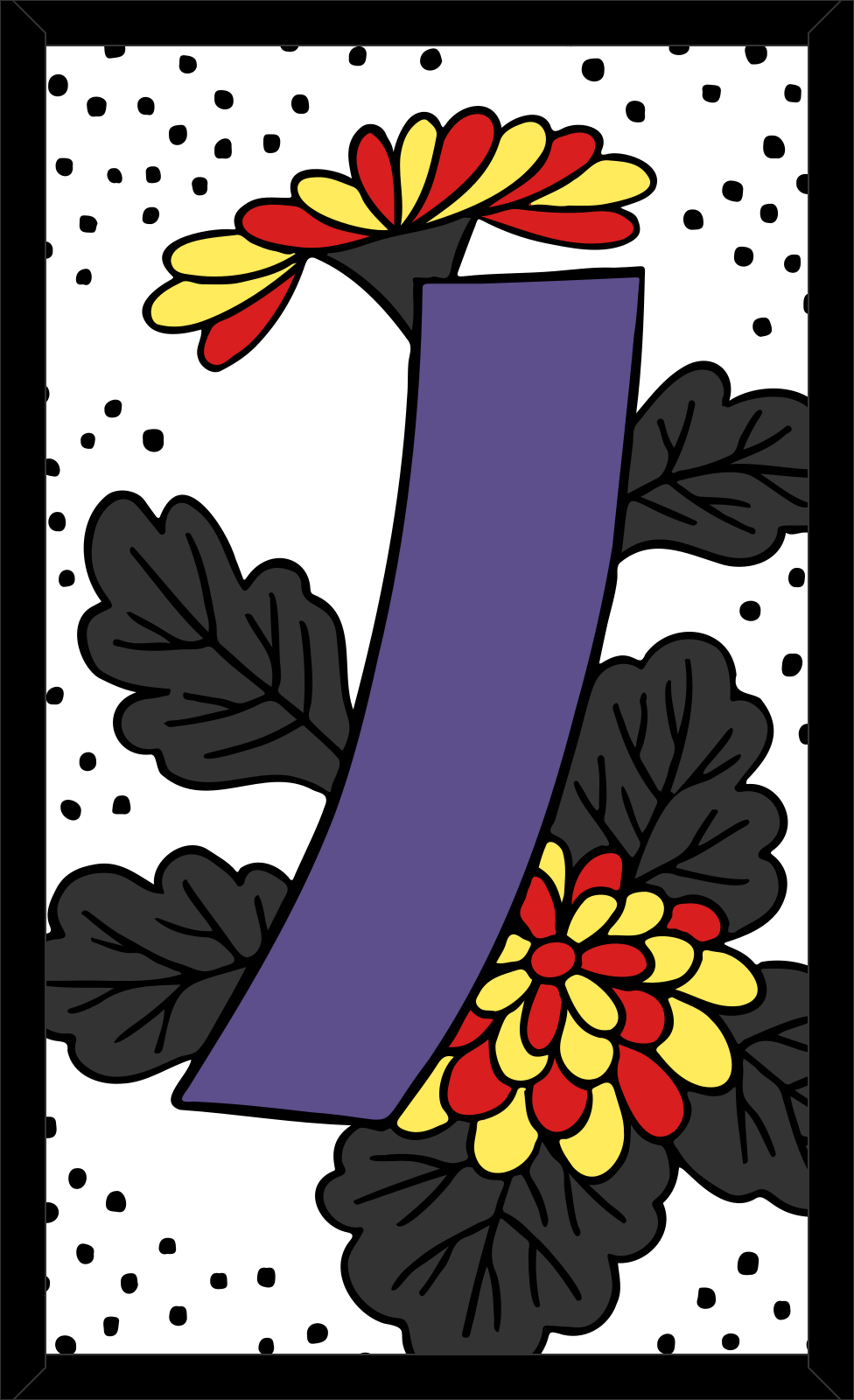
Blue tanzaku菊に青短September · Tanzaku (ribbon) · 5 pts 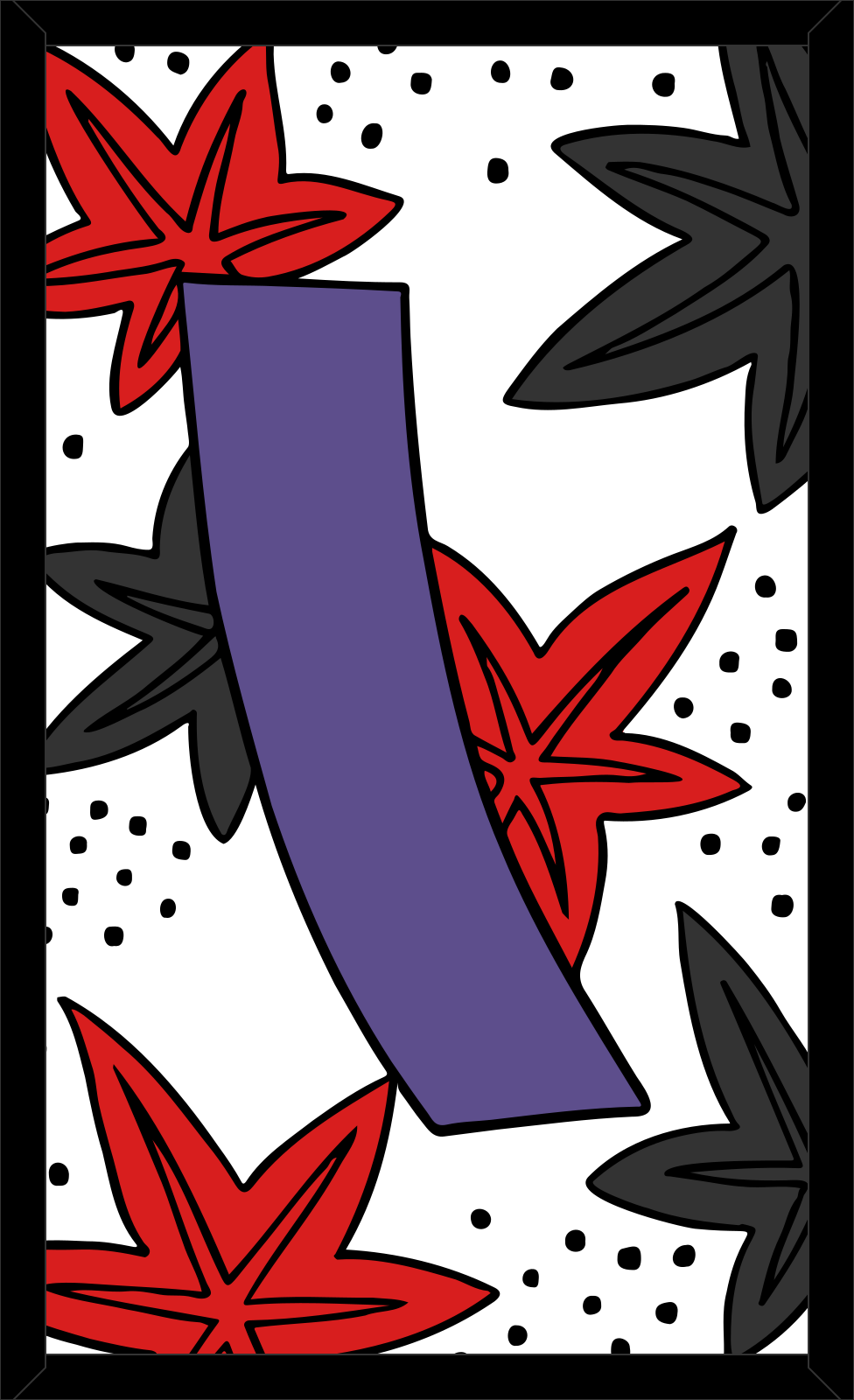
Blue tanzaku紅葉に青短October · Tanzaku (ribbon) · 5 pts
The blue tanzaku of the Peony, the Chrysanthemum and the Maple: 5 points, and 1 more for each other tanzaku.
Red & Blue Tanzaku (Akatan Aotan no Chōfuku)
10 points, +1 per other tanzaku赤短・青短の重複 akatan aotan no chōfuku
All six at once: Akatan Aotan no Chōfuku, “red and blue together”. It counts instead of Akatan and Aotan (10, not 5 + 5 + 10), plus 1 for each of the four plain red tanzaku you also hold.
Tanzaku (Tan)
1 point, +1 per tanzaku after the 5thタン tan
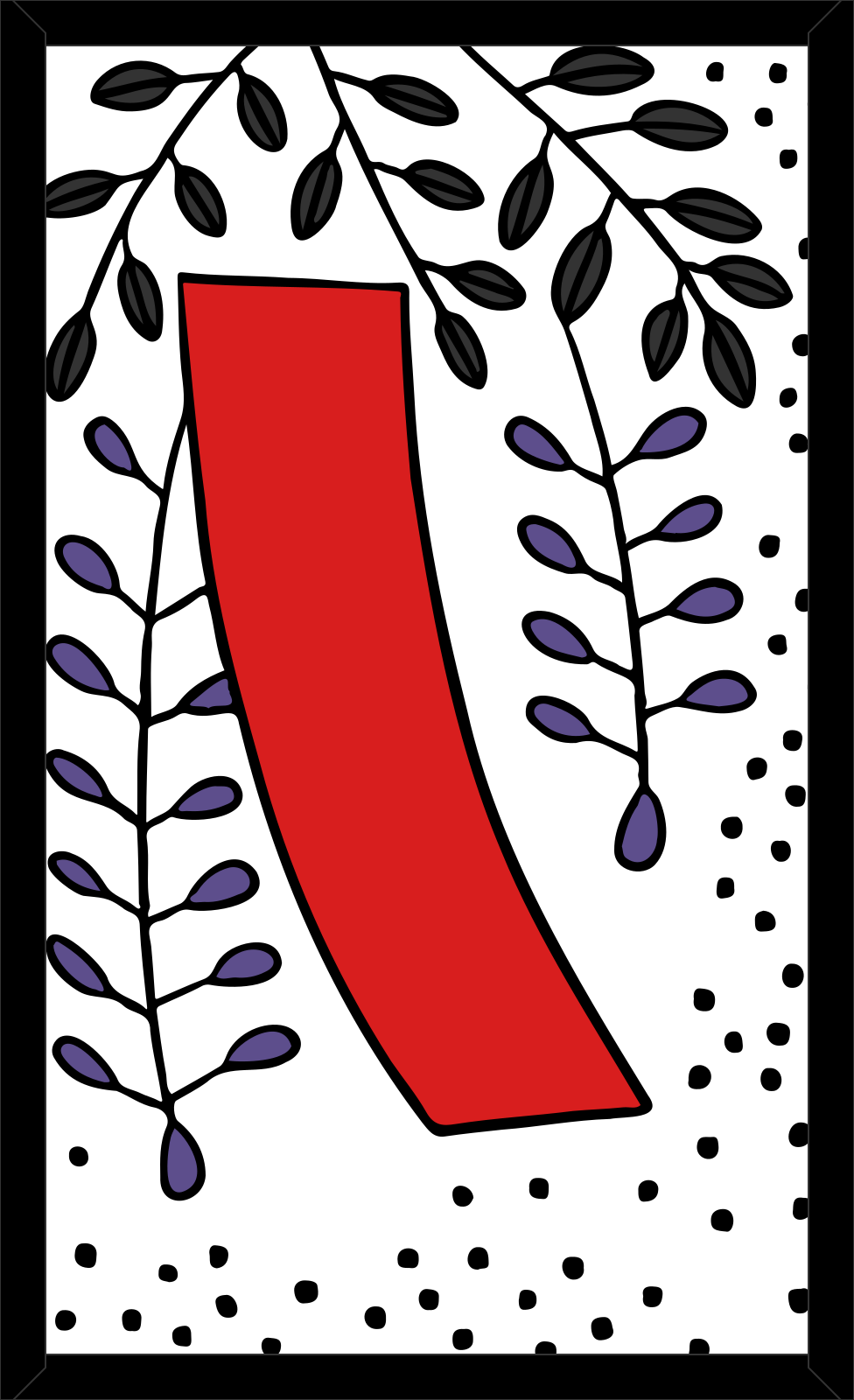
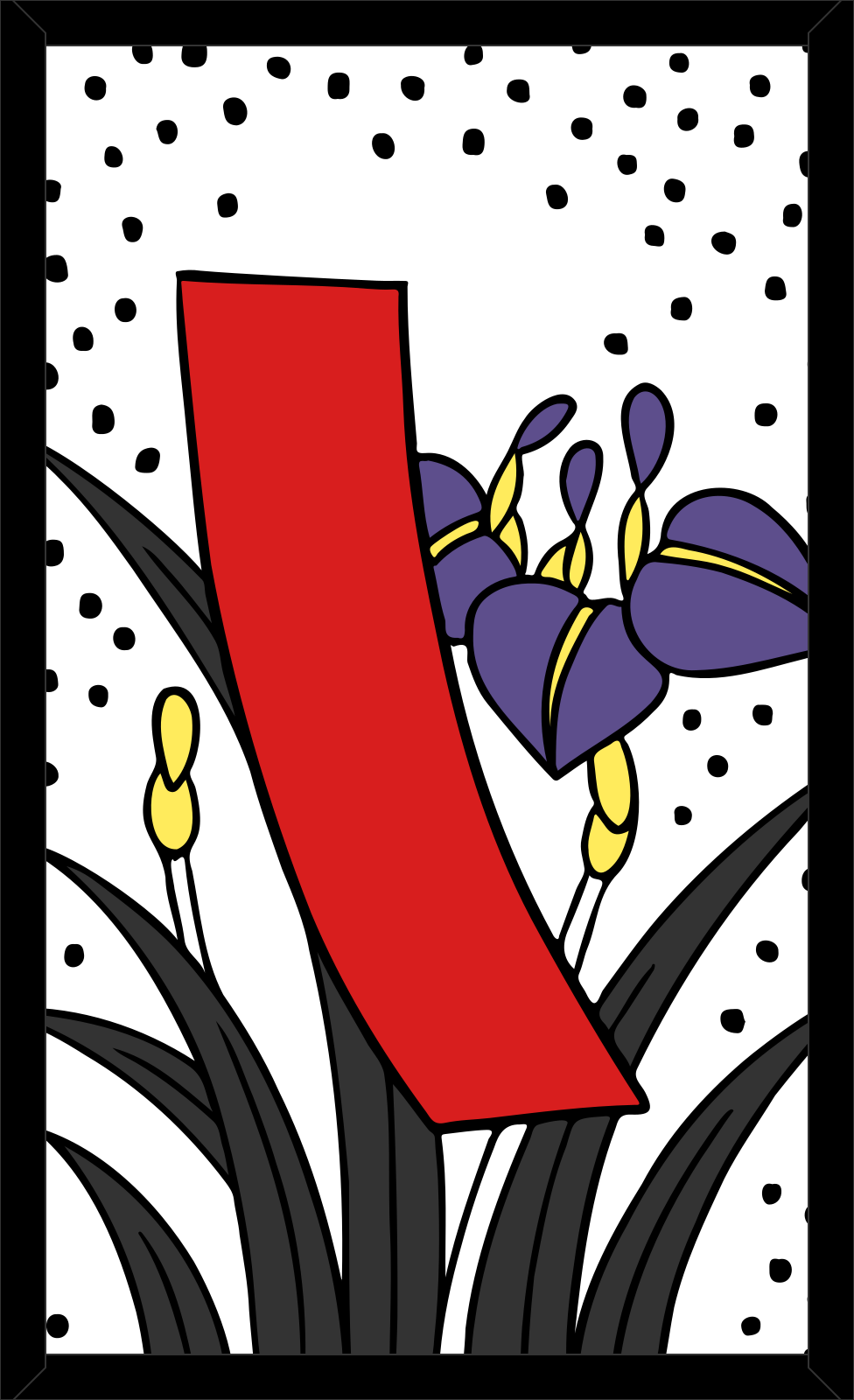
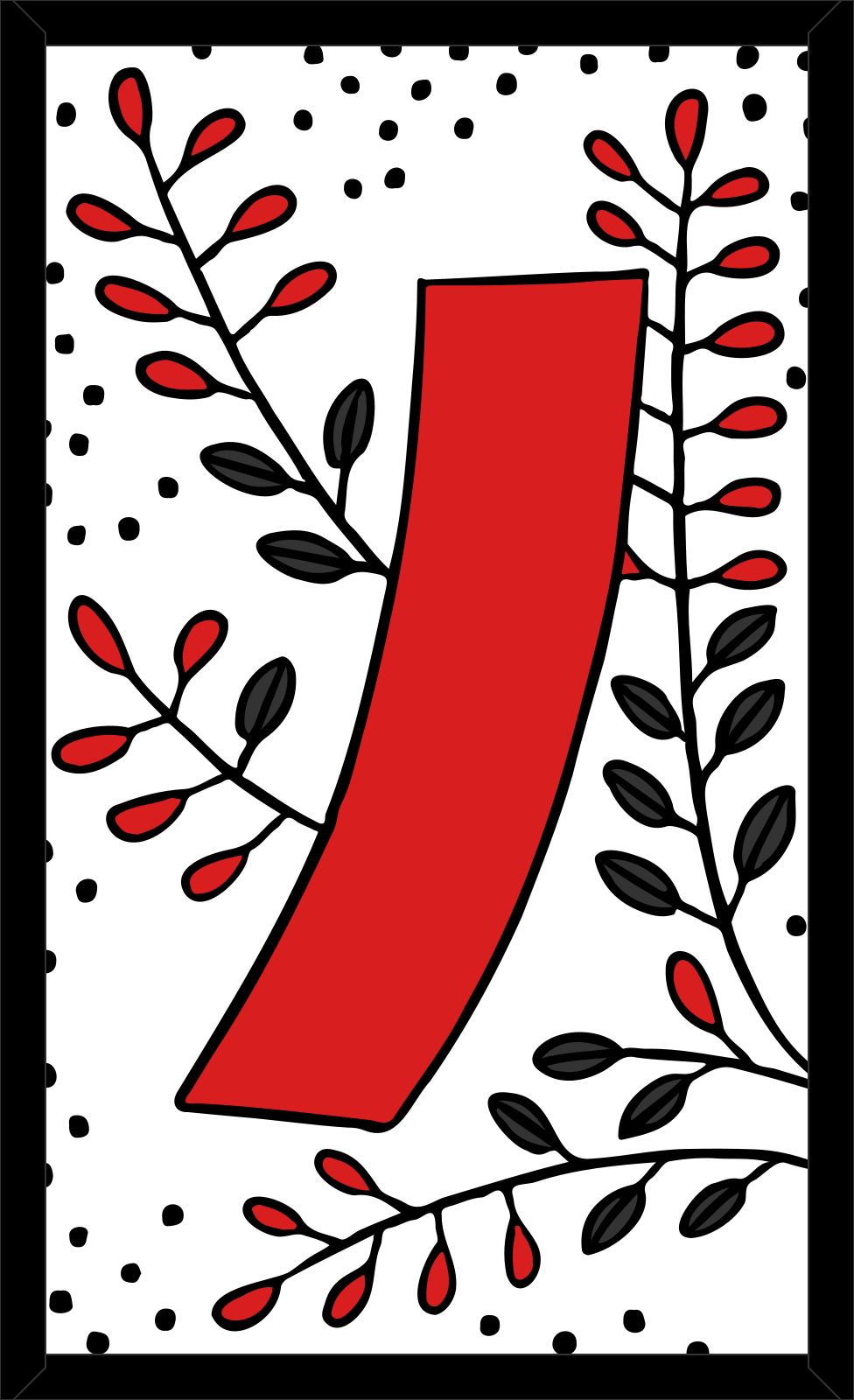

Any five of the ten tanzaku: 1 point, and 1 more for each tanzaku after the fifth. In this game Tan counts beside Akatan, Aotan and Chōfuku, so all ten tanzaku make Chōfuku 14 + Tan 6 = 20.
The plain yaku
Half the deck, 24 cards, are plains worth 1 point each: two in each month from January to October, the Willow’s Lightning, and three in December. One yaku counts them.
Plains (Kasu)
1 point, +1 per plain after the 10thカス kasu
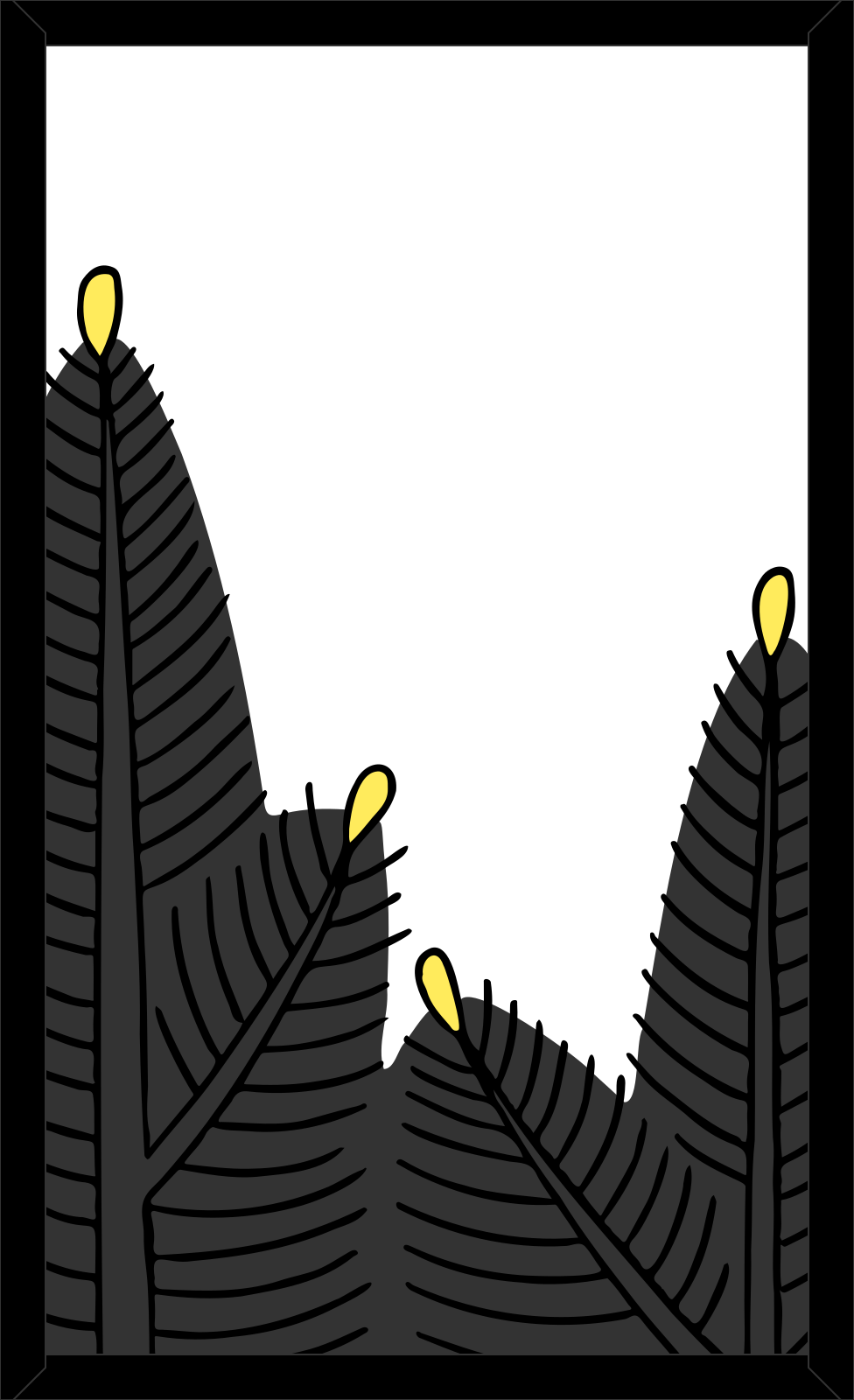
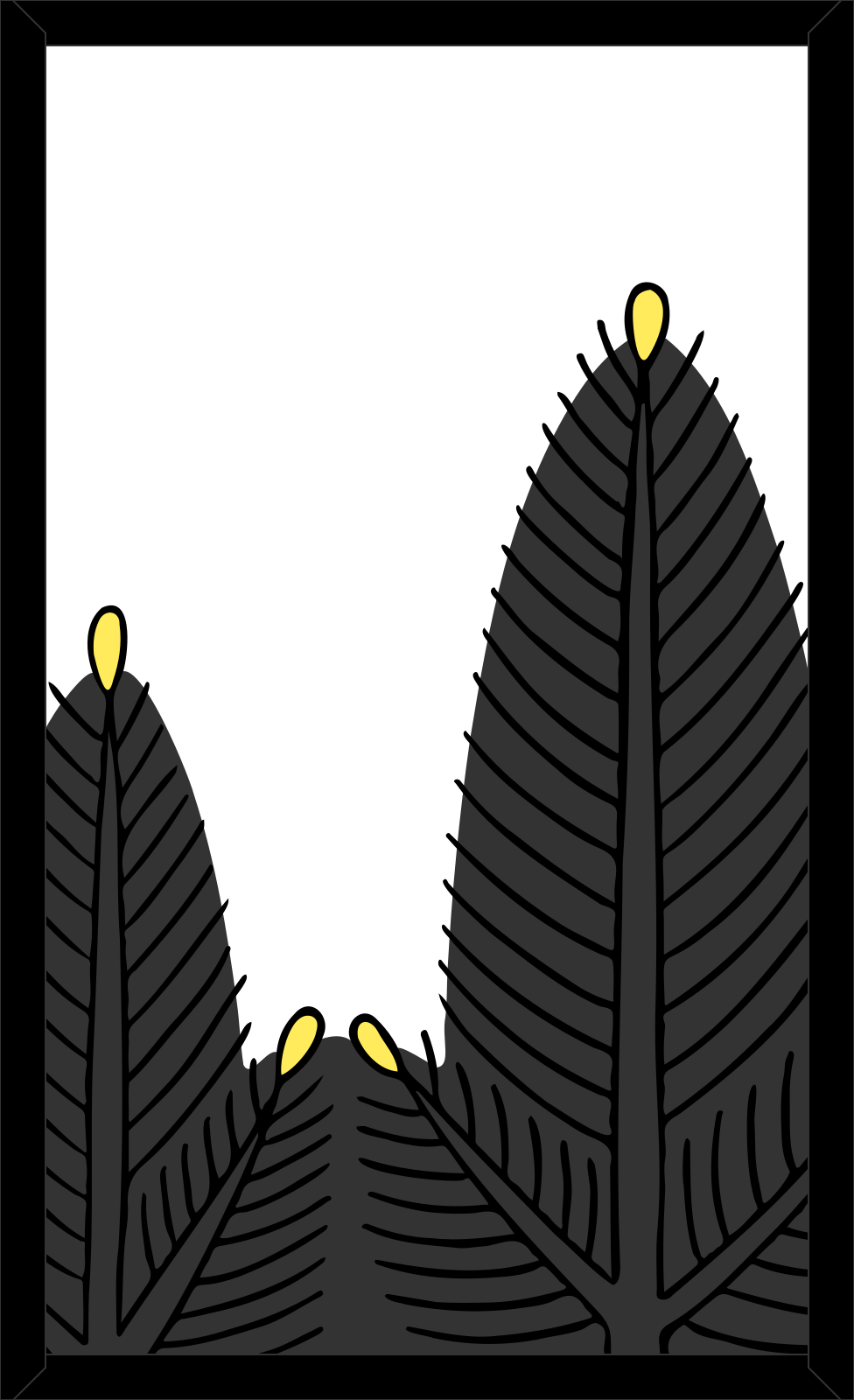
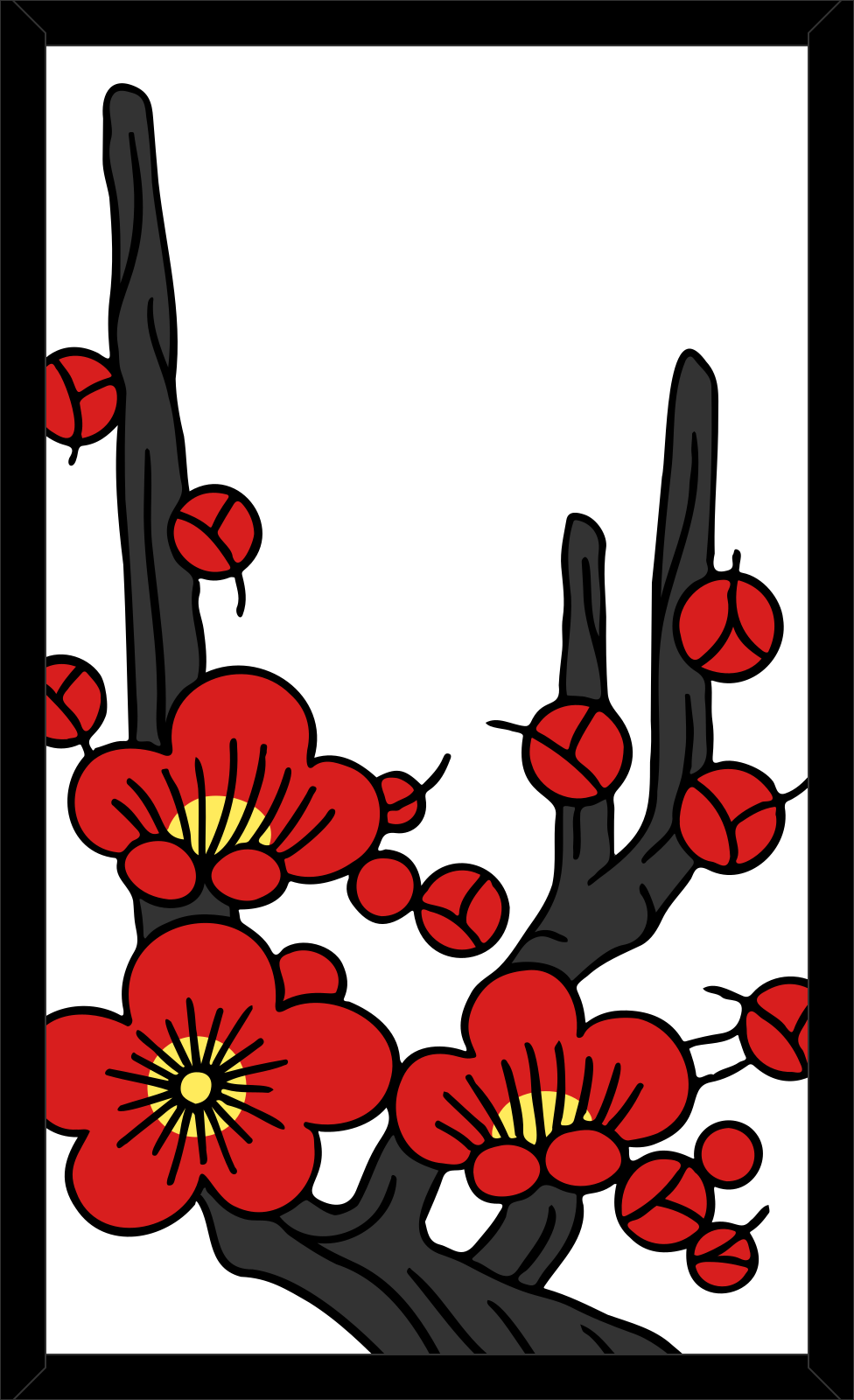
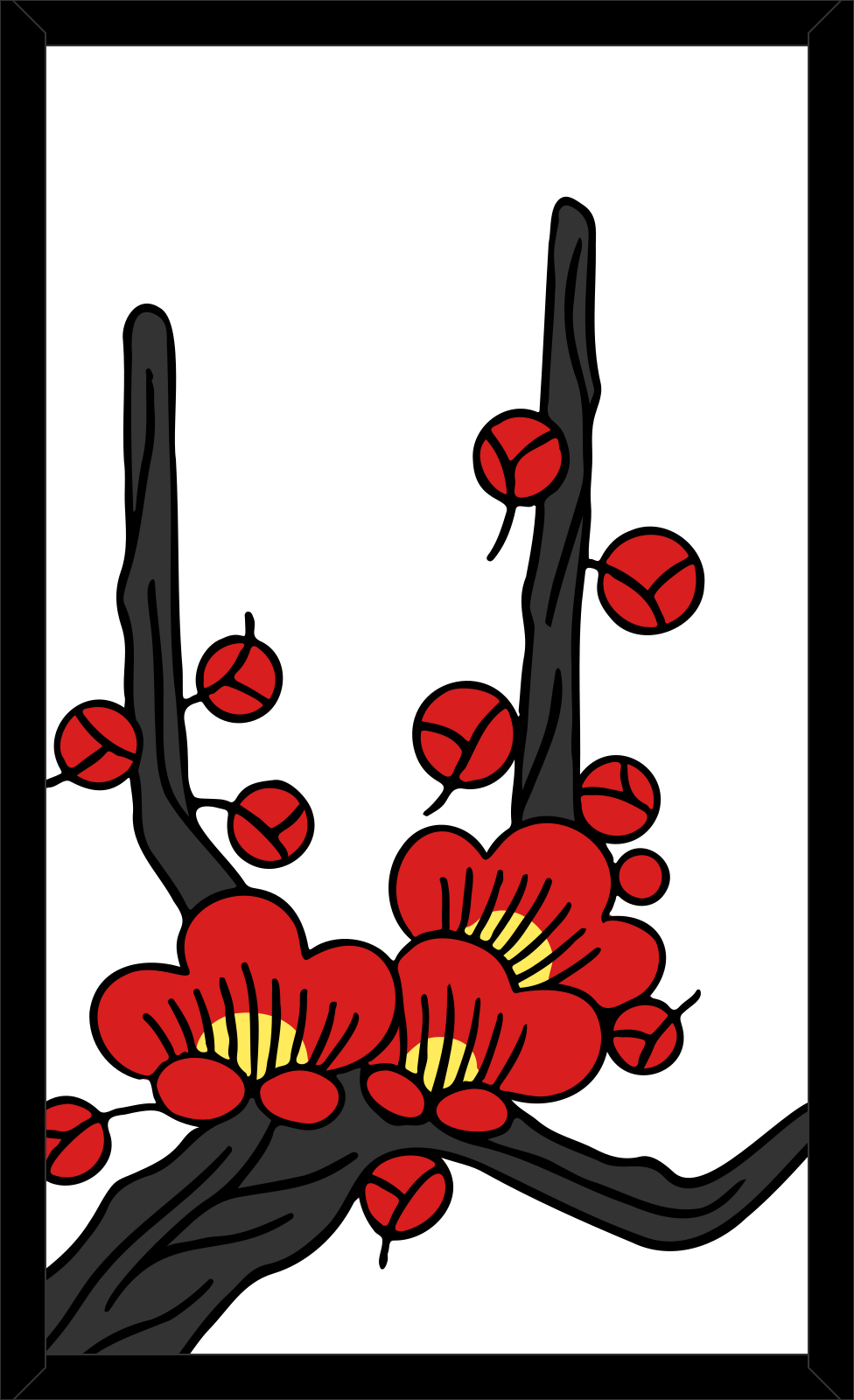
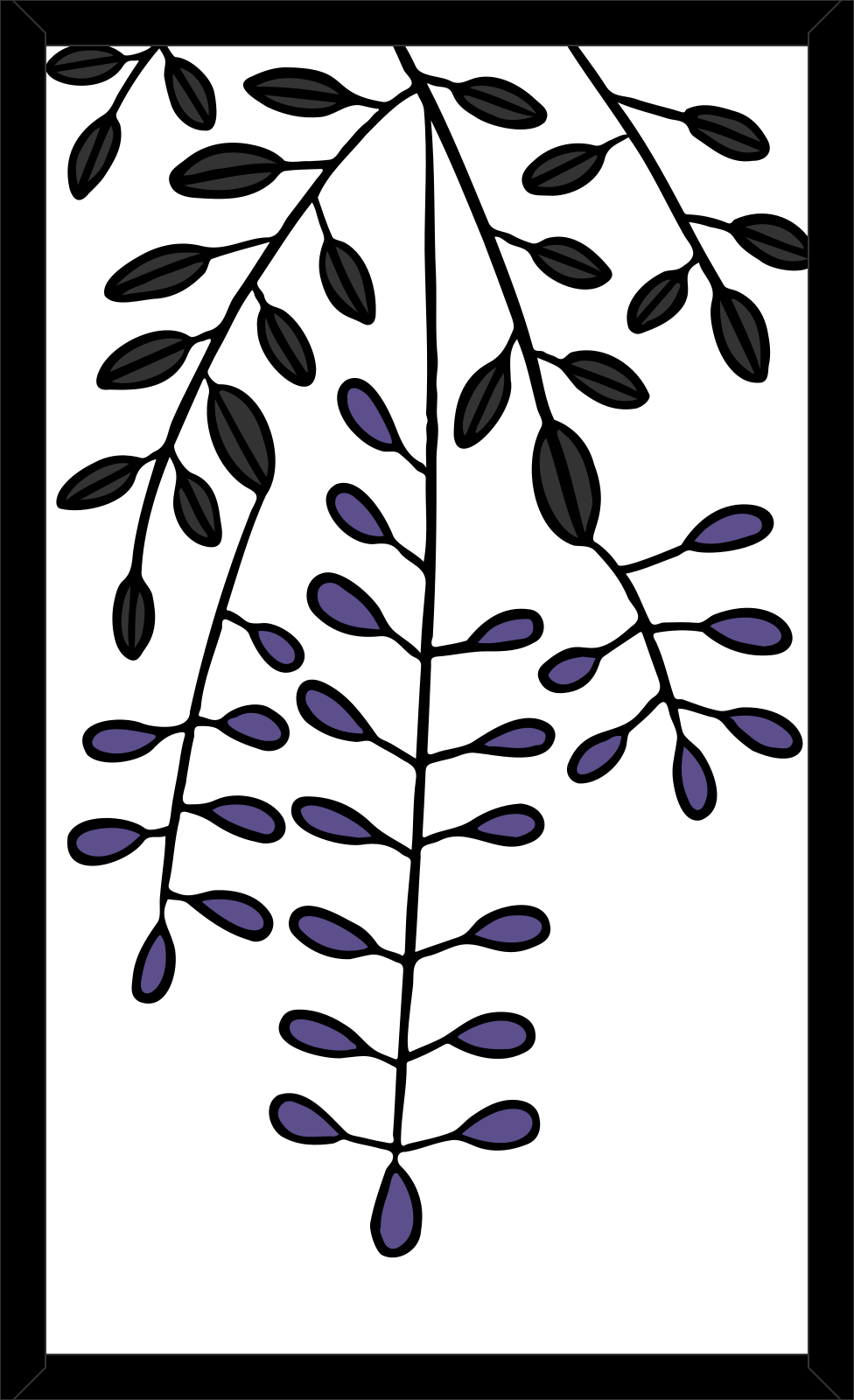
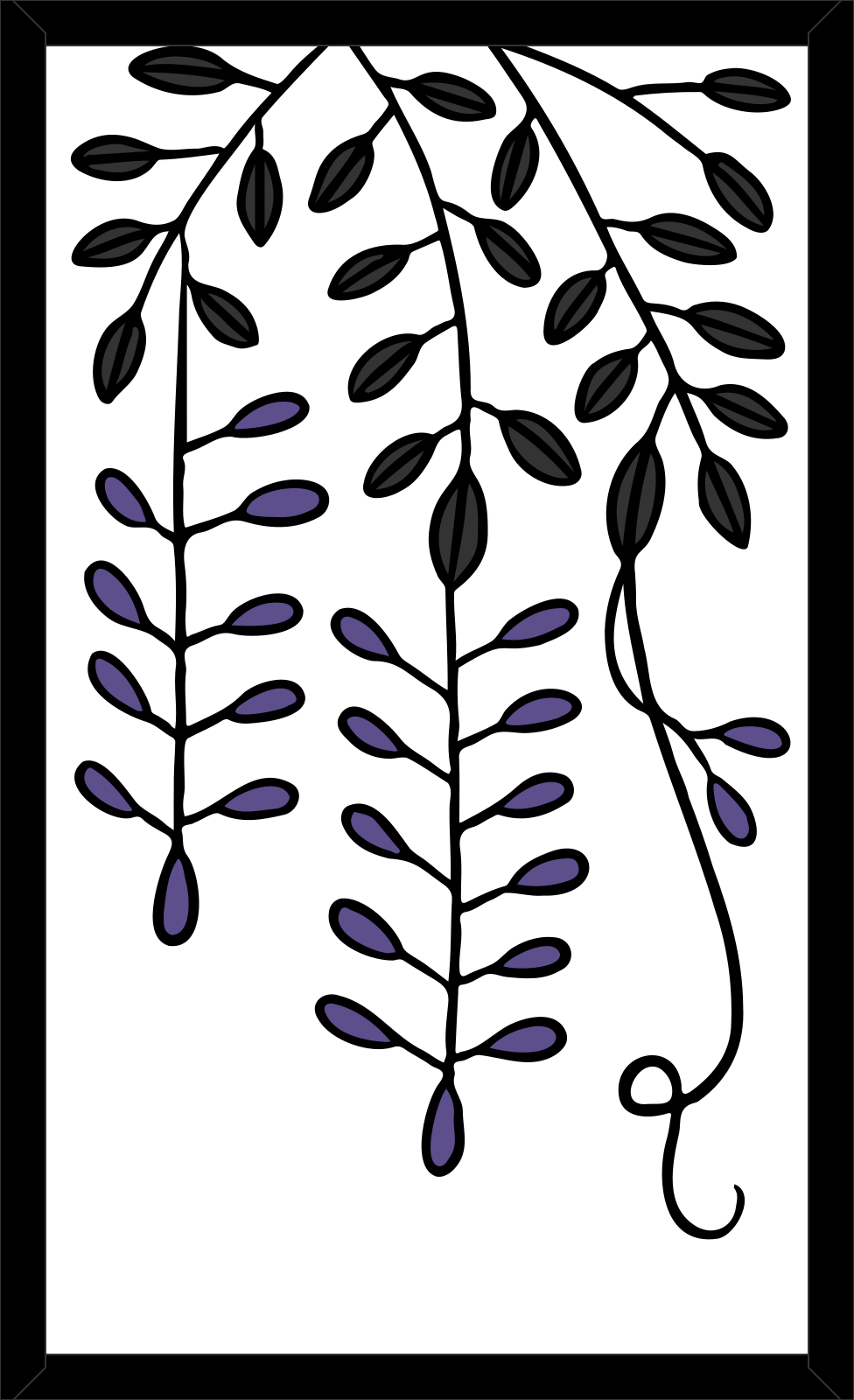
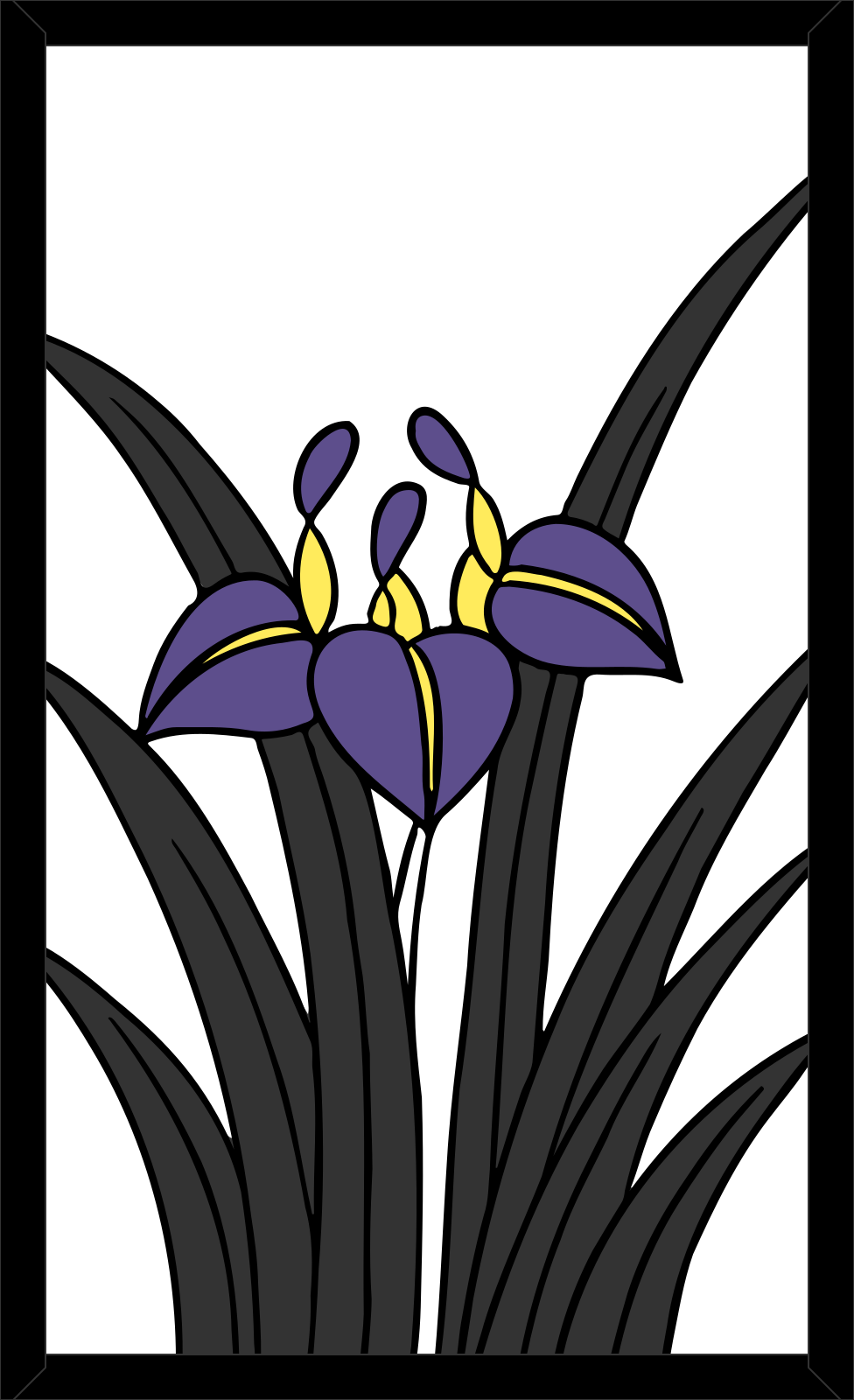
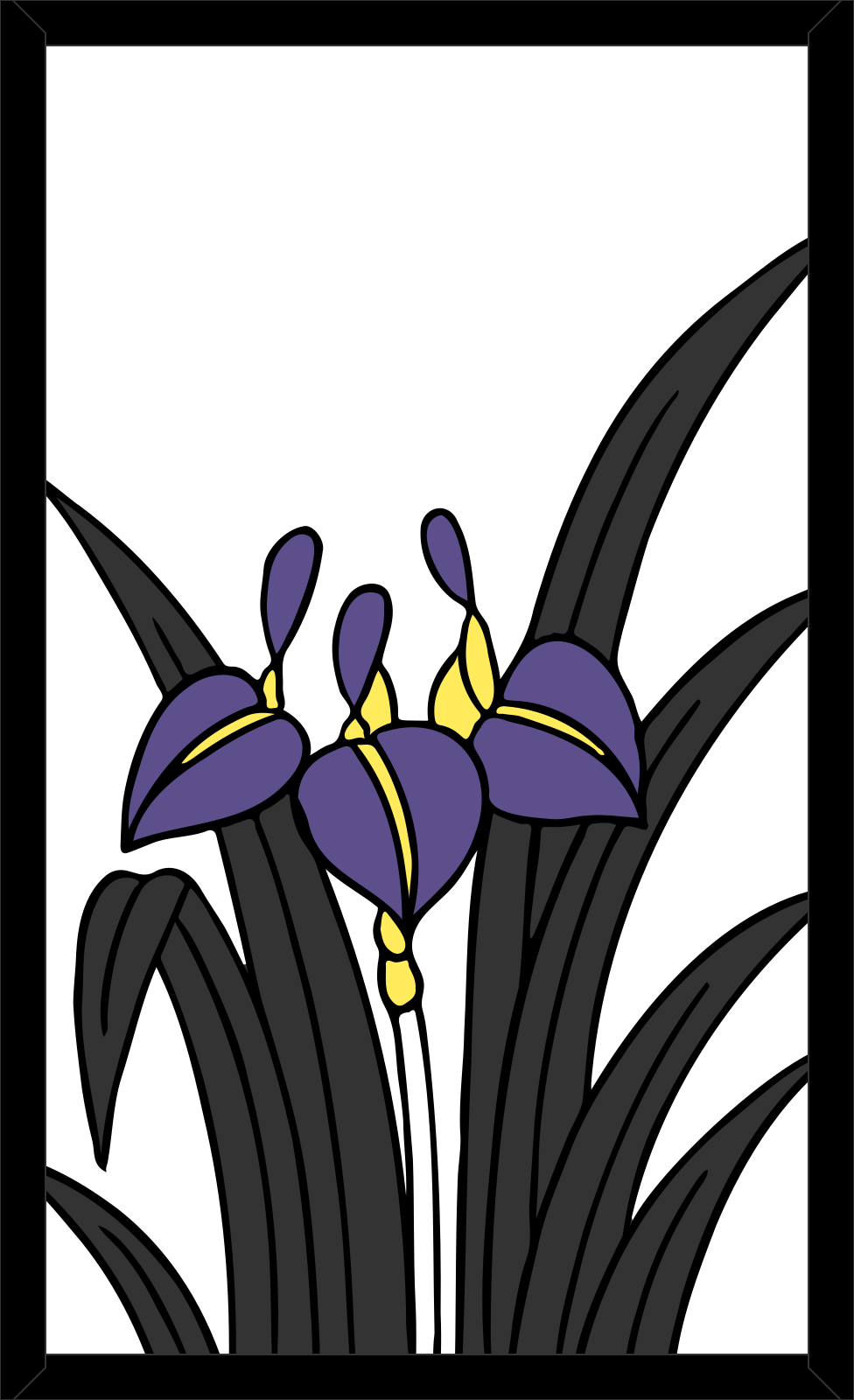
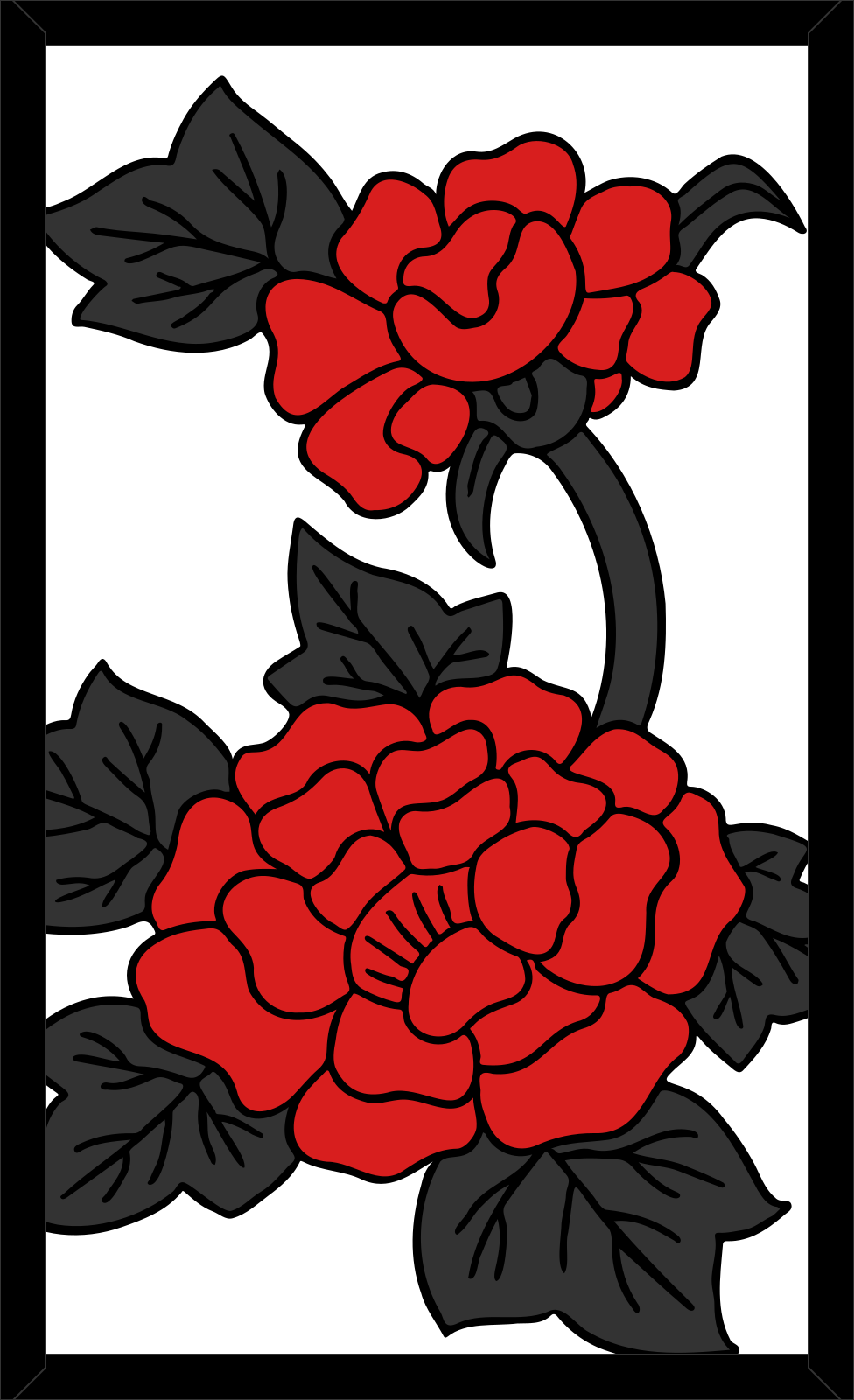



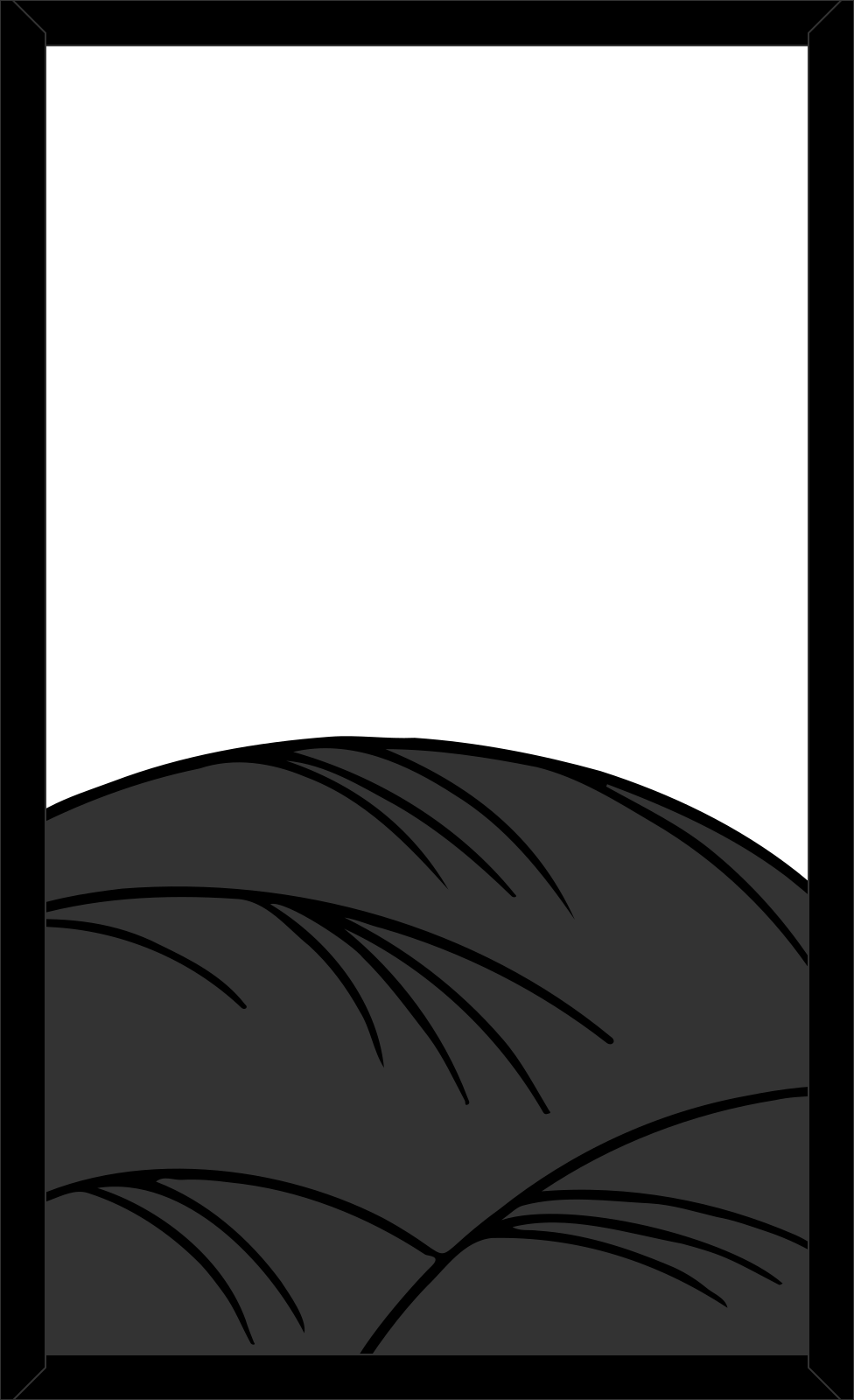
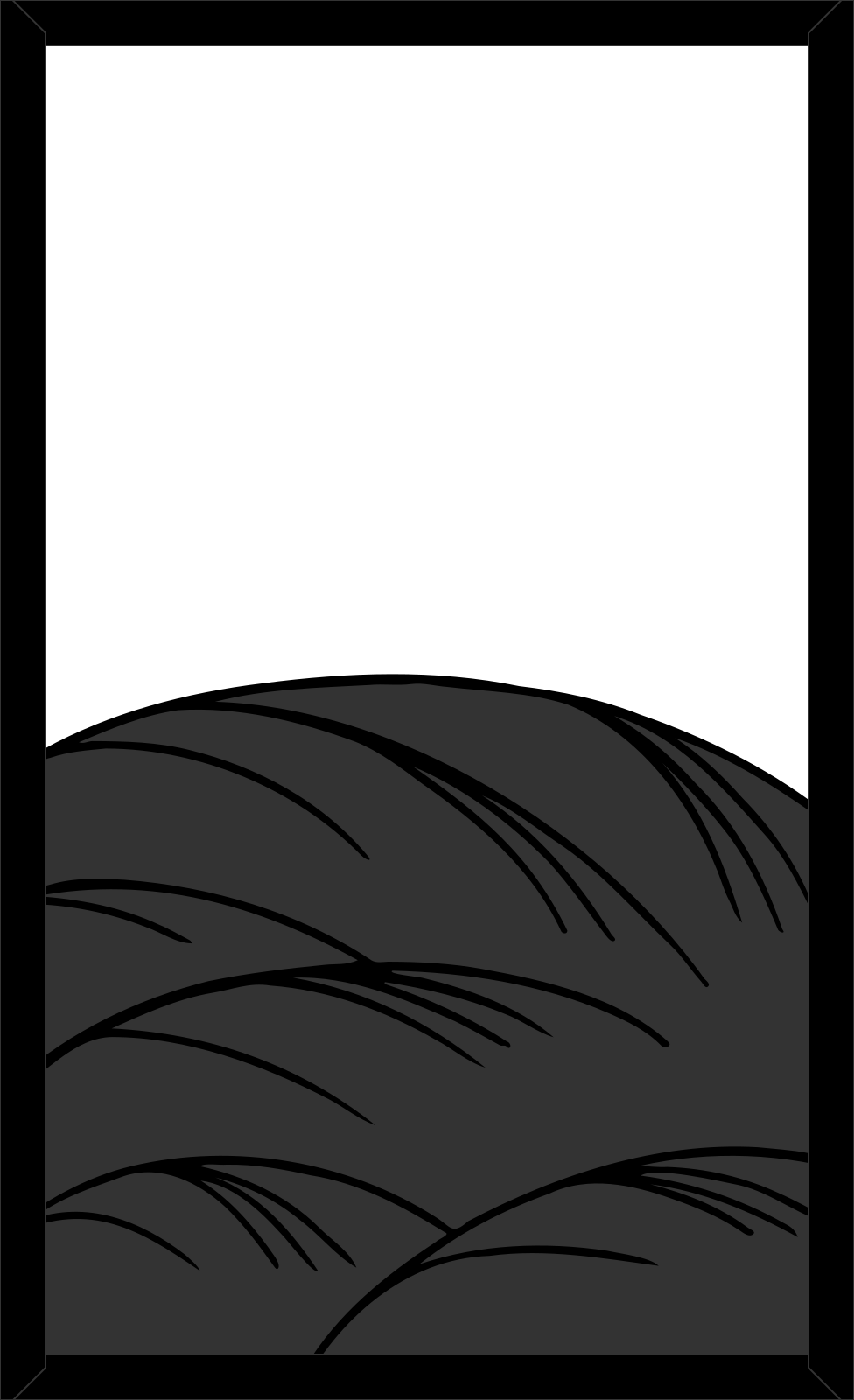
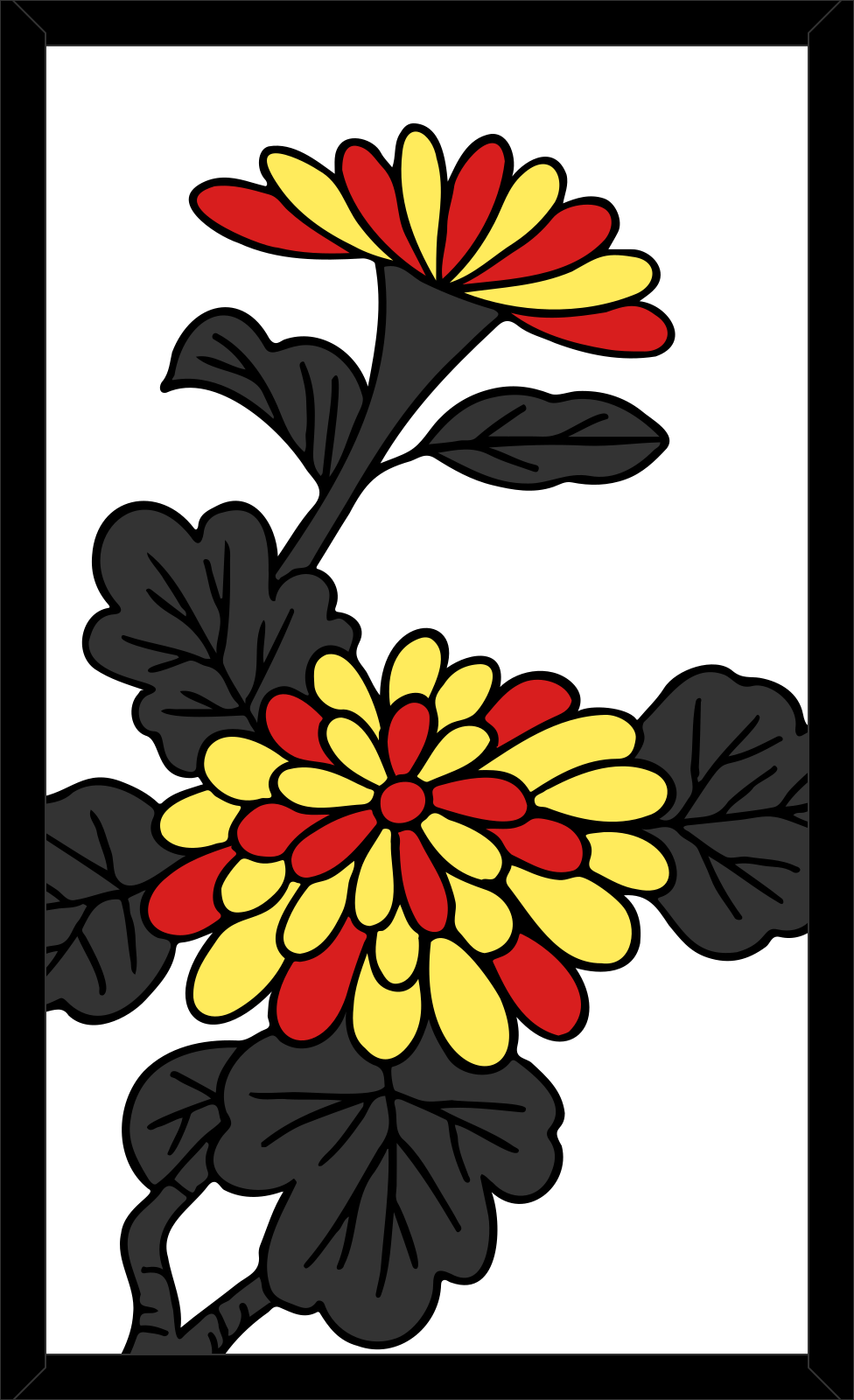
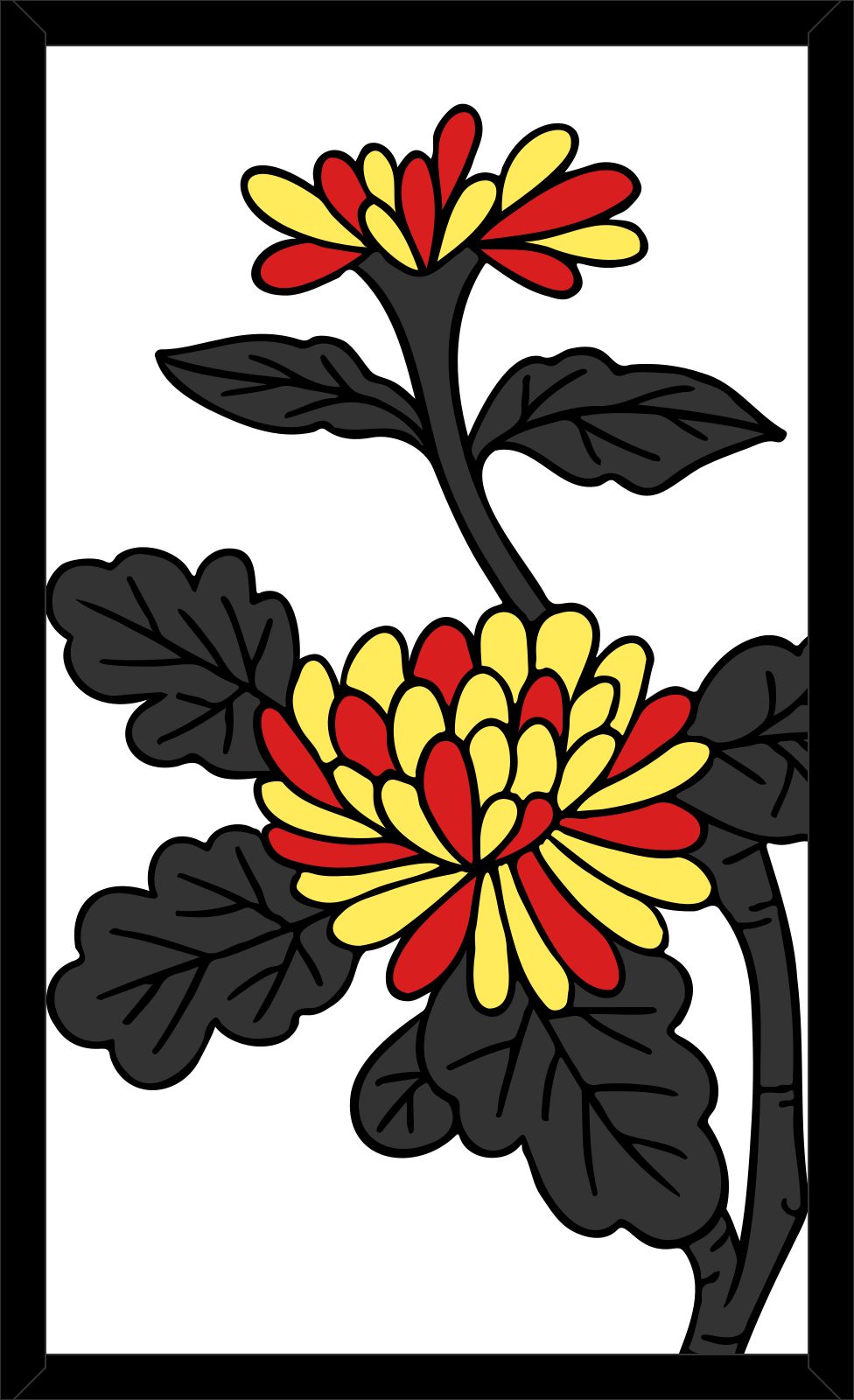
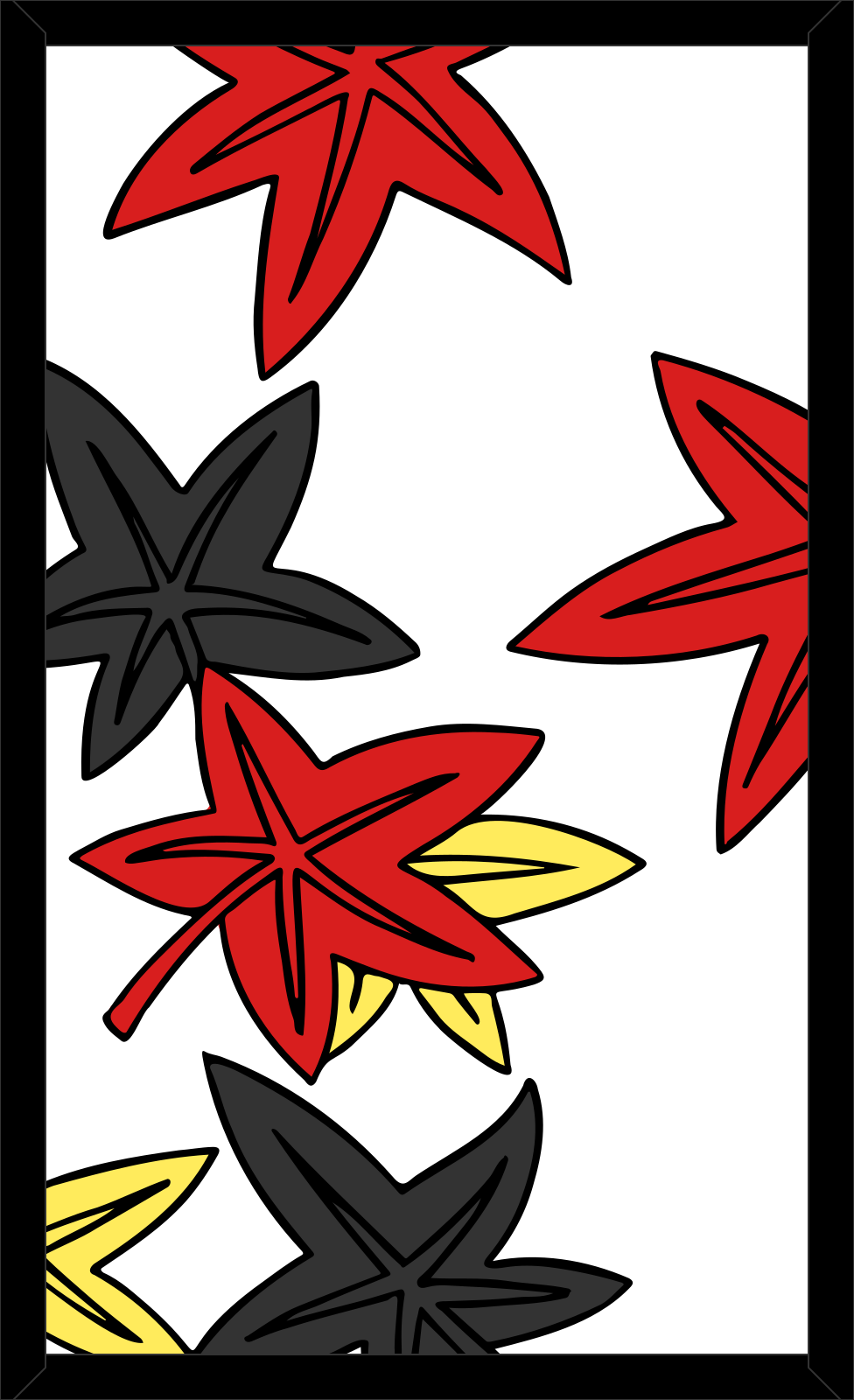
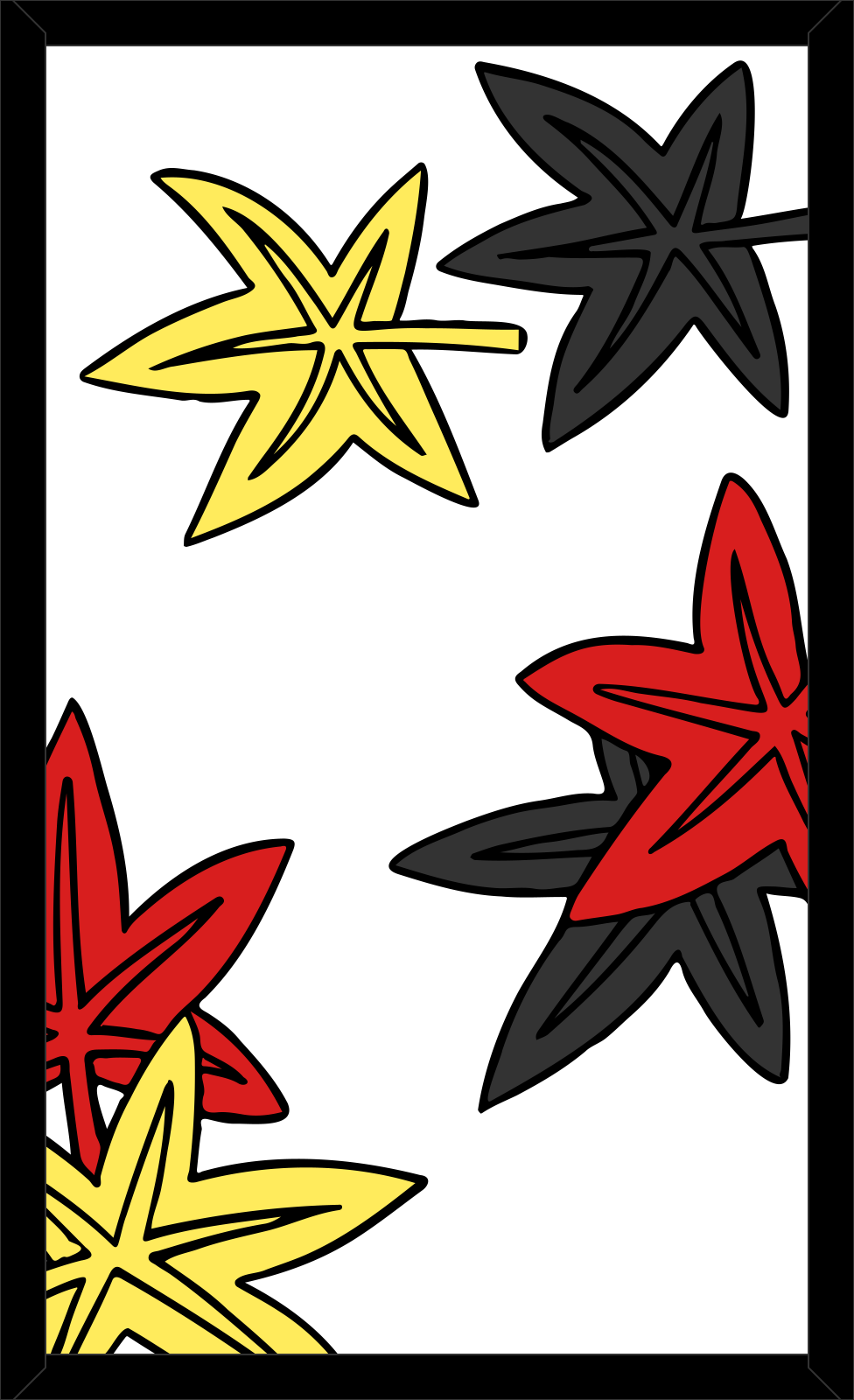
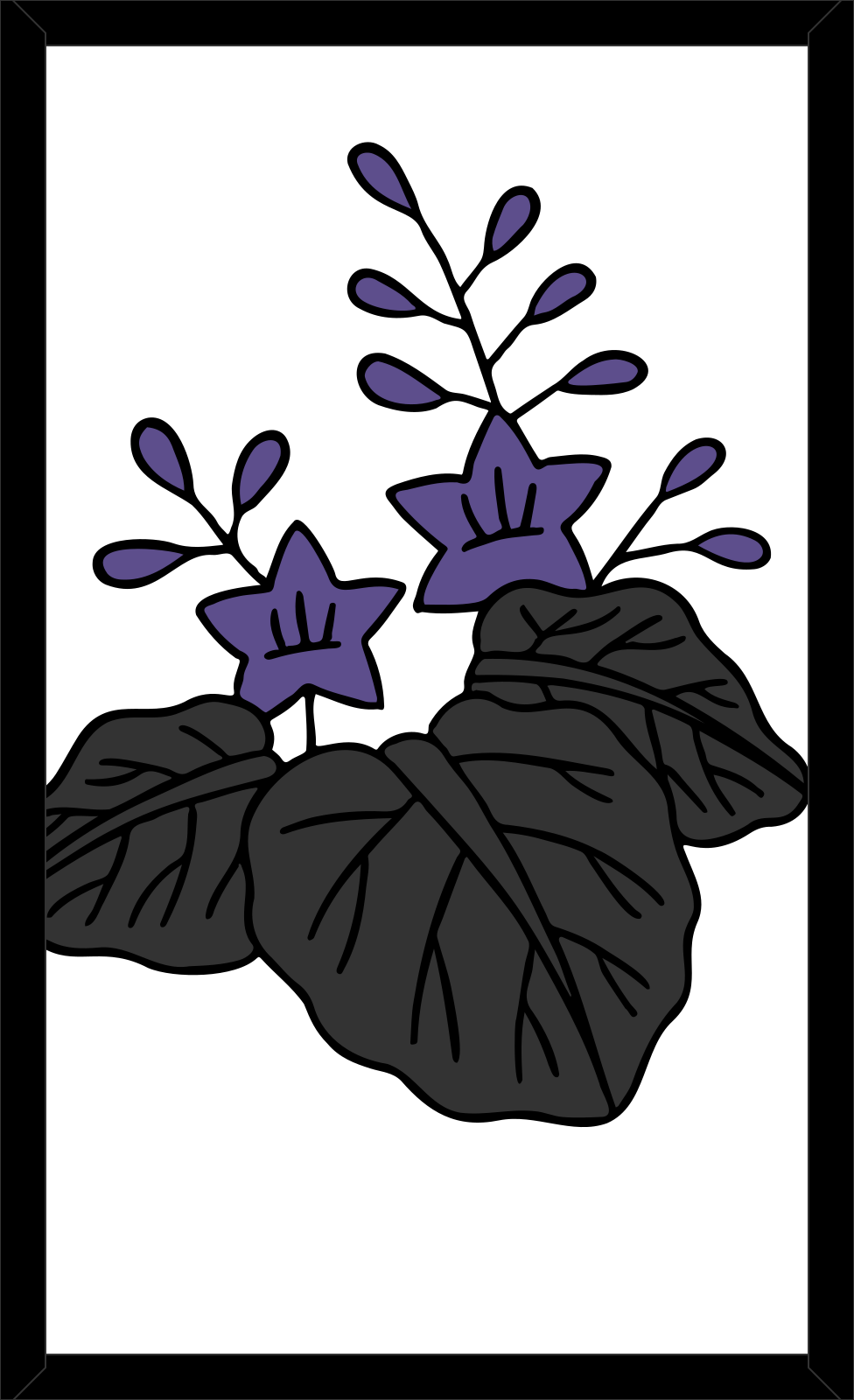
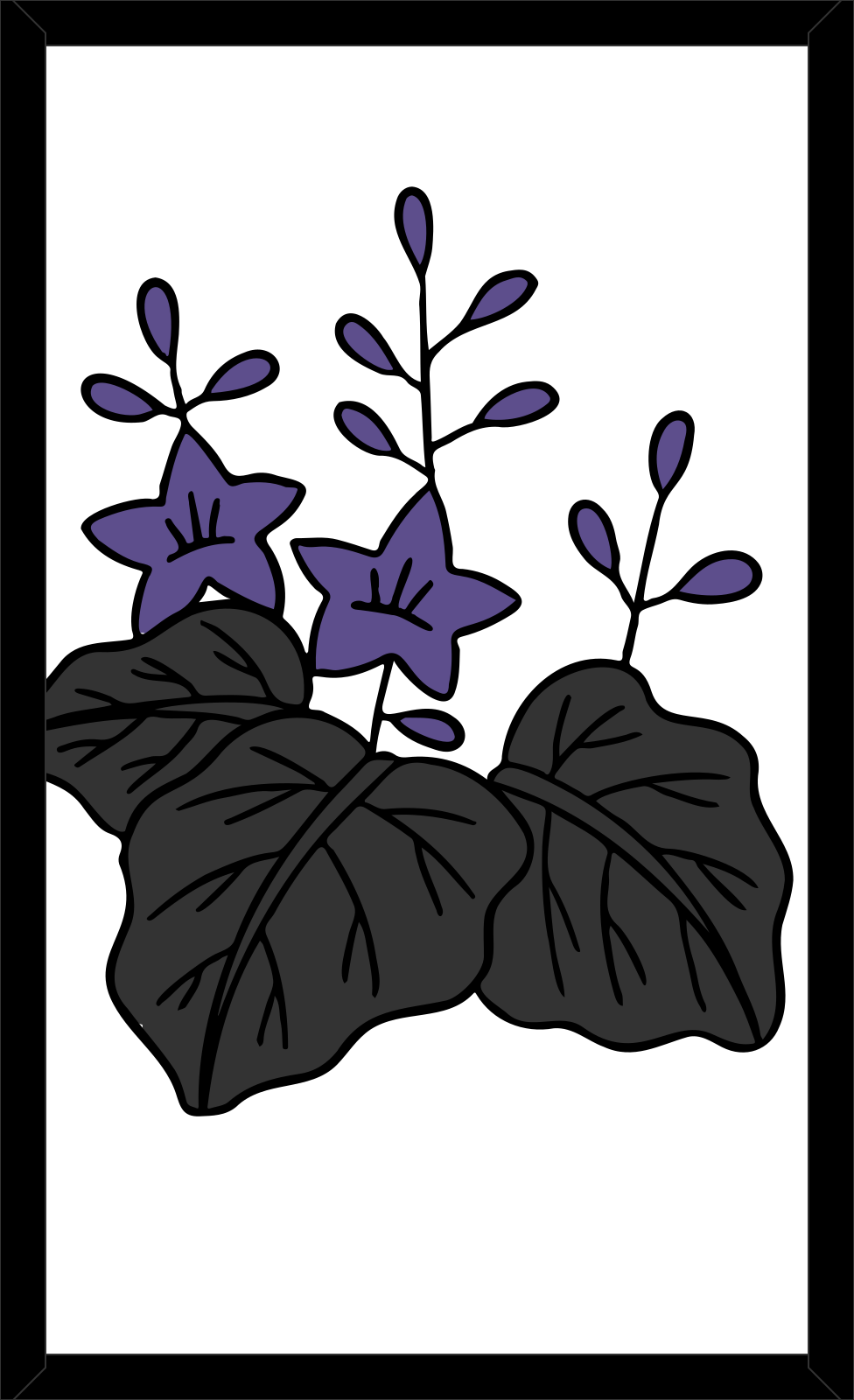
Any ten of the 24 plains: 1 point, and 1 more for each plain after the tenth. The Willow’s Lightning card and the Paulownia plain with the yellow band are plains like the others.
Dealt hands: Teshi and Kuttsuki
Two yaku come from the deal itself and are checked before anyone plays. Either one ends the round at once and scores 6: nobody has called Koi-Koi yet and 6 is below the doubling line, so nothing multiplies it. The player who had it deals the next round. If both players are dealt one, the dealer’s counts (see the rules).
Four of a Month (Teshi)
6 points手四 teshi
Curtain Red poem tanzaku 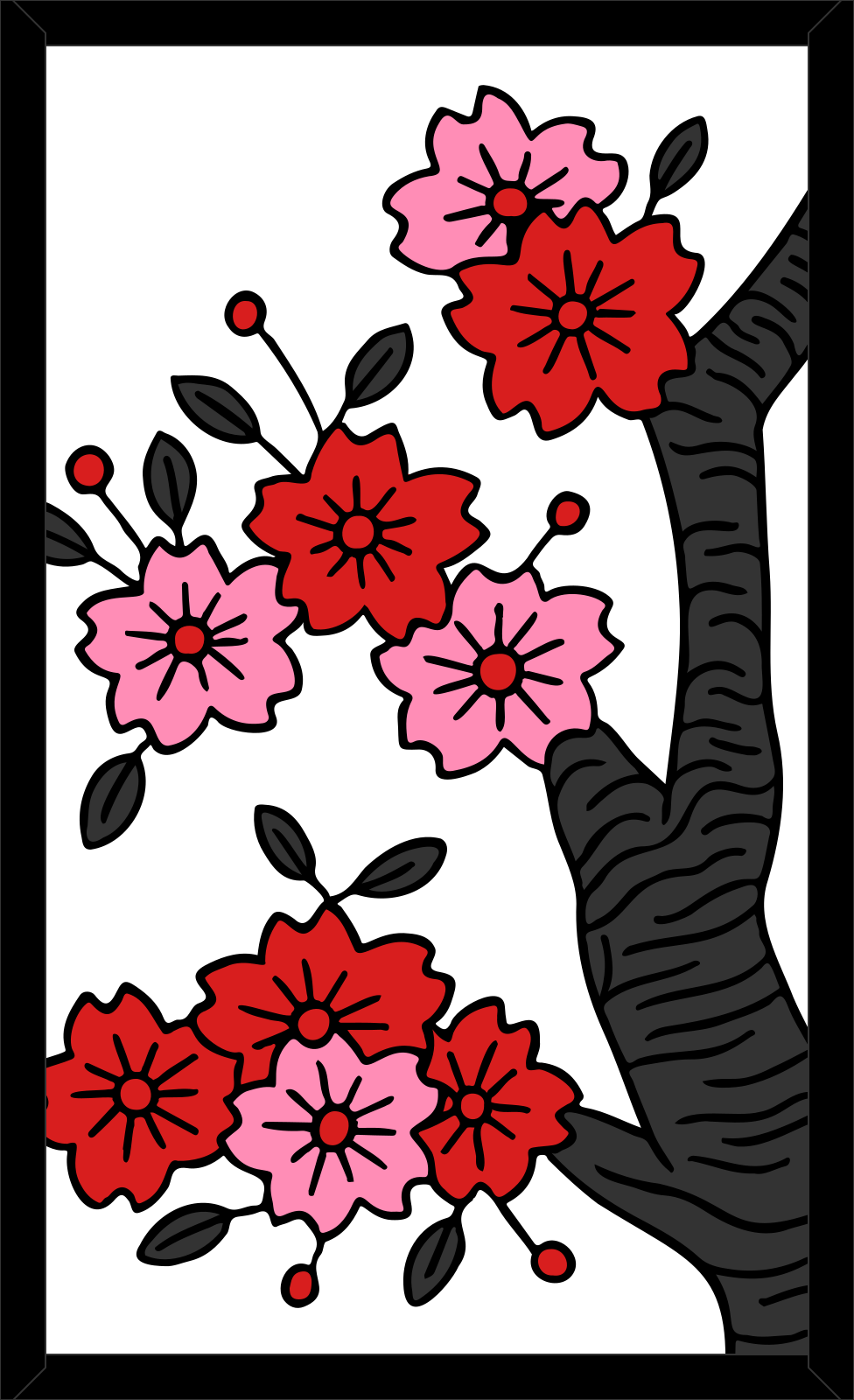
Cherry plain 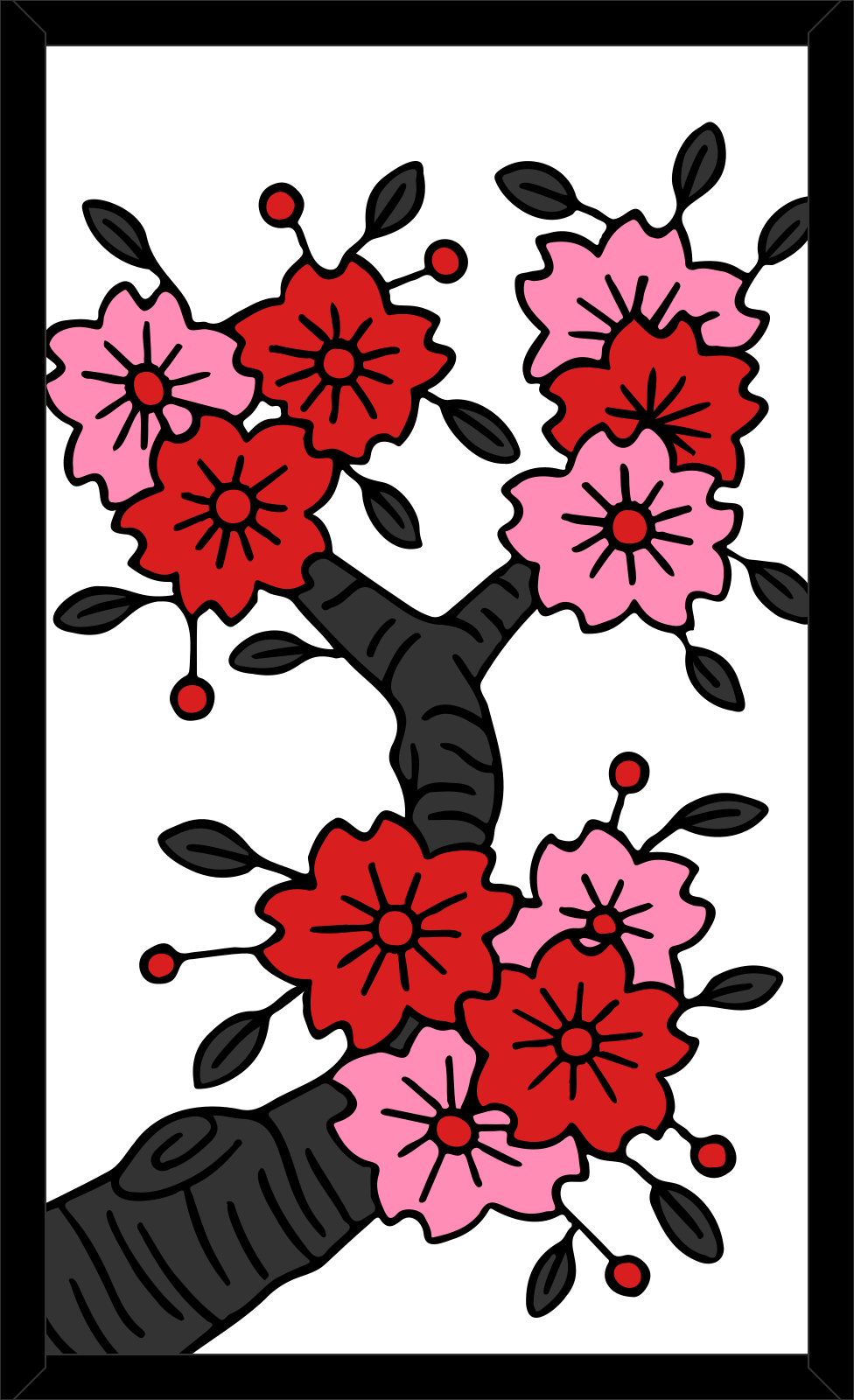
Cherry plain
All four cards of one month in your starting hand, here the four Cherry cards.
Four Pairs (Kuttsuki)
6 pointsくっつき kuttsuki
Four pairs: your eight cards are two each of four months, here the Crane with a Pine plain, the Nightingale with a Plum plain, the Cuckoo with a Wisteria plain, and the Sake cup with a Chrysanthemum plain. A hand with four cards of one month and two pairs counts as Teshi.
How yaku add up in this game
- One light yaku at a time. Gokō, Shikō, Ame Shikō and Sankō never count together.
- Chōfuku replaces Akatan and Aotan.
- Everything else adds up, and a card may serve several yaku. The Sake cup counts for Hanami, Tsukimi and Tane; the Boar, Deer and Butterflies for Inoshikachō and Tane; the tanzaku for Akatan, Aotan or Chōfuku and for Tan.
- Yaku grow. After a Koi-Koi call you may stop again at the end of any turn in which your total rises, whether from a new yaku or from one more card for a +1 yaku.
| Captured | This game | Nintendo |
|---|---|---|
| Boar, Deer, Butterflies, Nightingale, Geese | Inoshikachō 7 + Tane 1 = 8 | Inoshikachō 7 |
| Pine, Plum, Cherry poem tanzaku + Wisteria and Bush Clover tanzaku | Akatan 7 + Tan 1 = 8 | Akatan 7 |
| All ten tanzaku | Chōfuku 14 + Tan 6 = 20 | Chōfuku 14 |
| Nine plains + the Sake cup | no yaku | Kasu 1 |
| Curtain, Moon, Sake cup | Hanami 5 + Tsukimi 5 = 10 | Hanami 5 + Tsukimi 5 = 10 |
Written rules differ again. Fuda Wiki’s English guide scores only the most valuable yaku of each family (Inoshikachō or Tane, not both), and Japanese Wikipedia describes the +1 for Inoshikachō, Akatan and Aotan as a rule only some players use. The worked scoring examples take these totals through doubling and the Koi-Koi multiplier.
Four cards to watch
Rain柳に小野道風yanagi ni Ono no TōfūLight, but not for Sankō or Shikō Sake cup菊に盃kiku ni sakazukiAnimal; Hanami, Tsukimi, Tane 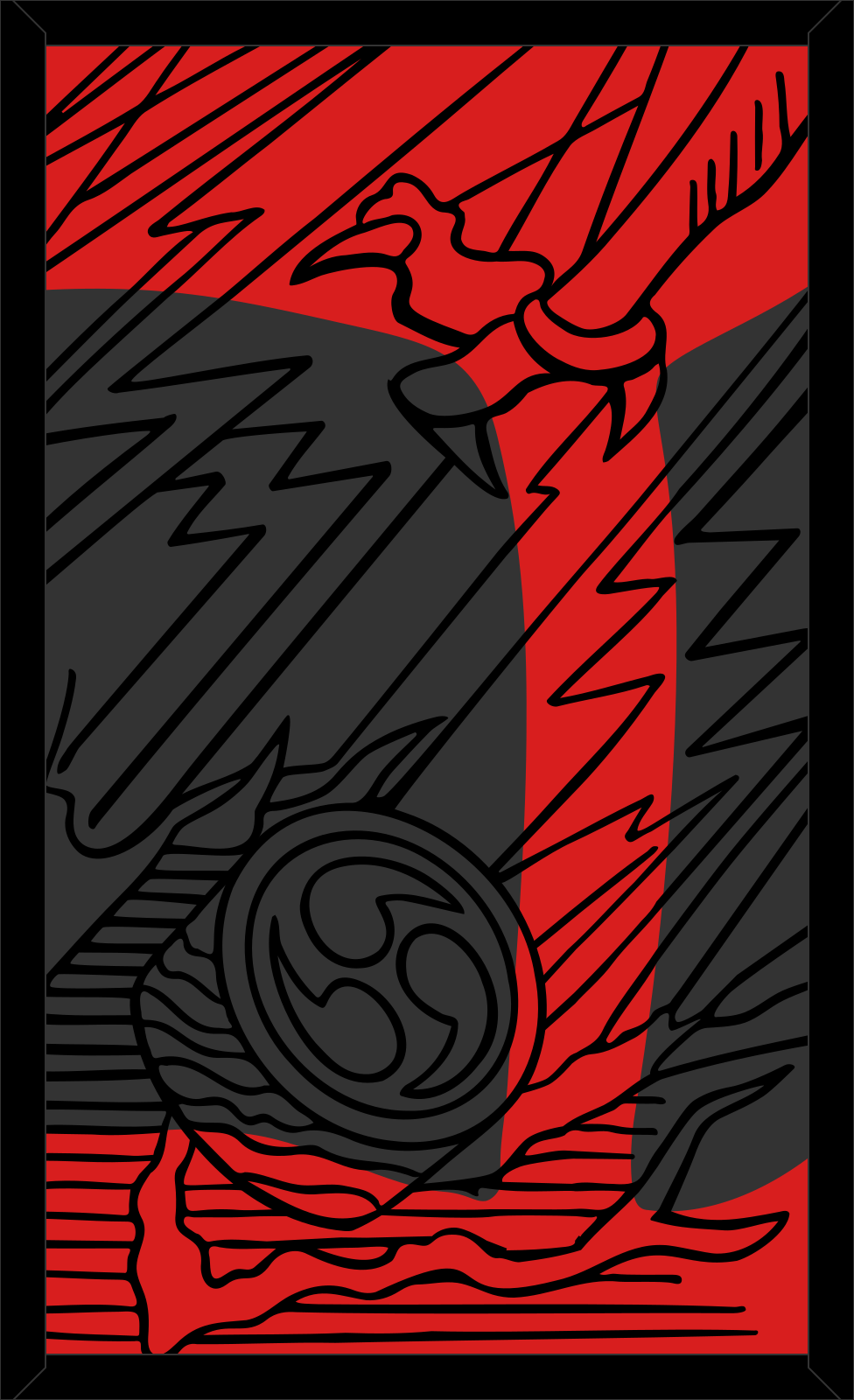
Lightning柳のカスyanagi no kasuPlain: counts for Kasu 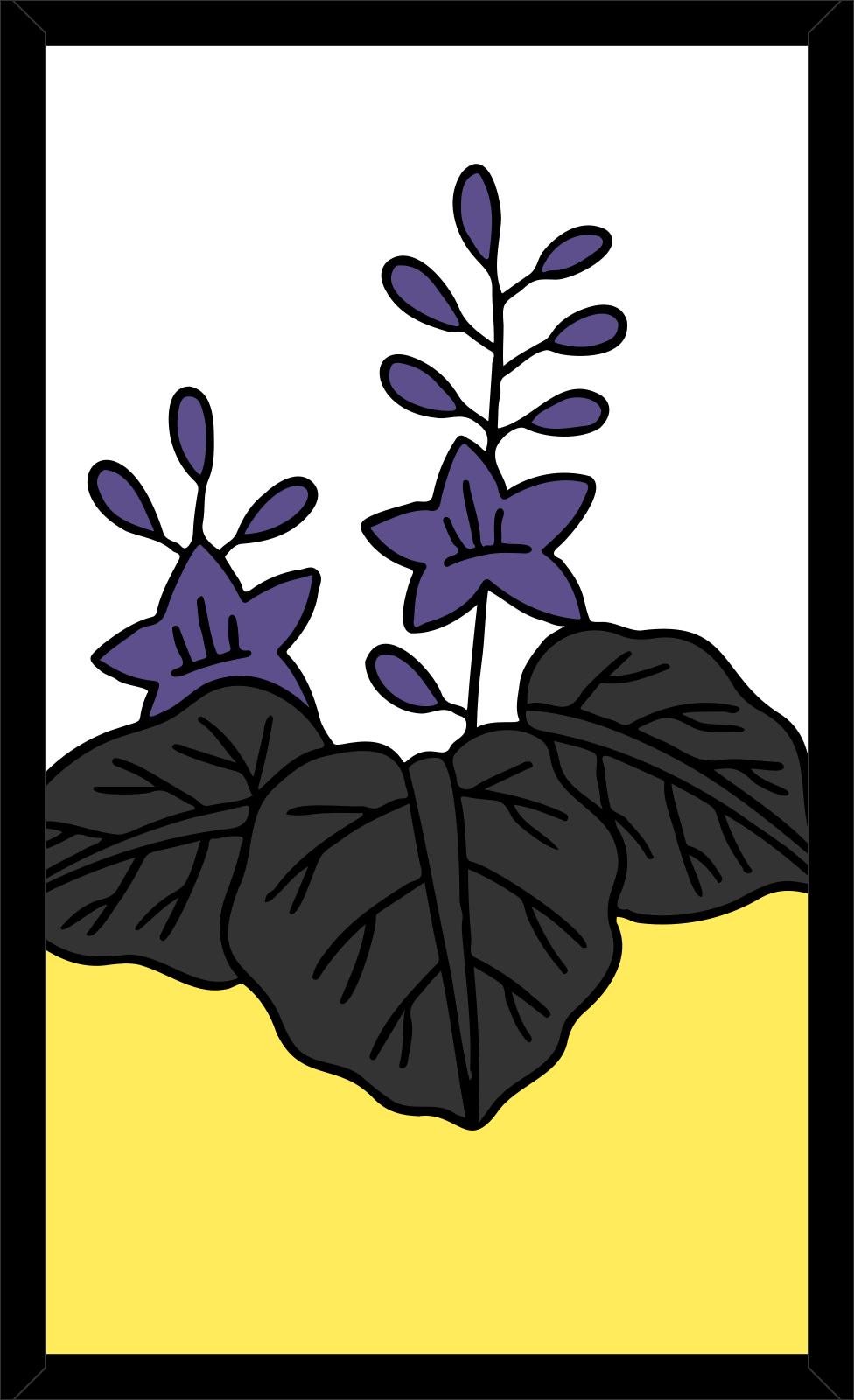
Paulownia plain桐のカスkiri no kasuPlain, despite its yellow band
- The Rain (yanagi ni Ono no Tōfū) is a light, but Sankō and Shikō are made without it. With it, four lights are Ame Shikō (7) and five are Gokō (10).
- The Sake cup (kiku ni sakazuki) counts for three yaku here: it is one of the nine animals and half of both viewing yaku. In this game it is never a plain; under Nintendo’s rules it is also one.
- The Lightning (yanagi no kasu) is the Willow’s plain: 1 point, one of the ten for Kasu.
- The yellow Paulownia plain looks different from the other two, but it is a plain.
Every card with its month and kind is on the card list, for example the Sake cup.
Remembering the yaku
- Lights count by number: three are 5, four are 8, five are 10, and a four with the Rain drops to 7. The lights are in months 1, 3, 8, 11 and 12.
- Most named sets are 5: Sankō, Inoshikachō, Akatan and Aotan are three cards each, and the two Sake cup yaku are two cards each. The two complete sets are 10: all five lights (Gokō) and all six poem and blue tanzaku (Chōfuku).
- Months for the tanzaku: the poem strips are the first three months; the blue ones are June, September and October.
- Inoshikachō is the name itself: ino (boar), shika (deer), chō (butterfly), from months 7, 10 and 6.
- Counting yaku are 5, 5 and 10: five animals, five tanzaku, ten plains, 1 point each and +1 per card after that.
- The dealt hands are 6 and end the round before it starts.
Sources
- こいこい|花札の歴史・遊びかた. Nintendo: Yaku points, the “void” notes on Tane and Tan, the Sake cup as a plain, 6 points for dealt hands.
- こいこい. Wikipedia (Japanese): Other point values, the +1 as an optional rule, both players dealt a hand yaku.
- Koi-Koi. Fuda Wiki: Yaku families, one yaku per family, older counting.
- Pine. Fuda Wiki: The akayoroshi poem strip.