
Koi-Koi house rules and variants
Last updated
Koi-Koi has no single official rulebook. Nintendo publishes a version that rule guides often refer to, and tables everywhere change parts of it. This page sets out each rule three ways, as Nintendo plays it, as other tables often play it, and as this game plays it, and says which ones you can change when you create a room.
The rules side by side
Each row names a rule on which rule sets disagree. “Common variants” are rules found in Japanese and English rule sources other than Nintendo’s; the sources are listed at the end of the page. The last column says whether you can change the rule for a room of your own.
| Rule | Nintendo | Common variants | This game | Room setting |
|---|---|---|---|---|
| Doubling a high total | ×2 when the yaku add up to 7 or more | 7 or more is the usual rule; some tables play without it | ×2 at 8 or more | Yes: “Double at 8+ points”, on by default (the 8 is fixed) |
| Koi-koi multiplier | After your koi-koi, an opponent who scores doubles their points | ×2 once (with the 7-point doubling ×4); ×2 per call (×2, ×4, ×8); calls + 1 | ×(1 + every call by both players this round), for whoever wins | Fixed |
| Calling koi-koi again | After a koi-koi, the next yaku by either player ends the round | Often as many calls as you like, by both players; some allow one | Any number of calls, by both players | Fixed |
| Sake cup as a plain (kasu) | Yes: it counts as a tane and as a plain | Both; or one or the other; or tane only | No: a tane only | Fixed |
| Flower and moon viewing | 5 points each | 5 or 3 points; not counted; only beside another yaku; cancelled by rain or fog | 5 points each, always | Fixed |
| Tane with Inoshikachō, Tan with Akatan or Aotan | Tane is void once Inoshikachō is made; Tan once Akatan or Aotan is | Void, or both count | Both count, each with its +1 for extra cards | Fixed |
| Hand yaku (Teshi, Kuttsuki) | 6 points; the round ends | The same; some tables leave them out and redeal | 6 points; the round ends | Fixed |
| Both players dealt a hand yaku | Not covered | Nobody scores | The dealer’s counts | Fixed |
| Four of a month on the table | Redeal | Redeal; or the dealer takes the four; or the dealer scores 6 | Redeal | Fixed |
| Four pairs on the table | Redeal when the table is lopsided; pairs not named | Redeal (Fuda Wiki, English Wikipedia); play on | Play on | Fixed |
| Playing a card that matches nothing while another could capture | Not spelled out | Allowed; some English guides require a capture | Allowed; a card with a match always captures | Fixed |
| First dealer | Each draws a card; the earlier month deals | The same; within one month the higher card | Earlier month, then the higher card; online, a coin flip | Fixed |
| Next dealer | The round winner | The round winner, or take turns | The round winner | Fixed |
| Nobody makes a yaku | No game; the deal passes to the other player | No score, same or other dealer; the dealer scores (oya-ken); the non-dealer scores (tsukazu) | No score; the dealer stays | Fixed |
| Match length | 12 rounds | 12, 6 or 3 rounds, or play to a target score | 6 or 12 rounds | Yes: 6 (default) or 12 |
| Keeping score | Running total; the higher total after 12 rounds wins | Running total; zero-sum (the loser pays) | 25 points each; the loser pays, at most what they have; 0 ends the match | Fixed |
| Yaku values | Gokō 10, Shikō 8, Ame Shikō 7, Sankō 5 … | Gokō 15, Sankō 6 and other values | Nintendo’s values | Fixed |
What a room can change
When you create a room you choose how many rounds it plays and two settings. The lobby’s practice button, under Create room, plays by the same choices, and the practice button on the home page starts a 6-round game with the settings last used for practice on that device (both on, if you never changed them).
| Setting (choices) | What it does |
|---|---|
| Rounds6 or 12 (default 6) | How long the match lasts, unless a player runs out of points first. |
| Double at 8+ pointsOn or off (default on) | On: a round total of 8 points or more is doubled, and koi-koi calls multiply it too. Off: only koi-koi calls multiply a round. |
| Assisted highlightingOn or off (default on) | Display only: cards that can capture shine, and a picked card lights up its matches. The rules and the score are the same either way. |
Public or private and the optional password decide who can find and join a room; they are not rules. In an online match the room’s rounds and settings are bound into the handshake between the two players’ devices, and a device that reads different settings fails it, so both tables always play by the same rules. The lobby shows them on every listed room (“×2 at 8+” or “No ×2 at 8+”). There is no setting for doubling at 7 and no Nintendo preset: every rule marked “Fixed” above is the same in every game.
Nintendo’s rules
Nintendo publishes Koi-Koi rules on its Japanese hanafuda site[1]. One Japanese rules site notes that Koi-Koi has no official rules as such, and that Nintendo’s are the ones often referred to[10]. In short, Nintendo’s rules say:
- Two players, 12 rounds; the player with the higher total after 12 rounds wins.
- Each player turns over a card and the earlier month deals first. Eight cards go to the table and eight to each hand, two at a time; if the table is lopsided, for example with four cards of one month, the cards are dealt again.
- Being dealt four cards of a month, or four pairs, scores 6 points and ends the round.
- The first player to make a yaku wins the round, unless they call koi-koi. After a koi-koi the round ends as soon as either player makes a yaku; if it is the opponent, the caller scores 0 and the opponent’s total is doubled.
- A total of 7 points or more is doubled. The winner deals the next round; if nobody makes a yaku, the round is a no-game and the deal passes to the other player.
- In the yaku table, the Sake cup also counts as a plain (kasu), Tane is void once Inoshikachō is made, and Tan is void once Akatan or Aotan is made.
The yaku themselves and their points are exactly Nintendo’s: see the list of yaku.
Doubling at 7 points, or 8
Nintendo’s page says: if the total is 7 points or more, the score is doubled[1]. Japanese Wikipedia gives the same rule and notes that some tables do not use it[2], and Fuda Wiki says the 7-point doubling began as a house rule before most rule sets took it in[4]. Japanese players also count points in mon (文), and call the rule 7文倍付, “doubling at seven mon”[9].
This game doubles a round total of 8 points or more. It is a room setting, on by default; with it off, nothing is doubled for its size and only koi-koi calls multiply a round. The 8 is this game’s own threshold: none of the rule sets cited on this page uses it. The difference shows in hands worth exactly 7, which Nintendo doubles and this game does not:
| Captures | Nintendo | This game |
|---|---|---|
| Rain Four Lights (Ame Shikō) | 7 × 2 = 14 | 7 |
| Four Lights (Shikō) | 8 × 2 = 16 | 8 × 2 = 16 |
| Sankō, your koi-koi, then Shikō | 8 × 2 = 16 (the call does not raise your own score) | 8 × 2 × 2 = 32; with doubling off, 8 × 2 = 16 |
The scoring page shows how the doubling combines with the koi-koi multiplier.
The koi-koi multiplier and how often you may call
Under Nintendo’s rules, once you call koi-koi, the round ends as soon as either player makes a yaku. If your opponent makes it, you score nothing and their total is doubled[1]. Other rule sets handle it differently[2][4]:
- The opponent’s score is doubled once, however often you called. Japanese sites call it baigaeshi (倍返し) or koi-kaburi (こい被り), and with the 7-point doubling it makes ×4[7][9].
- Koi-bai (こい倍): every call doubles again, ×2, ×4, ×8.
- Fuda Wiki lists ×2 only when the scorer called, ×2 when anyone called, and a multiplier of the number of calls plus one.
- On how often you may call, English Wikipedia notes that some versions allow one koi-koi per round and others several[5]; Fuda Wiki mentions tables that allow a call only after a new yaku, not after a higher count.
This game uses one shared multiplier: 1 plus every koi-koi call made this round by both players, applied to whoever wins the round, the caller included. It starts again at ×1 every round. Both players may call as often as they like; after a call you can stop again only when your total rises, with a new yaku or a +1 for an extra card. On the last turn, when both hands are empty, only Shōbu is offered.
| Calls | This game | Koi-bai | Nintendo |
|---|---|---|---|
| 0 | ×1 | ×1 | ×1 |
| 1 | ×2 | ×2 | ×2, only if the caller’s opponent wins |
| 2 | ×3 | ×4 | Does not arise |
| 3 | ×4 | ×8 | Does not arise |
An example: you make Tsukimi de ippai (5) and call koi-koi; your opponent makes a yaku and calls too; then you take the Curtain for Hanami de ippai. Your 10 points are doubled for reaching 8 and tripled for the two calls: 10 × 2 × 3 = 60, paid up to what your opponent has left. So every call, by either player, makes the round worth more to whoever wins it.
The Sake cup, flower viewing and moon viewing
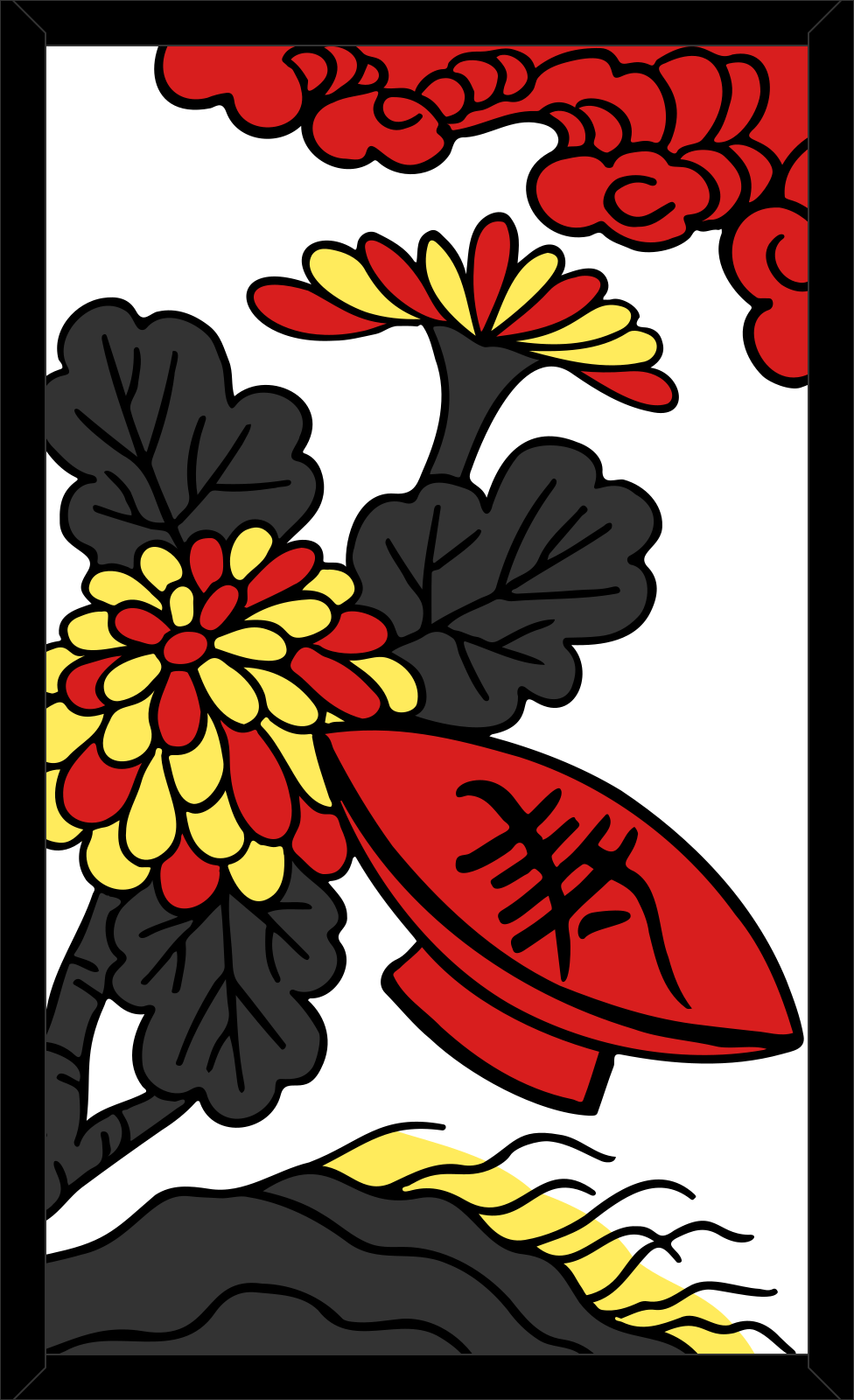
Sake cup菊に盃September · Animal (tane) · 10 pts 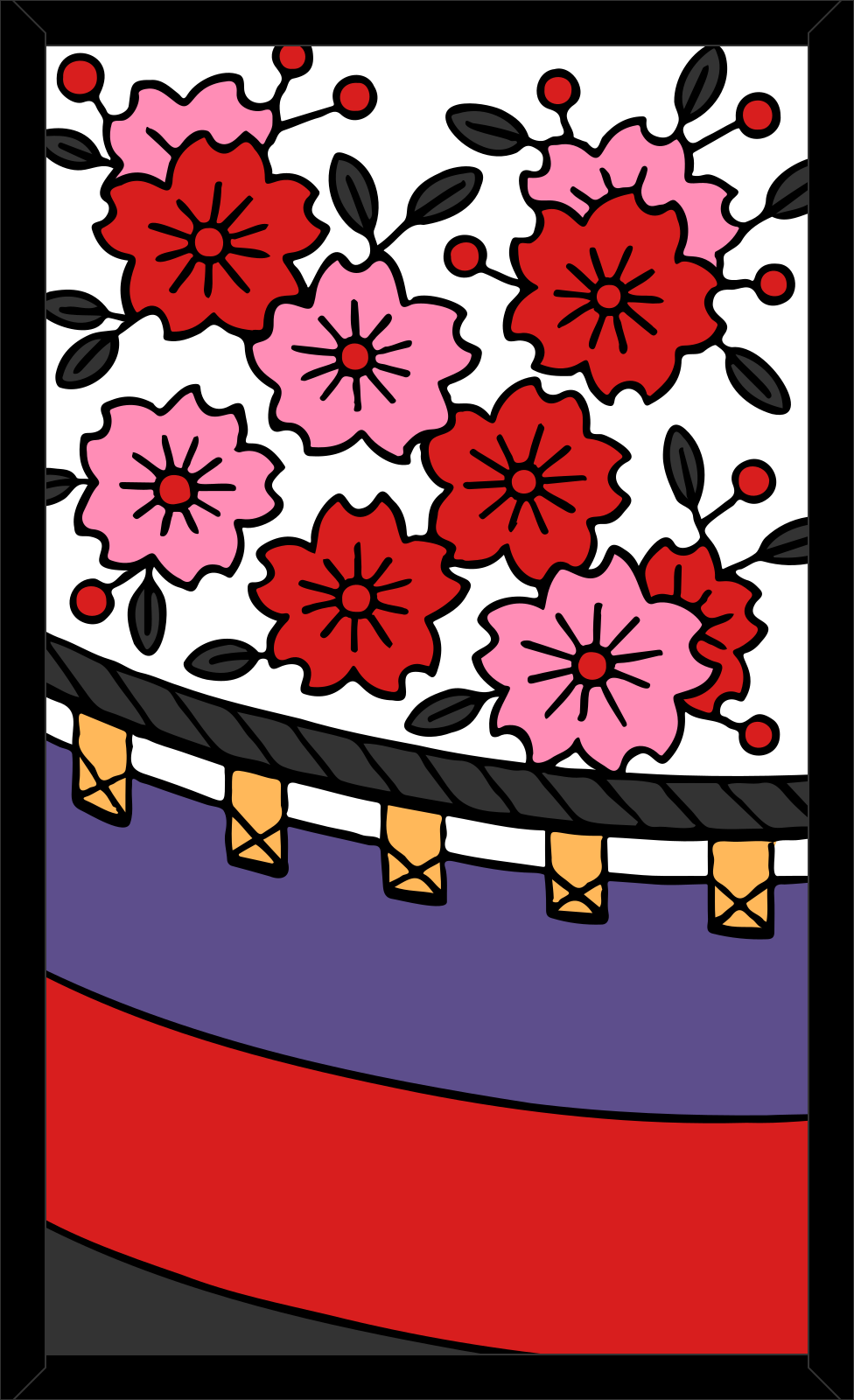
Curtain桜に幕March · Light (hikari) · 20 pts 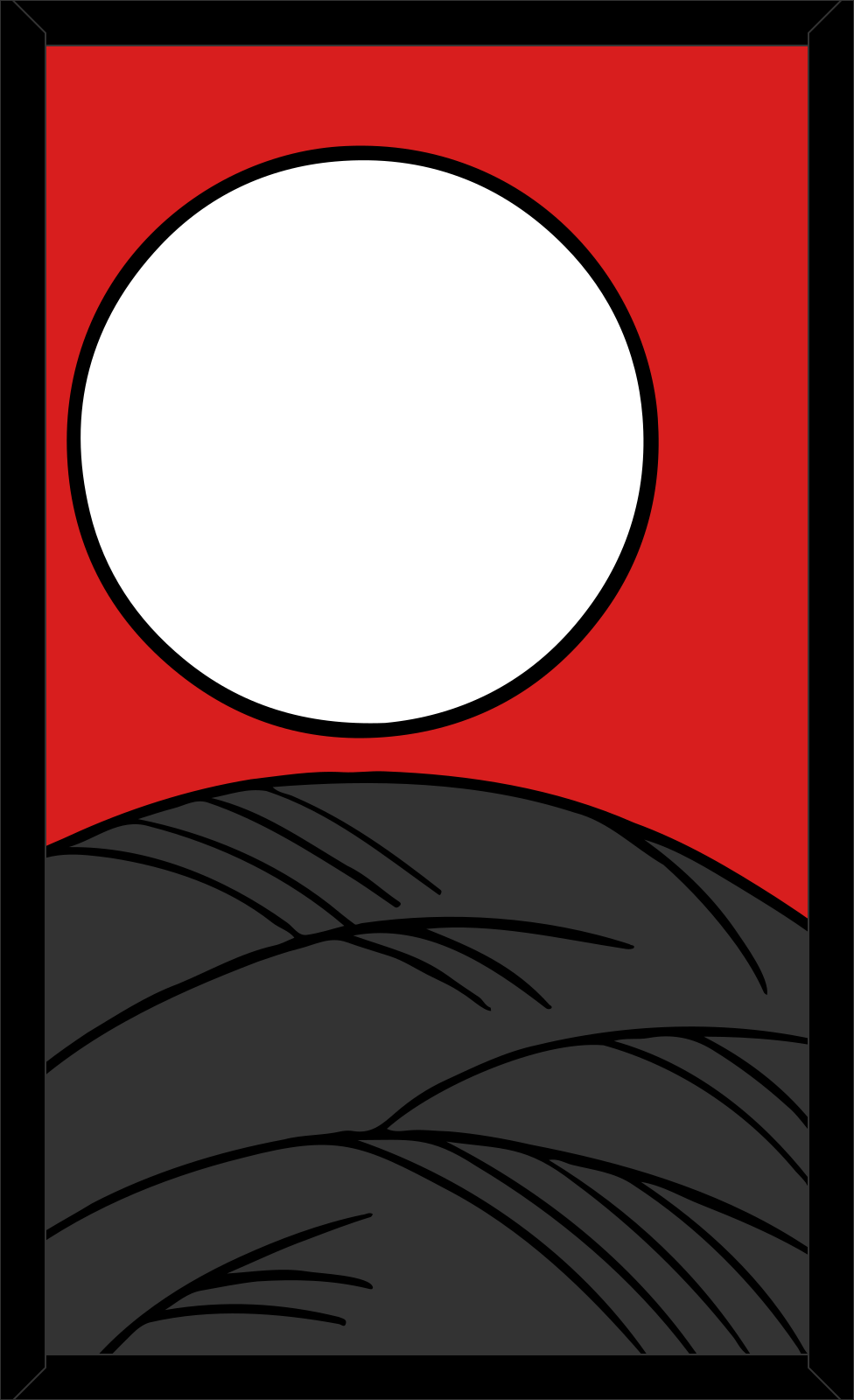
Moon芒に月August · Light (hikari) · 20 pts
The Chrysanthemum with Sake cup (菊に盃, kiku ni sakazuki) is a tane (animal) card that also completes Hanami de ippai with the Curtain and Tsukimi de ippai with the Moon. Where it also counts as a plain it can serve four yaku at once, and Fuda Wiki notes that many house rules exist to tame it[4].
As a plain (kasu)
Nintendo counts the Sake cup as a plain (kasu) as well as a tane[1], and Japanese Wikipedia calls a card that stands in for another a bakefuda (化札), and links this one to the Chrysanthemum Festival on the ninth day of the ninth month[3]. Other tables let it count as one or the other but not both, or as a tane only[4]. This game counts it only as a tane: nine plains and the Sake cup make Kasu under Nintendo’s rules, and nothing here.
Hanami and Tsukimi
Nintendo and this game give 5 points each to Hanami de ippai (Hanami-zake) and Tsukimi de ippai (Tsukimi-zake). Japanese Wikipedia also lists 3 points, notes that some rules leave both out, and describes a combined yaku of Curtain, Moon and Sake cup worth 10 in place of the two[2]. Fuda Wiki adds tables that count them only beside another yaku, and notes that many video games let you switch them off[4].
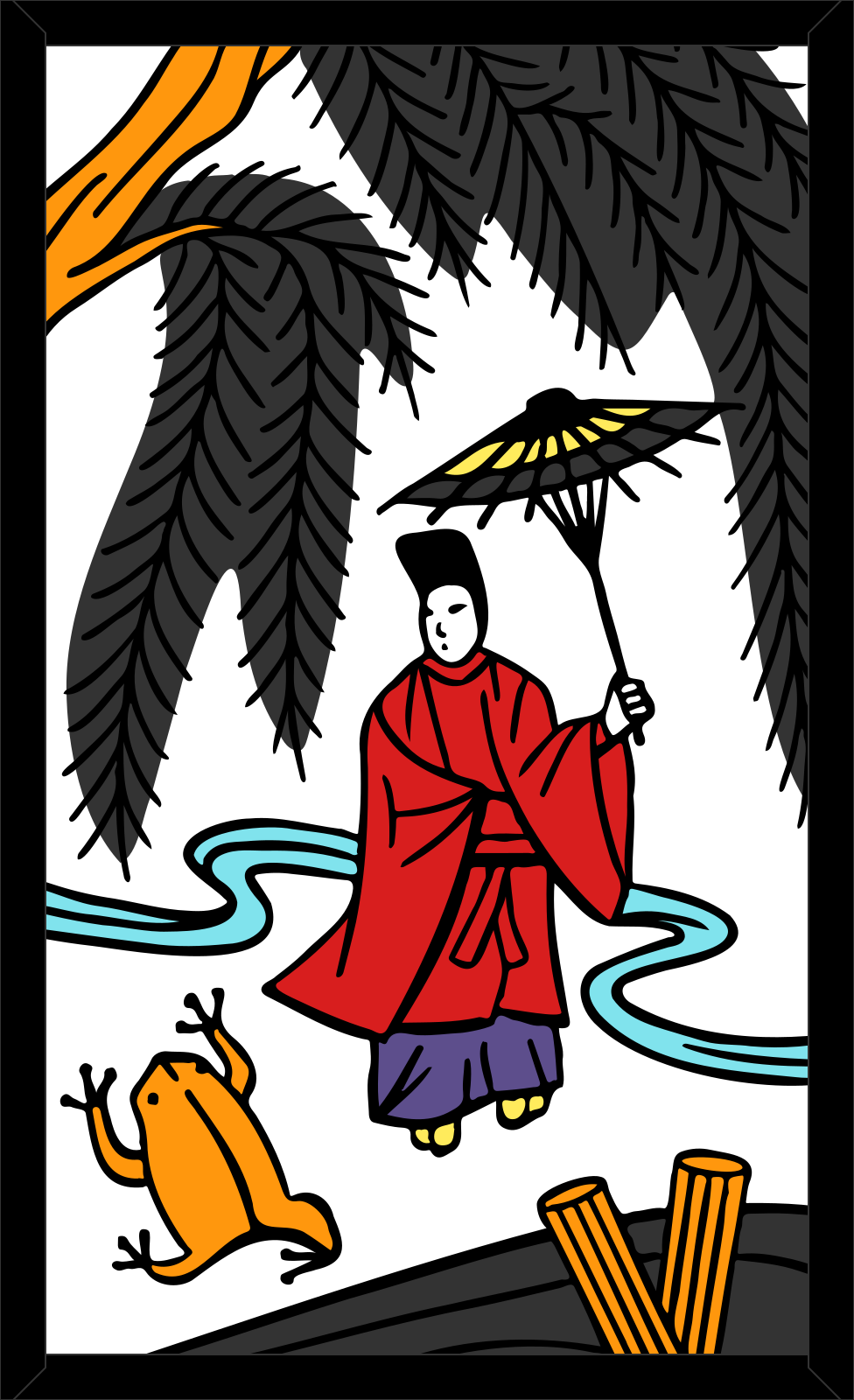
Rain 
Swallow 
Red tanzaku 
Lightning 
Phoenix
Ame-nagare (雨流れ, “rained out”) lets a Willow card, the rain month, cancel the viewing yaku, and kiri-nagare (霧流れ, “fogged out”) does the same with a Paulownia card[8]. Versions differ in which card counts, whether it must be captured or only lie on the table, and which viewing yaku it spoils. Fuda Wiki describes Willow cards on the table spoiling the flower viewing and Paulownia cards on the table spoiling the moon viewing[4]; Board Game Arena cancels both for a player who captures a November card[6]. This game uses none of these: Hanami and Tsukimi always score 5.
Tane and Tan beside Inoshikachō, Akatan and Aotan
Boar 
Deer 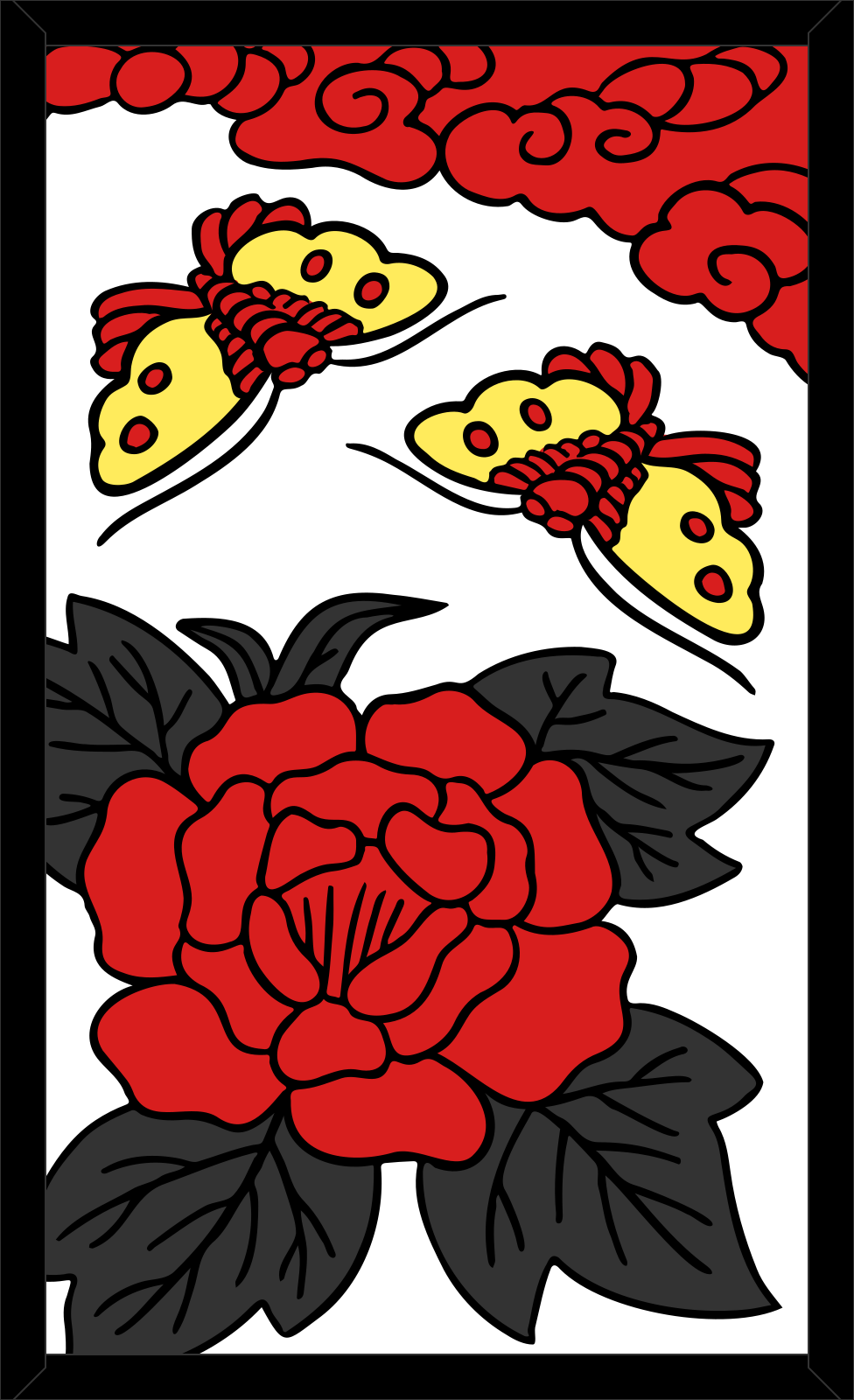
Butterflies 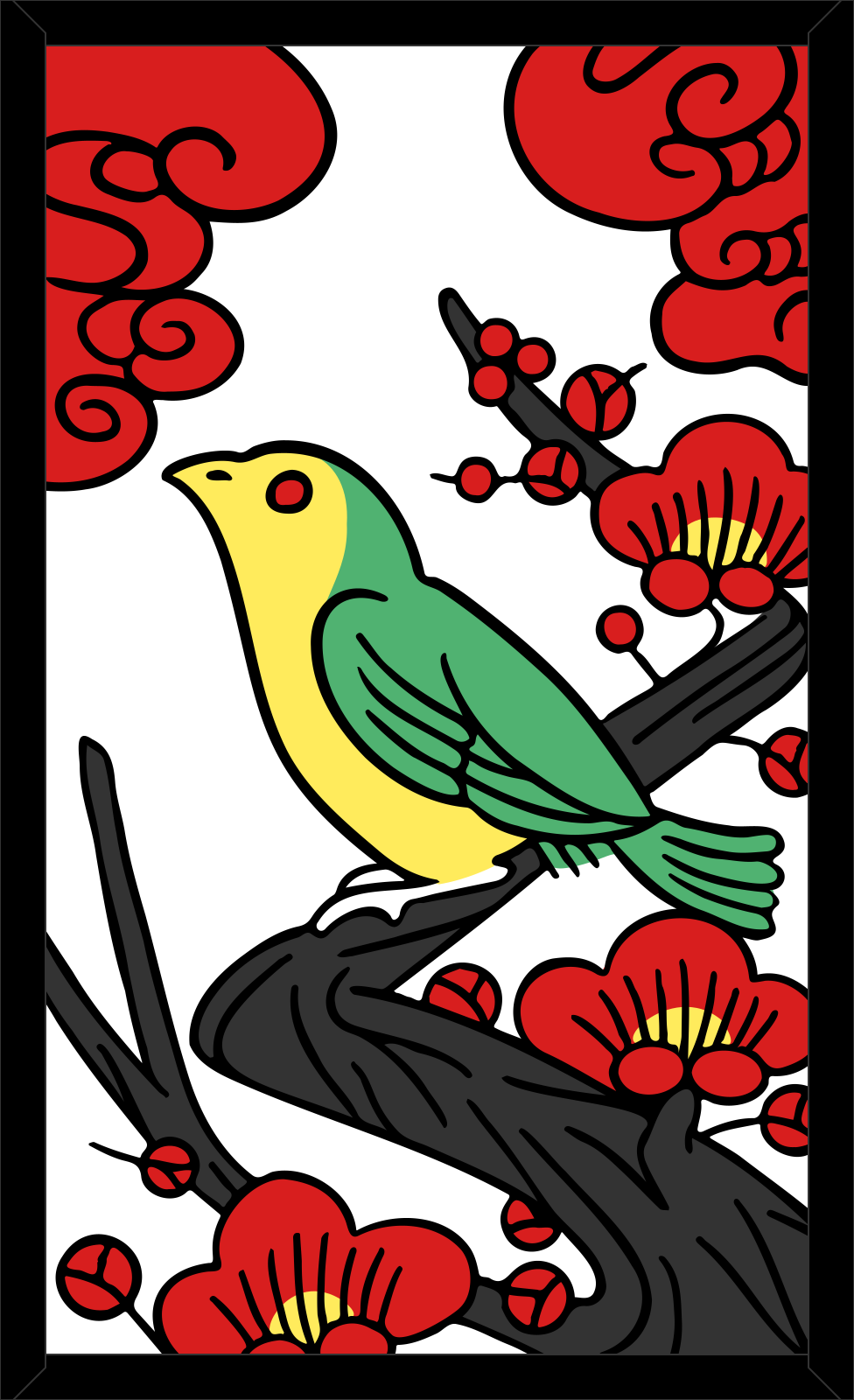
Nightingale 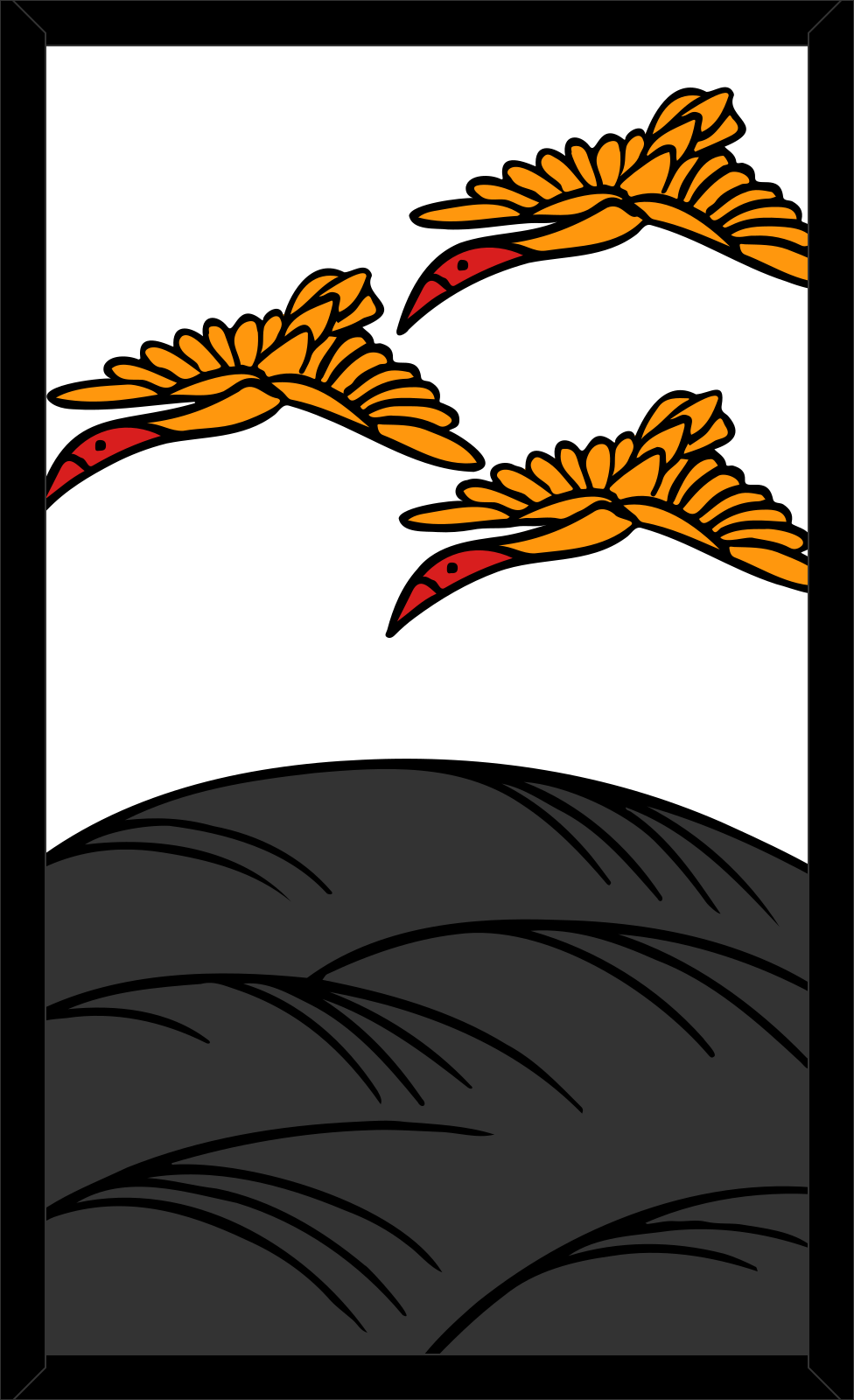
Geese
Nintendo’s yaku table gives Inoshikachō 5 points plus 1 for each other tane card, and marks Tane (five tane cards, 1 point) as void once Inoshikachō is made; Tan (five tanzaku) is void once Akatan or Aotan is made[1]. Fuda Wiki’s modern table also counts only the best yaku of each group, while older rules it describes drop the extra points and let the yaku add up[4]. Some Japanese rule sites let both count[7].
This game lets both count, each with its extra points: a card can serve Inoshikachō and Tane, or Akatan, Aotan and Tan, at the same time.
| Captures | Nintendo | This game |
|---|---|---|
| Inoshikachō and two other tane | Inoshikachō 5 + 2 = 7, Tane void → 7 × 2 = 14 | Inoshikachō 7 + Tane 1 = 8 → 8 × 2 = 16 |
| Akatan and two other tanzaku | Akatan 5 + 2 = 7, Tan void → 7 × 2 = 14 | Akatan 7 + Tan 1 = 8 → 8 × 2 = 16 |
| Akatan, Aotan and one other tanzaku | Chōfuku 10 + 1 = 11, Tan void → 11 × 2 = 22 | Chōfuku 11 + Tan 3 = 14 → 14 × 2 = 28 |
Counting only the best yaku stops one card from scoring twice; letting them add up rewards collecting every card of a kind.
Hand yaku, and when both players have one
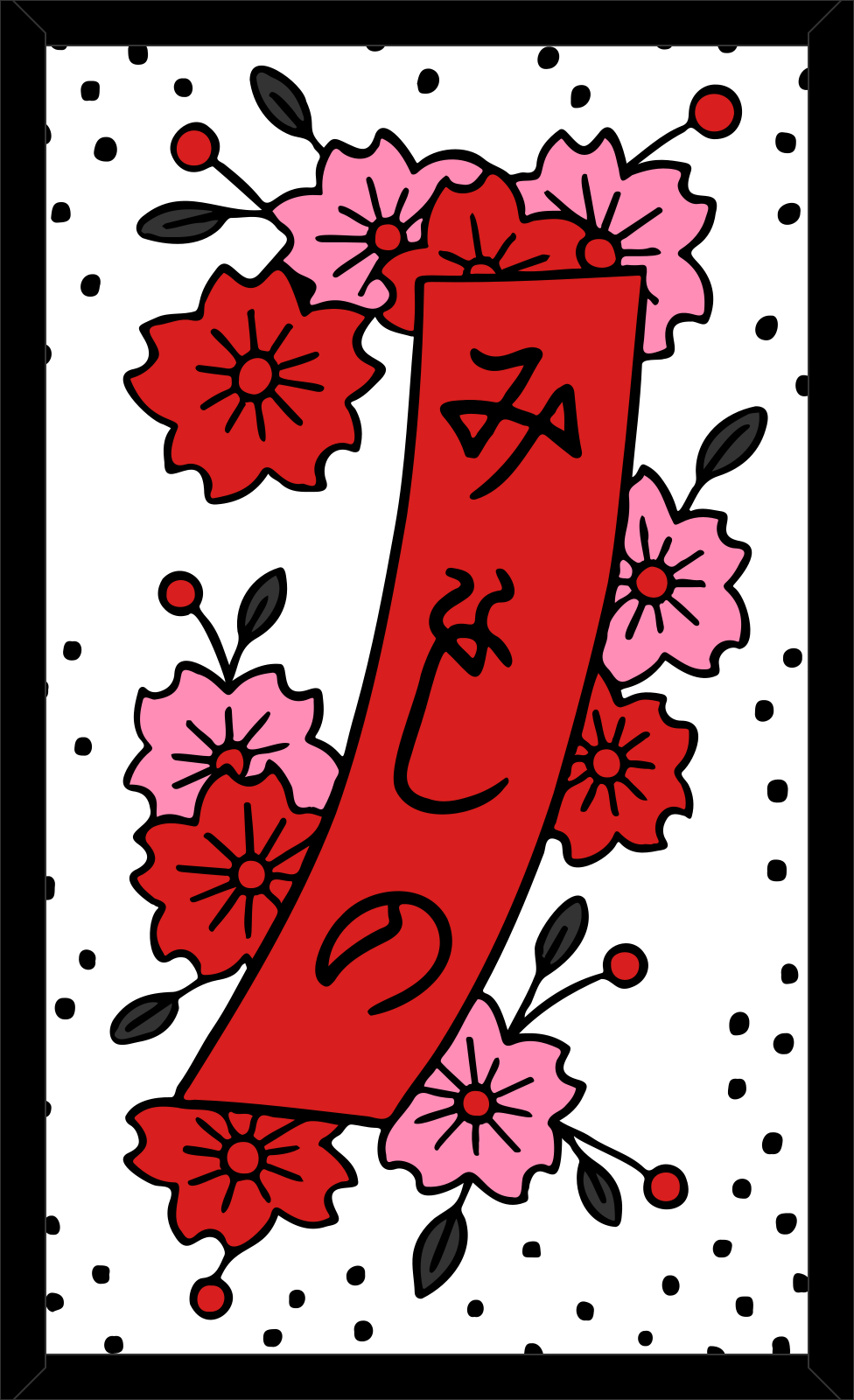
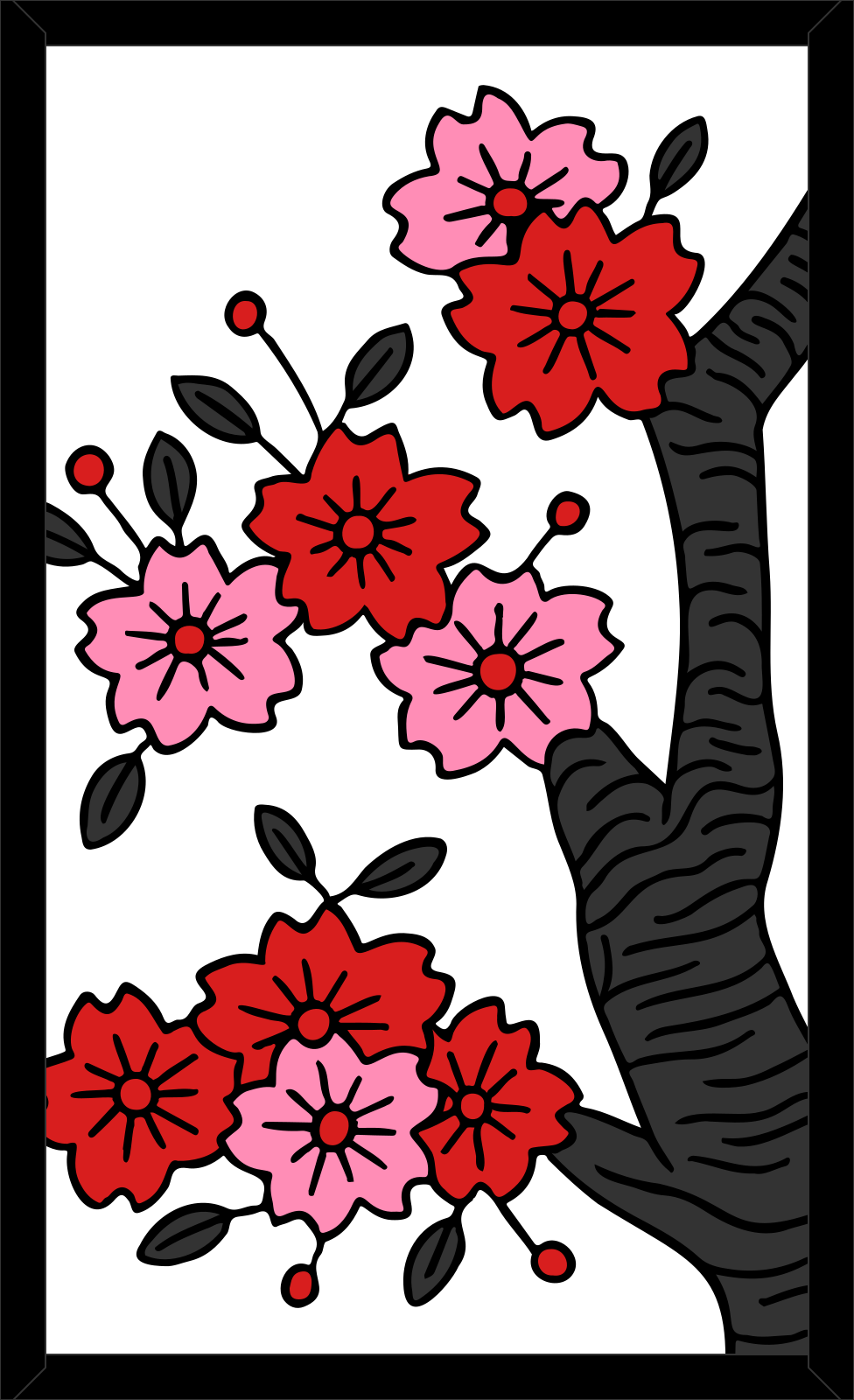
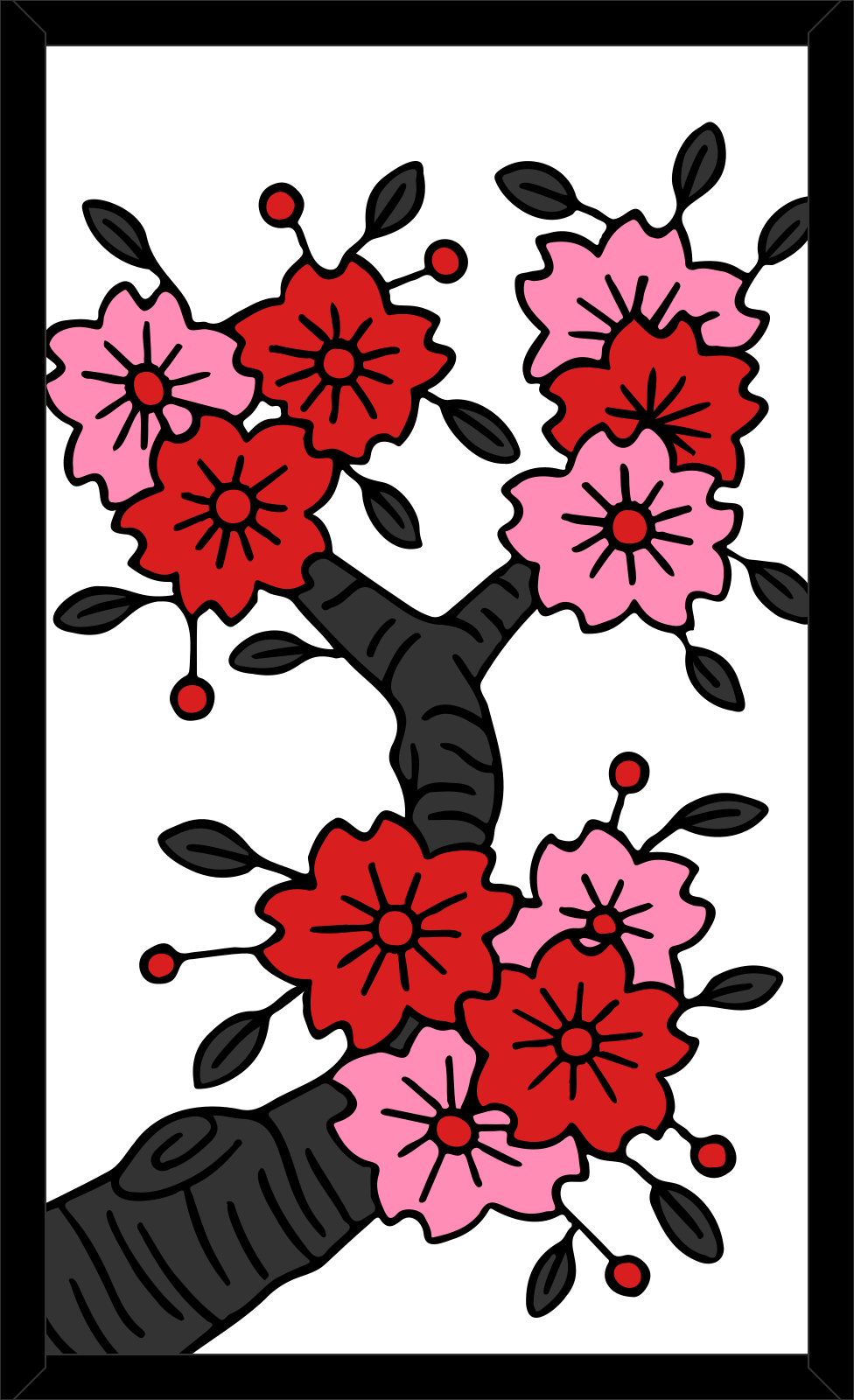
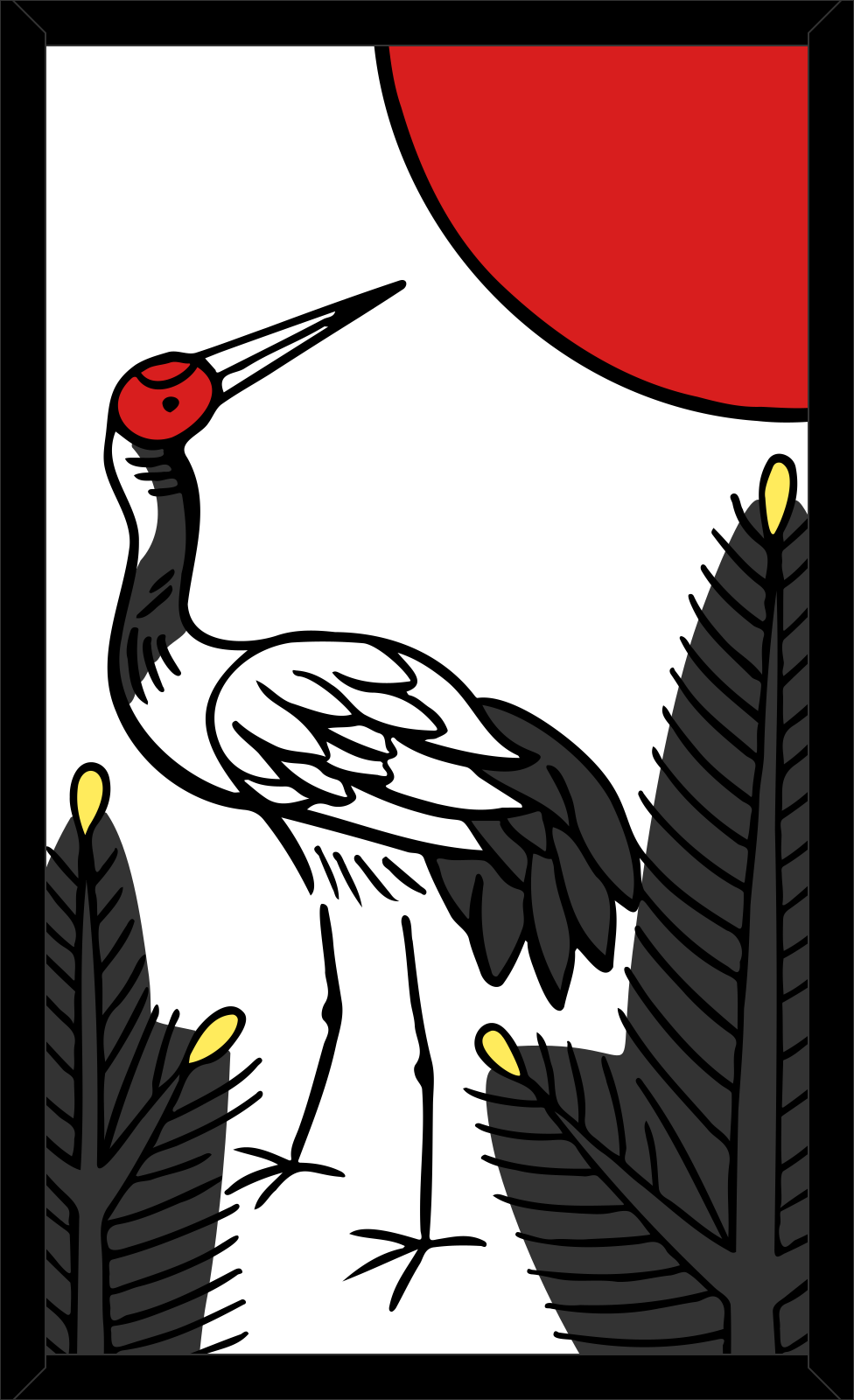
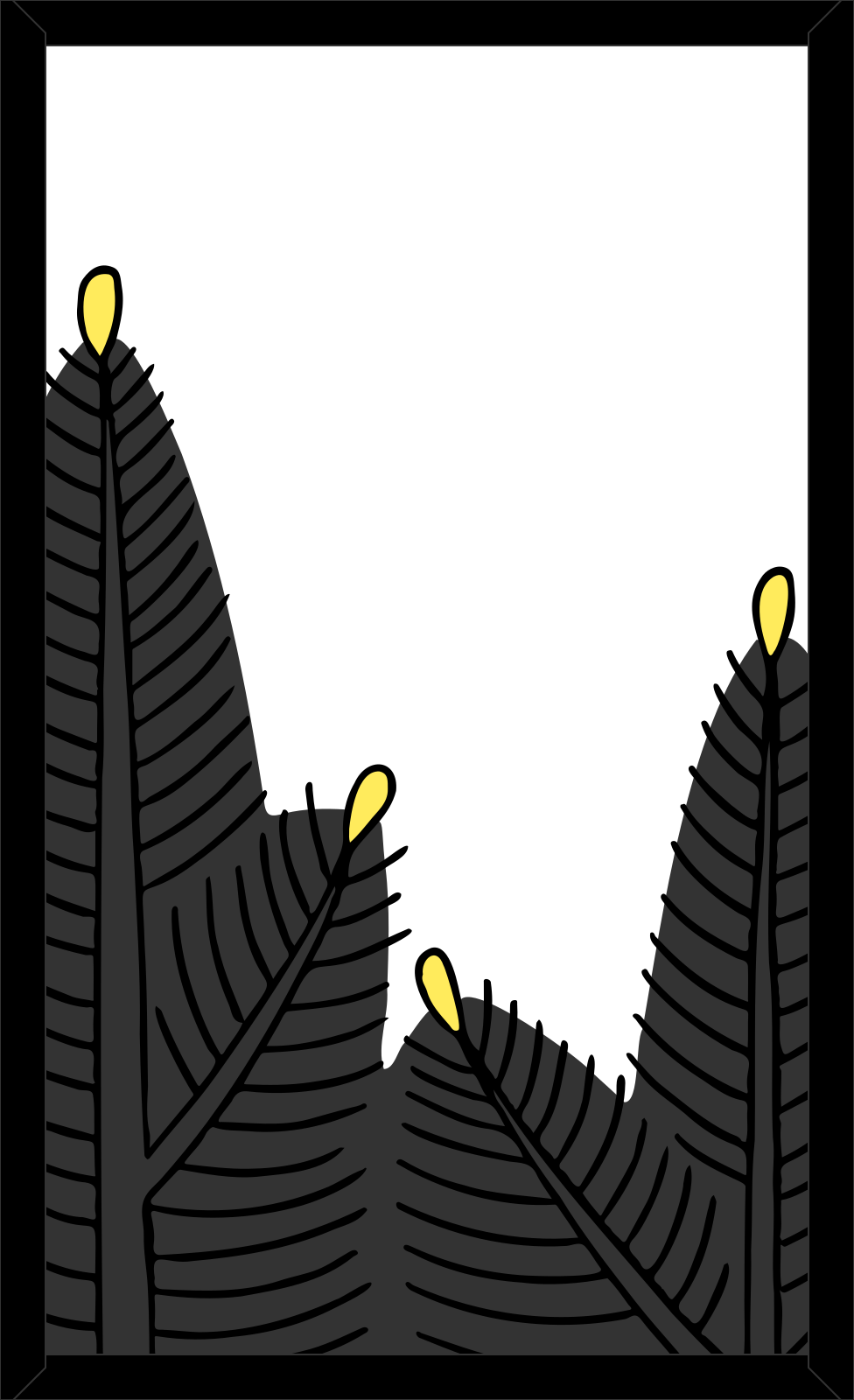



A hand dealt with all four cards of one month (Teshi, 手四) or with four pairs (Kuttsuki) scores 6 points and ends the round before anyone plays: Nintendo, the common rules and this game agree[1][2]. Japanese Wikipedia adds that some tables do not use hand yaku and usually redeal instead[2].
Nintendo does not say what happens when both players are dealt one. Japanese Wikipedia gives neither player any points, and Fuda Wiki treats it as a drawn round with the same dealer[2][4]. This game checks the dealer’s hand first, and the dealer’s hand yaku counts. A hand yaku is scored like any round: 6 points (below the 8-point doubling, and no koi-koi has been called), paid up to what the other player has left, and its holder deals next. A hand with four cards of one month and two pairs counts as Teshi. The rules page shows the hand yaku in play.
Redeals
Moon Geese 
Pampas plain 
Pampas plain
If all four cards of one month land on the table, no card is left in the deck to capture them. Nintendo, Japanese Wikipedia and this game deal again[1][2]. Fuda Wiki also lists letting the dealer take the four and dealing four more to the table, or giving the dealer the round for 6 points[4].
Nintendo asks for a redeal when the table is “lopsided, such as four cards of one month”, without naming other cases. Fuda Wiki and English Wikipedia also redeal when the table shows four pairs, the Kuttsuki pattern[4][5], and Fuda Wiki lists playing on as a variant. This game plays on with four pairs on the table; only four of one month forces a redeal. Three cards of one month on the table are no reason to redeal anywhere: the fourth card takes all three.
The dealer
The dealer (oya, 親) plays first in every round. For the first round, each player turns over a card and the earlier month deals; Nintendo puts the two cards back in the deck[1]. Japanese Wikipedia and Fuda Wiki add that within one month the card worth more deals[2][4]. This game does the same against the computer, and two plains of one month mean drawing again. Online, a coin flip picks the first dealer: the room’s creator commits to a random value before the other player sends theirs, and reveals it only afterwards, so neither player can steer the result.
After that, the round winner deals the next round under Nintendo’s rules and in this game; some tables take turns instead[2].
When both hands run out and nobody has called Shōbu, Nintendo calls the round a no-game and passes the deal to the other player[1]. Japanese Wikipedia describes no score as usual, with the dealer either staying or changing, and two variants that do score: oya-ken (親権), where the dealer wins the round, and tsukazu, where the other player does[2]. The dealer’s points under oya-ken vary: 1 in English Wikipedia, 6 on some Japanese sites, “typically 1 or 6” in Fuda Wiki[5][7][4]. This game scores nothing and the dealer stays, also when a player called koi-koi and never raised their total.
Match length and keeping score
Nintendo plays 12 rounds and adds up each player’s scores; the higher total wins[1]. Fuda Wiki calls 12 rounds, one for each month, a year, 6 rounds a half-year and 3 a season[4]; the Japanese terms are nen (年) or don for 12 rounds, han-don (半どん) for 6 and ki (季) for a unit of 3[3]. Other tables play to a target score[2], and Fuda Wiki lists zero-sum scoring, in which the winner’s points come out of the loser’s score[4].
This game plays 6 or 12 rounds, chosen with the room, and keeps score in a pool:
- Both players start with 25 points.
- The loser of a round pays the winner the round’s score, at most what they have left.
- A player who reaches 0 loses at once, even before the last round.
- Otherwise the player with more points after the last round wins; equal points make a drawn match.
The pool is this game’s own format, not one taken from a published rule set. One large koi-koi can end a match early: a player with 12 points left who loses a round worth 40 pays 12, and the match is over.
Other variants you may meet
- Yaku values. Fuda Wiki calls 15 the most common value for Gokō and 6 for Sankō, and Japanese Wikipedia lists other values beside Nintendo’s[4][2]. This game uses Nintendo’s values throughout.
- Capturing. Here, as in Fuda Wiki, you may play a card that matches nothing even while another card in your hand could capture; Board Game Arena and English Wikipedia require a capture whenever one is possible[6][5].
- Cards of the month. Some 12-round games score all four cards of the round’s month as a yaku[4]. Not used here.
- Field multipliers. Borrowed from Hachi-hachi: each Light dealt to the table raises the round’s multiplier[4]. Not used here.
- Three wins in a season. Japanese Wikipedia mentions an option that doubles the score of a player who wins three rounds in a row within a season of three rounds[3]. Not used here.
- A minimum for koi-koi. Borrowed from Go-Stop: you may call only with a certain number of points[4]. Not used here.
Japanese Wikipedia advises players to check the local rules with each other before they start[2]. In this game only the rounds and the 8-point doubling are chosen, and both are shown before anyone joins: in the lobby’s list of rooms and on the join screen.
Sources
- こいこい|花札の歴史・遊びかた. Nintendo: Nintendo’s rules and yaku table
- こいこい. Wikipedia (Japanese): common rules and their variants
- 花札. Wikipedia (Japanese): bakefuda; year, half year and season
- Koi-Koi. Fuda Wiki: rules and a long list of variations
- Koi-Koi. Wikipedia: redeals, oya-ken, capturing
- Gamehelpkoikoi. Board Game Arena: capturing; “rain ruins the party”
- 花札「こいこい」のルール. 攻略大百科: baigaeshi; stacking; oya-ken of 6 points
- 花札の「雨流れ」と「日の出」とは?(+霧流れ). サザノノ: ame-nagare and kiri-nagare
- 花札こいこいの点数計算|役の合計→7文倍付→こい被りまで(例つき). サザノノ: seven-mon doubling and koi-kaburi
- こいこいのルール. 花札forモバイル: no official rules; Nintendo’s as the usual reference