
What is hanafuda?
Last updated
Hanafuda (花札, “flower cards”) are Japanese playing cards: a deck of 48 small, stiff cards with no numbers on them. Each month of the year has four cards drawn with its own flower or plant, so the pictures tell you which cards belong together, and most hanafuda games are about matching cards of the same month. Koi-Koi, a game for two, is one of them, and the one you can play on this site.
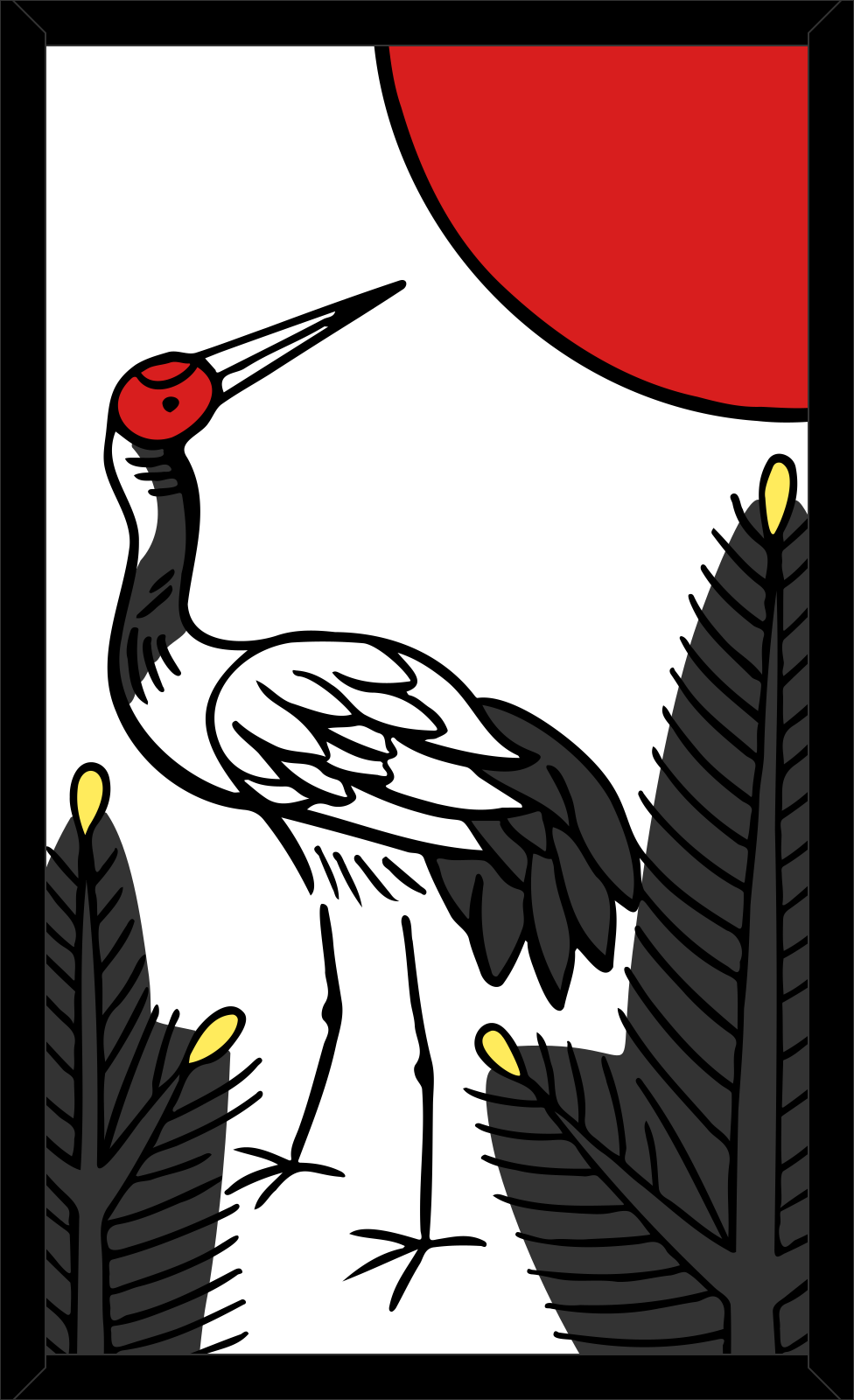
CraneJanuary 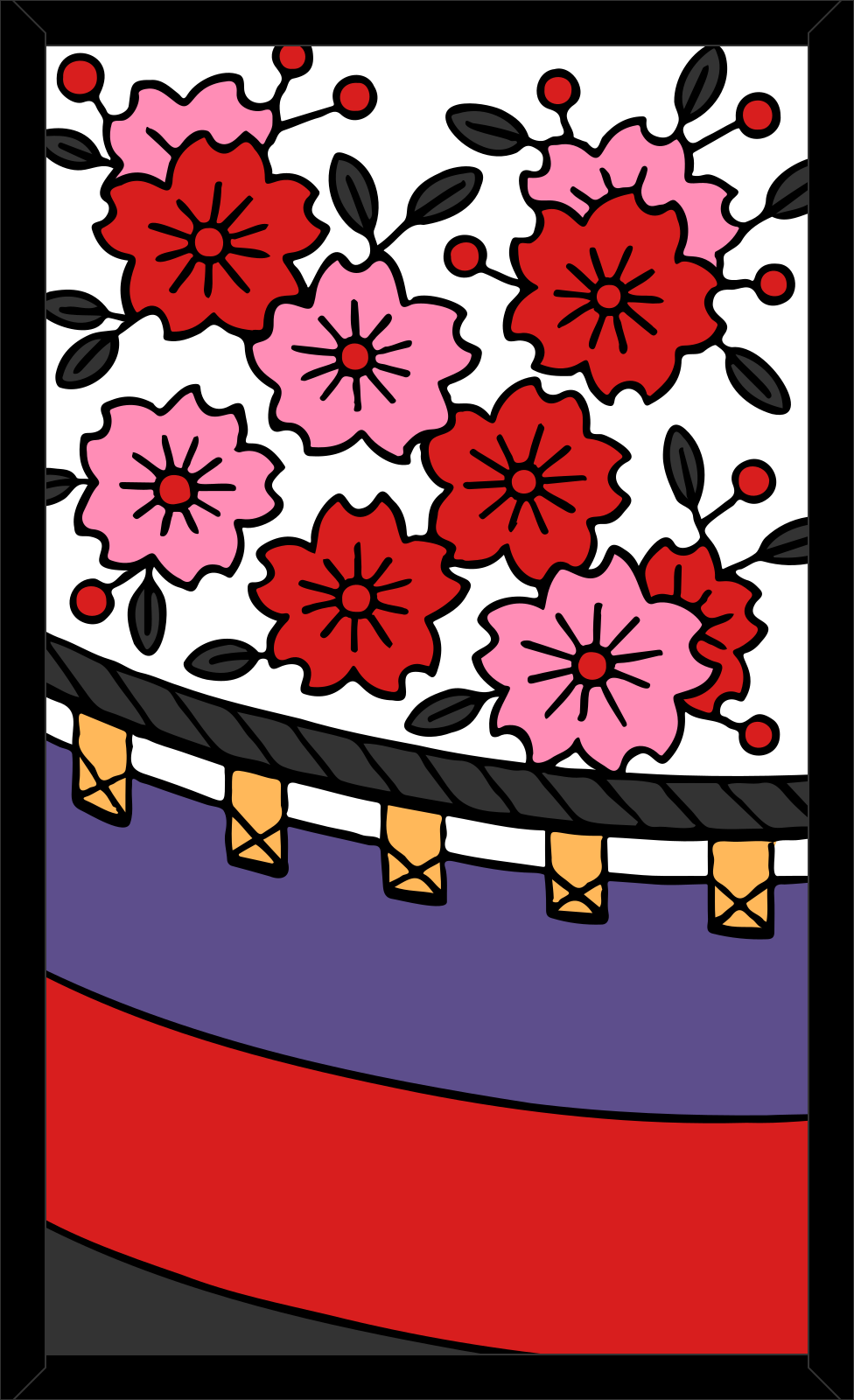
CurtainMarch 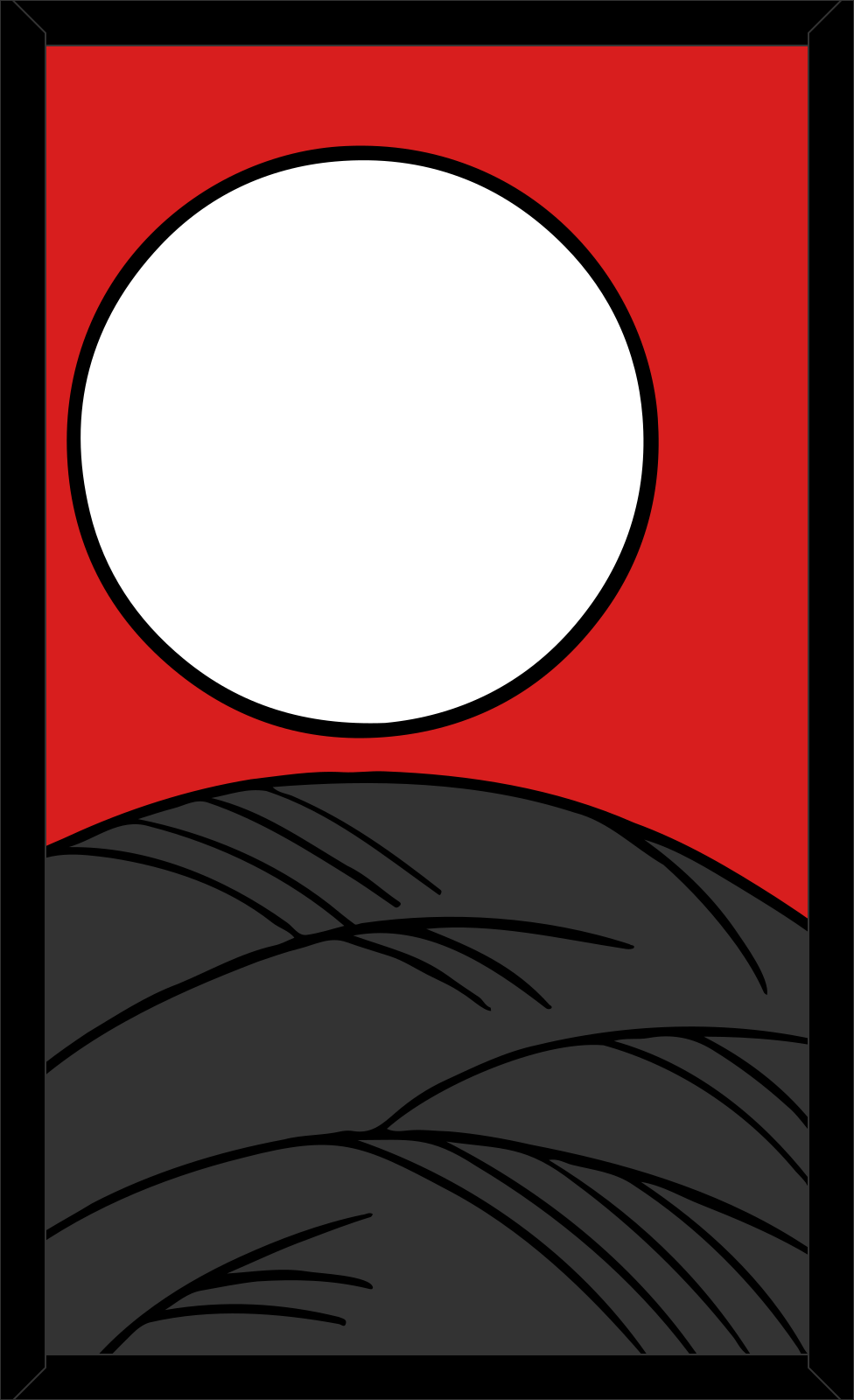
MoonAugust 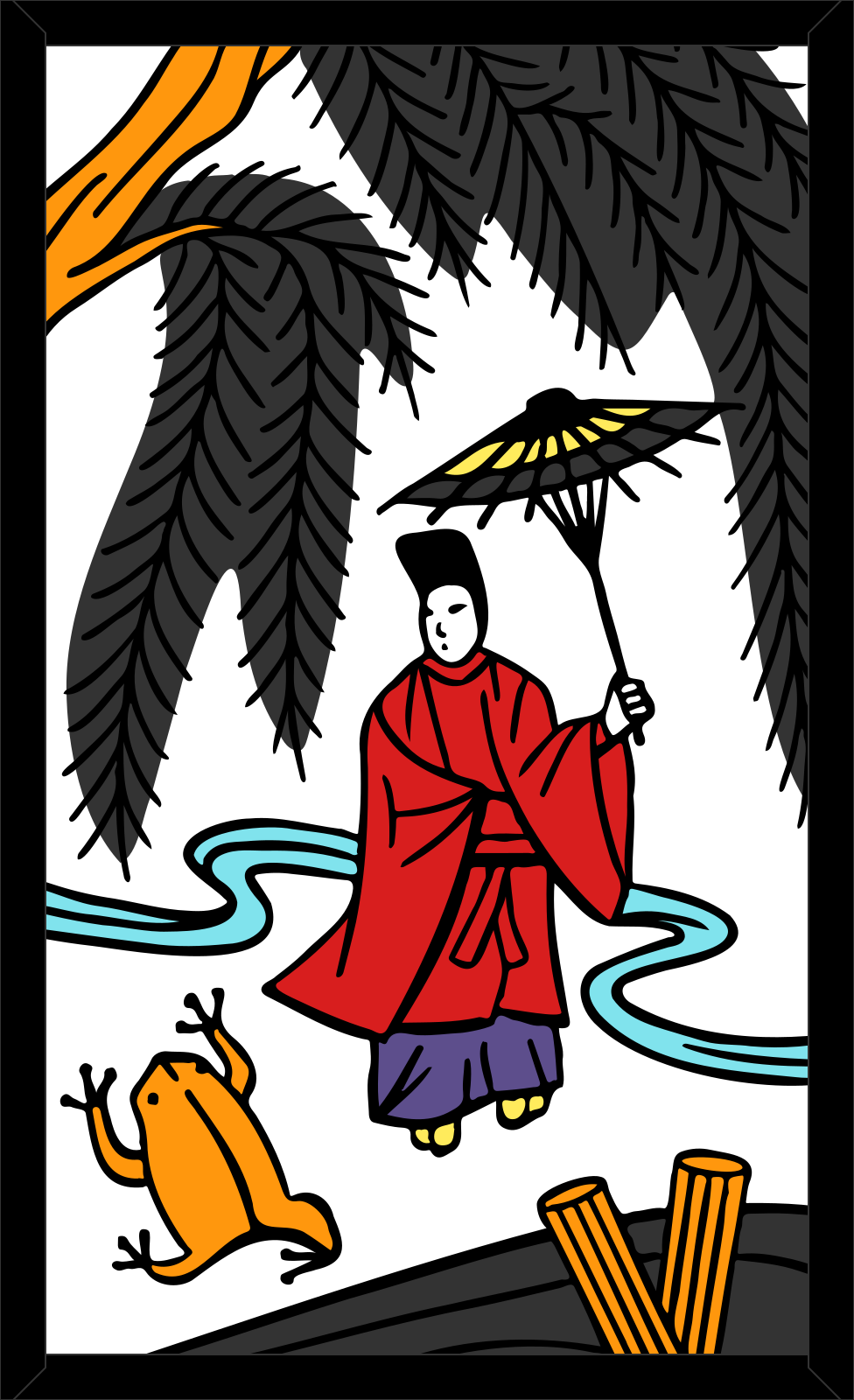
RainNovember 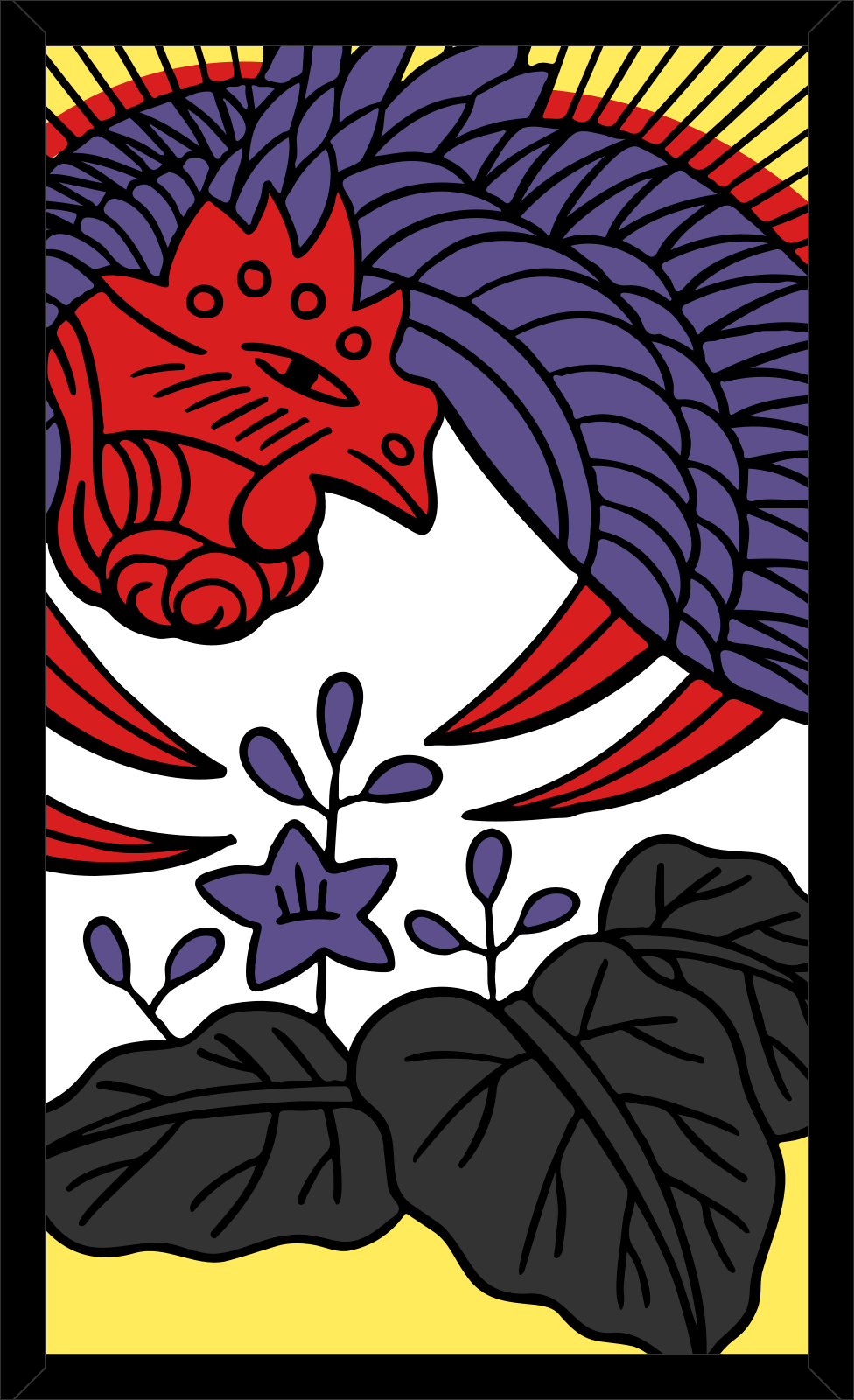
PhoenixDecember
Where the name comes from
The word is written 花札 and read hana-fuda: hana means flower and fuda means card, the same fuda you meet in the names of the card kinds. In English the cards are usually called flower cards.[10] Nintendo, which still makes them, notes that they are also called hana-karuta (花かるた), “flower karuta”.[1] Karuta, the older Japanese word for playing cards, comes from the Portuguese carta, “card”: playing cards first reached Japan with Portuguese traders in the sixteenth century.[11]
The deck has had other names too. Hana-awase (花合わせ, “matching flowers”) is both the name of a game and an old name for the cards, and early printed decks were sold as Musashino, after the plain around Edo, today’s Tokyo. The design used today is called hachi-hachi-bana, after the game hachi-hachi that made it popular. In Japanese you “draw” or “strike” hanafuda to play (花札を引く, 花札を打つ).[6] In Korea the same cards are hwatu (花鬪, “flower battle”).[10]
The deck in brief
A deck has twelve suits, one for each month, and each suit has four cards showing the same plant: pine for January, plum for February, cherry for March and so on, to paulownia for December.[1] There are no numbers or suit signs, so the plant is how you tell the months apart. Learn these twelve and you can sort any hand.
JanuaryPine 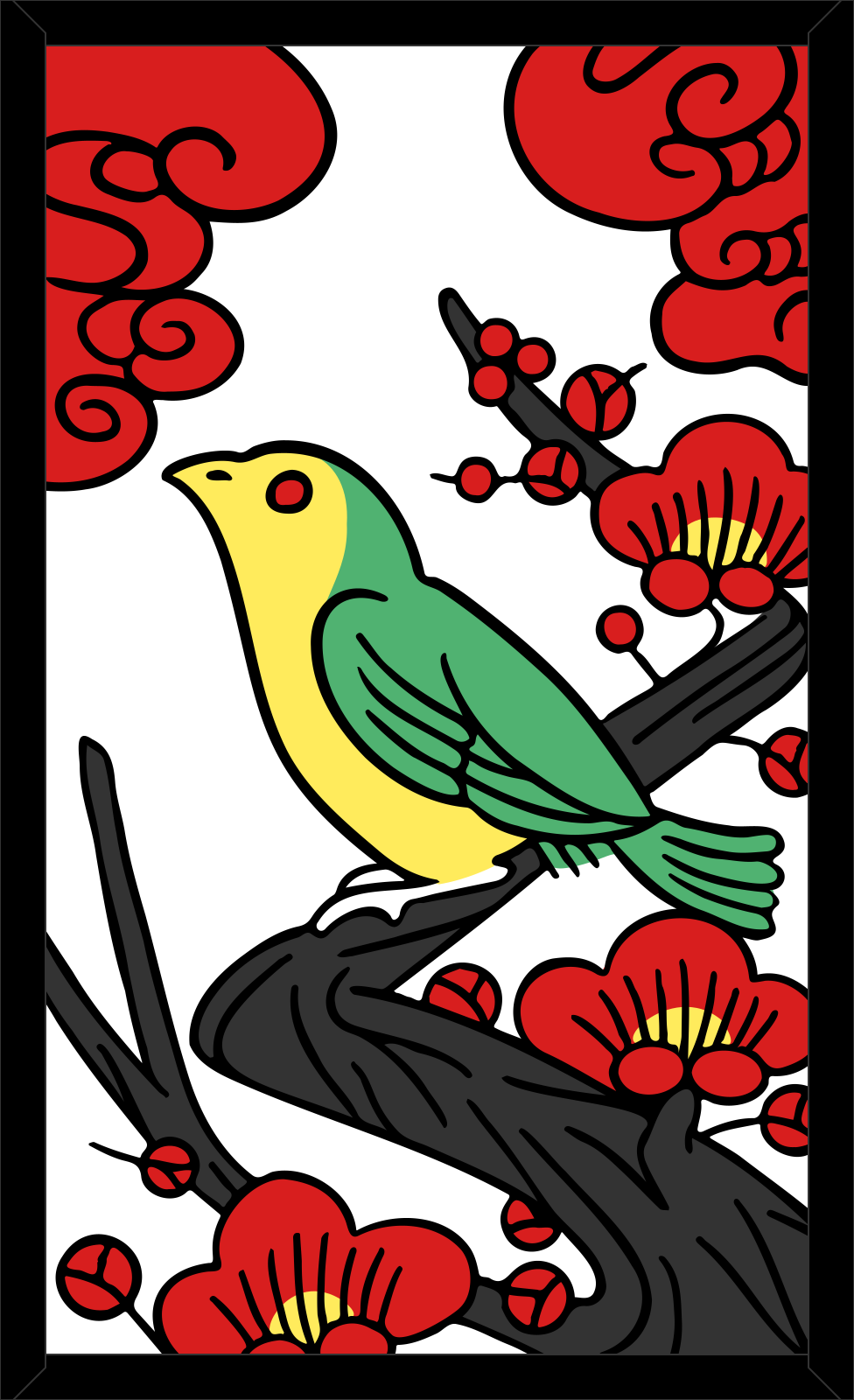
FebruaryPlum MarchCherry 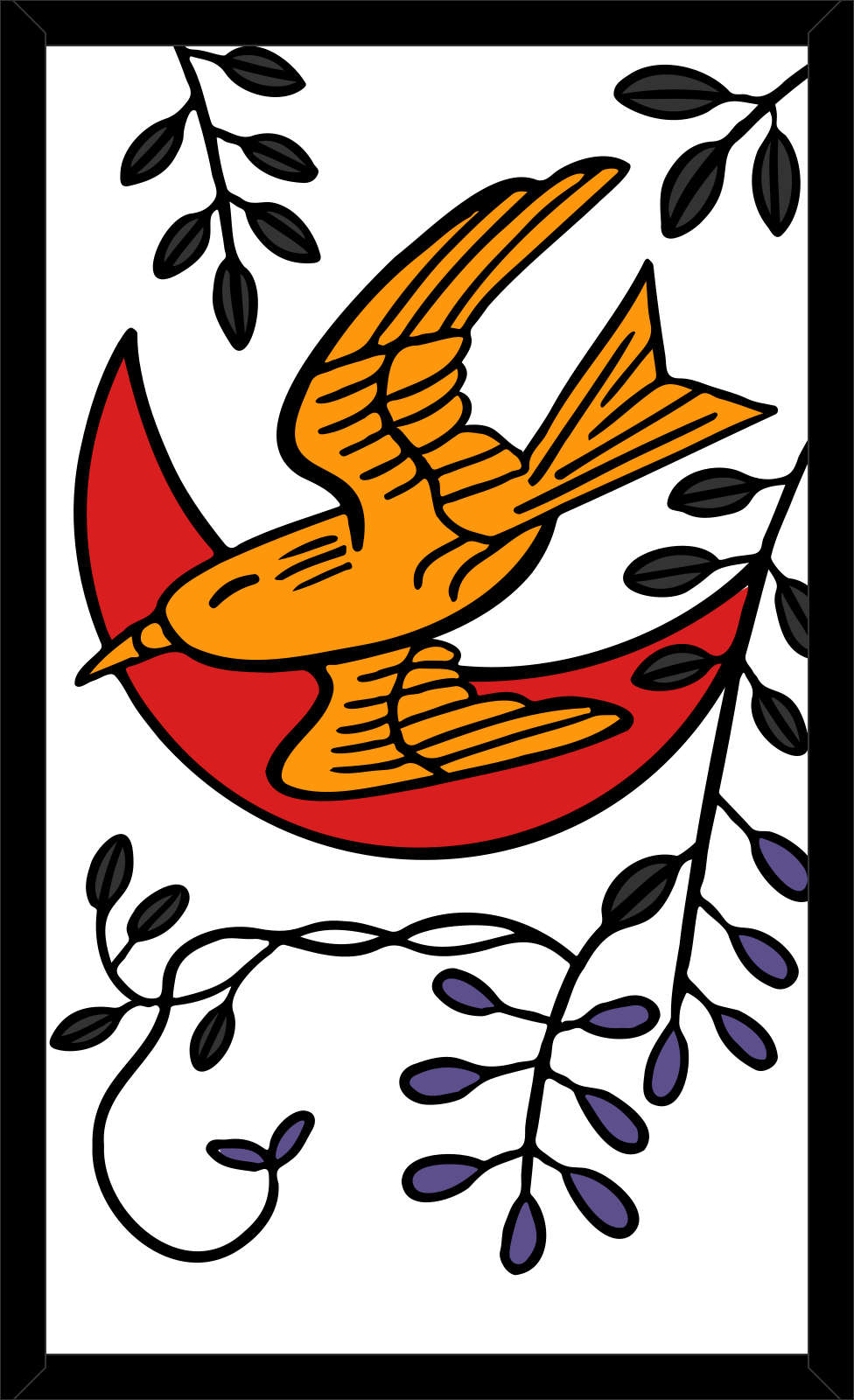
AprilWisteria 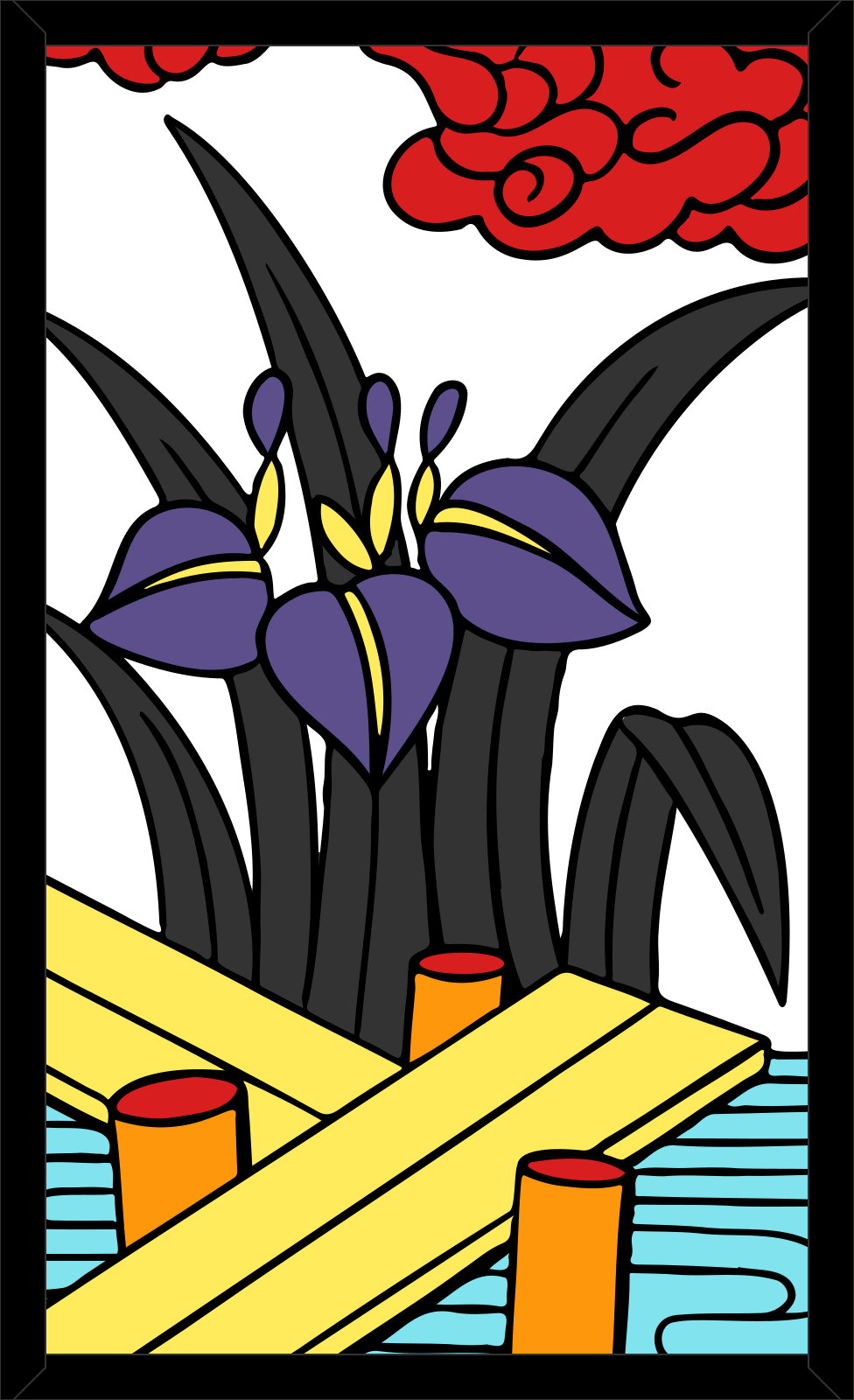
MayIris 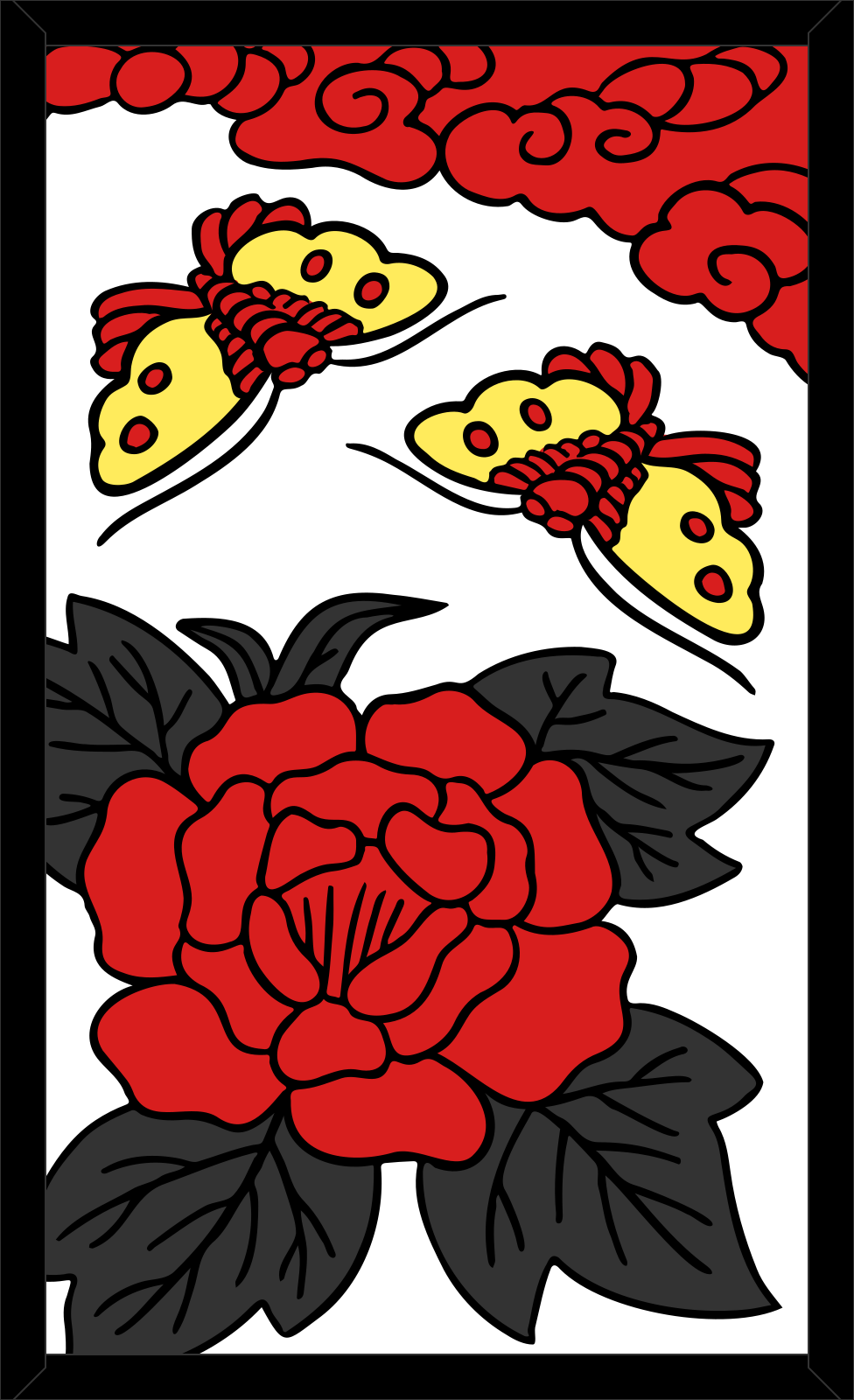
JunePeony 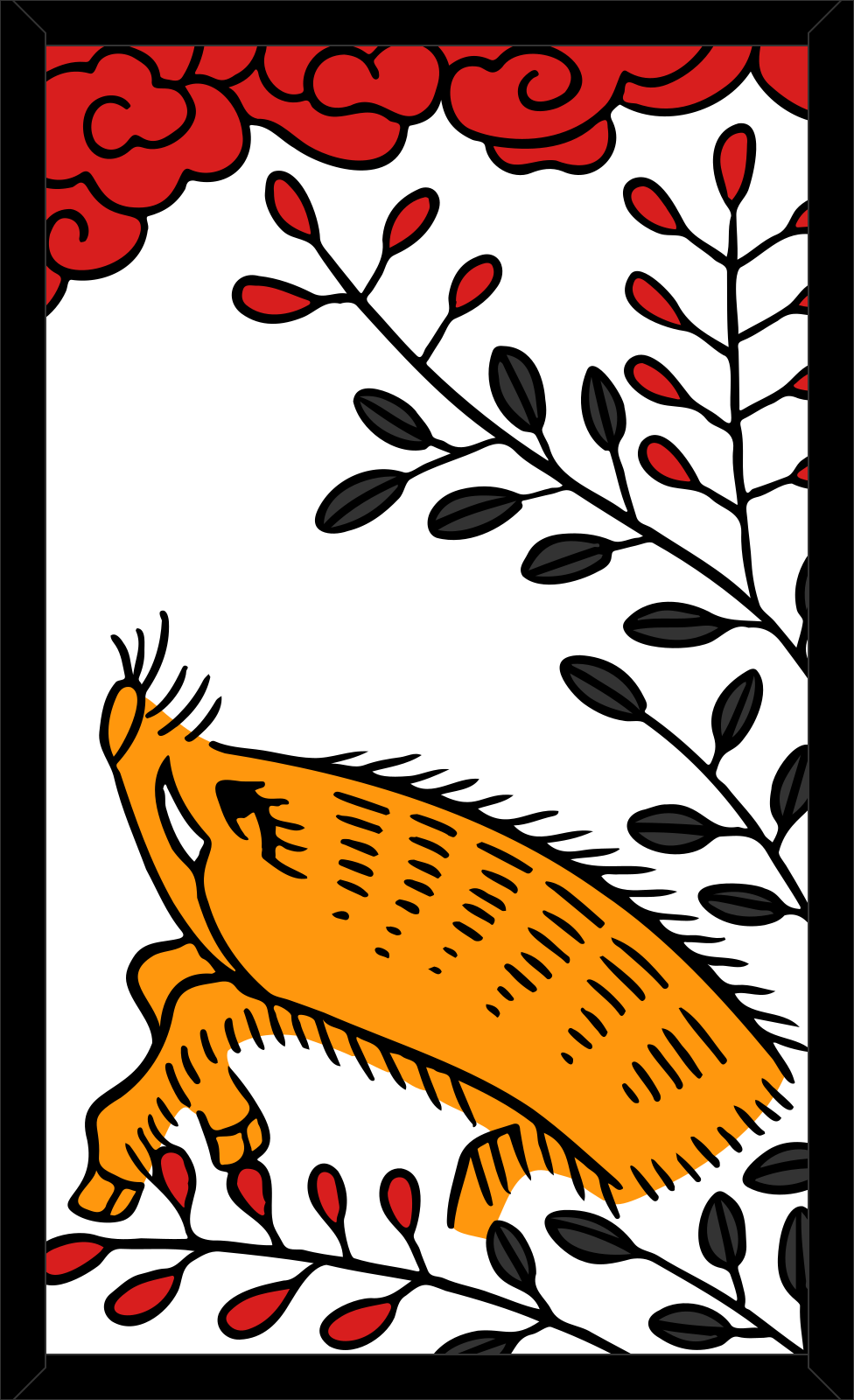
JulyLespedeza AugustPampas 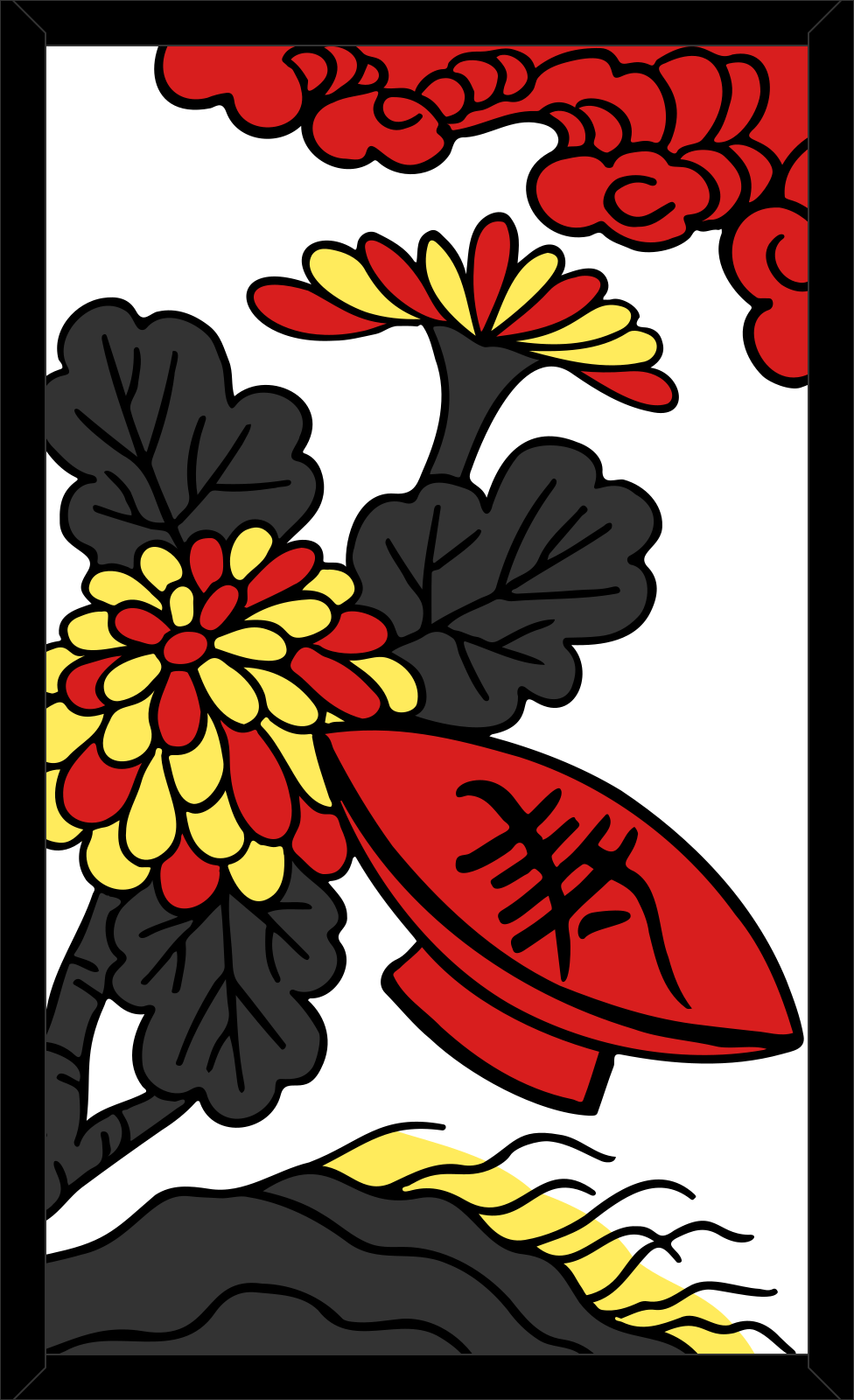
SeptemberChrysanthemum 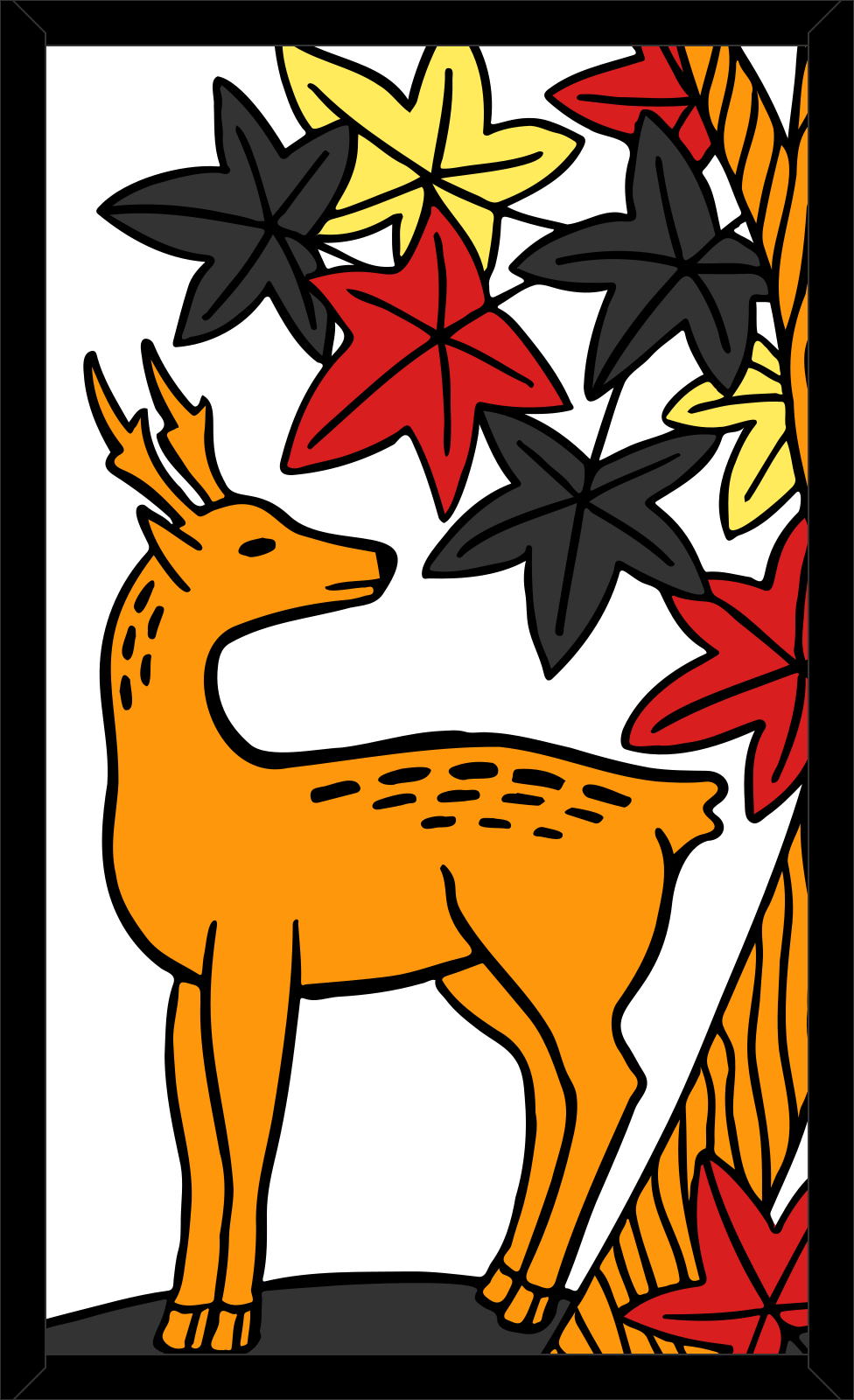
OctoberMaple NovemberWillow DecemberPaulownia
Each card is also one of four kinds, told apart by what is drawn with the plant. Five lights show a large subject such as the crane or the full moon. Nine tane cards show an animal or an object, ten tanzaku show a paper strip hung in the branches, and the plains show the plant alone. In the older games each kind has a value, and across the deck the values add up to 264.[6]
| Kind | Japanese | Value | Cards |
|---|---|---|---|
| Light (hikari) | 光札 hikari-fuda | 20 | 5 |
| Animal (tane) | タネ札 tane-fuda | 10 | 9 |
| Tanzaku (ribbon) | 短冊 tanzaku | 5 | 10 |
| Plain (kasu) | カス札 kasu-fuda | 1 | 24 |
The kinds matter in the matching games because the scoring sets, yaku, are built from them. In Koi-Koi they include the lights together, the boar, deer and butterflies, the three red poem ribbons, or simply five tane, five tanzaku or ten plains, and Koi-Koi scores those sets and ignores the card values. The cards themselves are small, about 5.4 by 3.2 cm, but thicker and stiffer than Western cards, and their backs are usually plain black or red. Only one card shows a person: the man with the umbrella on November’s light.[10] You can see all 48 cards month by month, with their names and what each picture shows.
How the matching games work
Most hanafuda games belong to the fishing family: you capture cards from the table by matching them.[13] In Koi-Koi as this game deals it, each player gets eight cards, eight more lie face up on the table and the other 24 form a face-down draw pile. On your turn you play a card from your hand. If a table card is of the same month, you take both; if none is, your card stays on the table. Then you turn over the top card of the draw pile and do the same with it.[2]
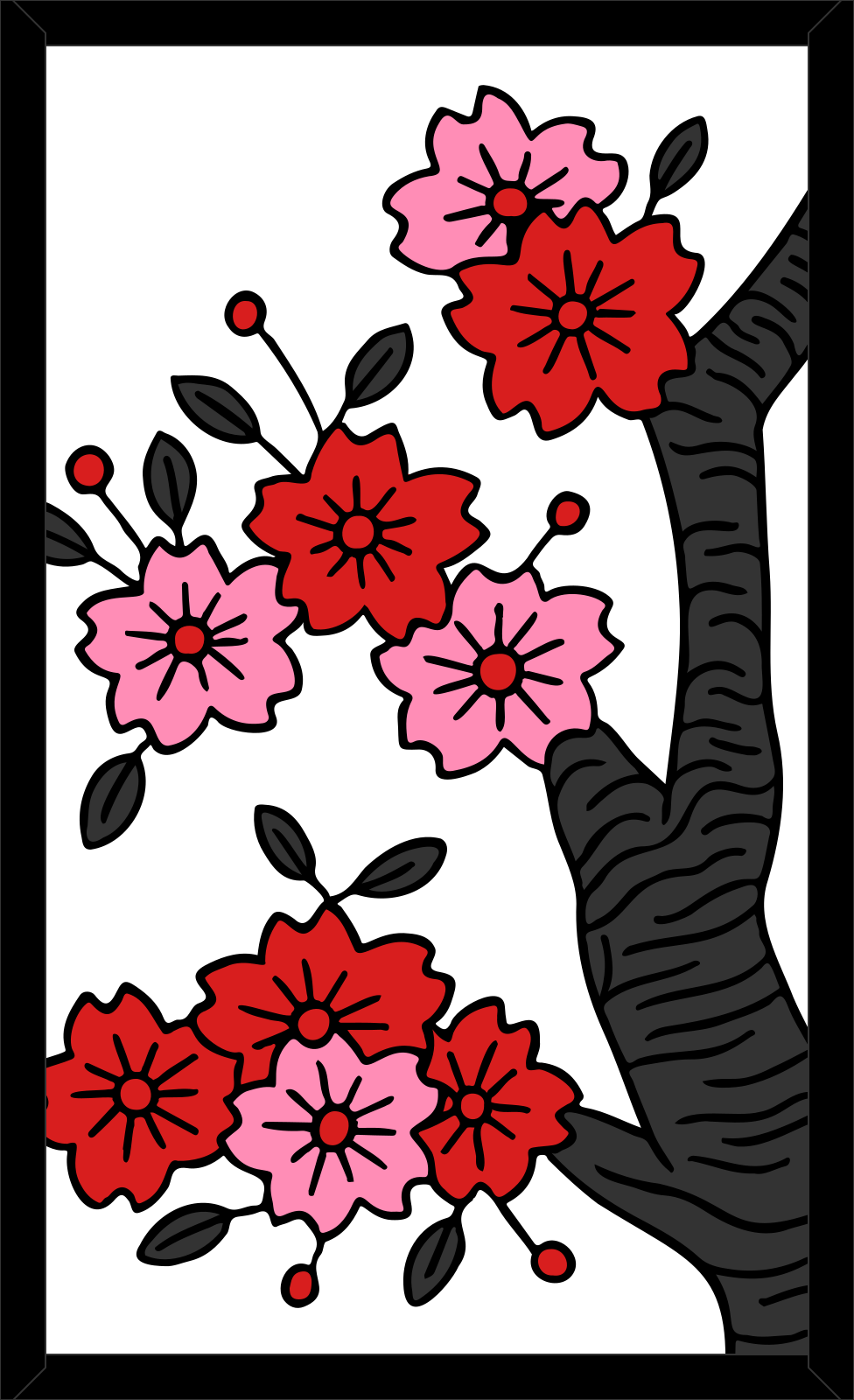 1. Play from your handYou play the Cherry plain, a March card.
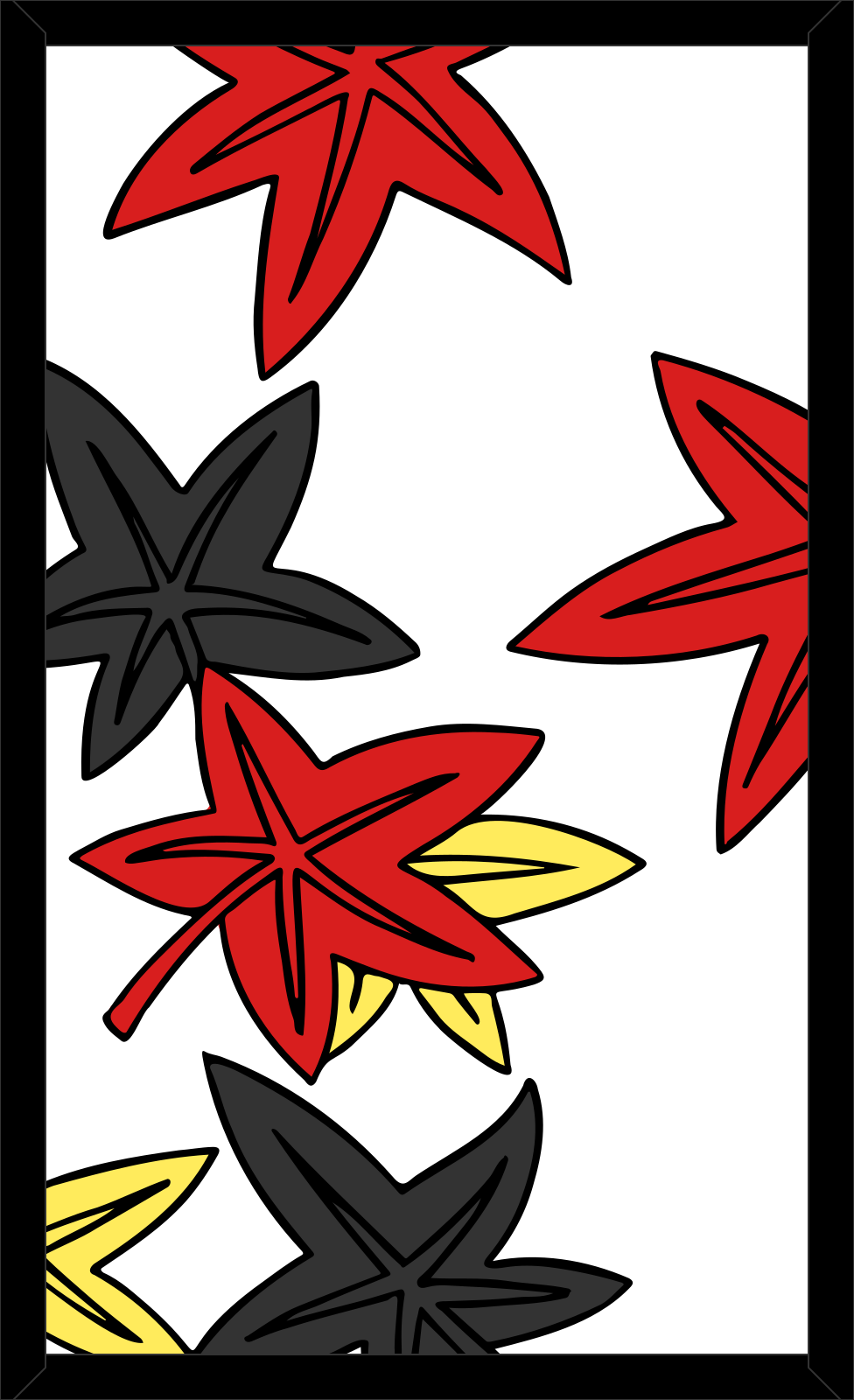 2. Match the tableOf the table cards, only the Curtain is also March, so the two match.
- 3. Take bothBoth cards go to your captures. With no match, your card would stay on the table.
When two table cards match, you choose which one to take, and when three match, you take all four. Captured cards lie face up in front of you, and what they make together is what scores. In Koi-Koi, a player who completes a yaku decides at the end of that turn whether to stop and score (shōbu, often written “shobu”) or to call koi-koi and play on for more, at the risk that the opponent scores first. The rules walk through a whole turn, and the yaku page lists every scoring set.
Games played with hanafuda
Hanafuda is a deck, not a game, much as a Western pack serves for both bridge and poker. These are the games you are most likely to meet in Japan.
| Game | Players | Deck | What scores |
|---|---|---|---|
| Koi-Koiこいこい | 2 | Hanafuda | Yaku only |
| Hana-awase花合わせ | 3 | Hanafuda | Card values against 88, and yaku |
| Hachi-hachi八八 | 3 | Hanafuda | Card values against 88, and yaku |
| Oicho-kabuおいちょかぶ | A banker against each player | Kabufuda, usually | The last digit of the total: closest to 9 wins |
Koi-Koi
Koi-Koi (こいこい, also written koi koi or koikoi) is a game for two in which each player races to complete yaku. Its name is the call a player makes to keep going after a yaku: koi, “come on”.[9] Only the yaku count, never the card values. Nintendo calls it “the most famous way to play hanafuda”.[1] It is young by hanafuda standards: it is said to have become widely known only around 1950.[8]
Hana-awase
Hana-awase is a game for three, played in a fixed order from the dealer, the oya. Each player gets seven cards and six go face up on the table, and the matching works as in Koi-Koi. At the end each player’s captured cards are counted against a par of 88, and the yaku they made are added.[3] Nintendo has also published simpler versions of its own: one for two to four players that uses only eight of the months, and one for two to five that uses all twelve.[1]
Hachi-hachi
Hachi-hachi (八八, “eighty-eight”) is also for three, with extra rules on top of the matching: Nintendo rates it four stars for difficulty, one more than Koi-Koi.[1] The name is a score. The deck is worth 264 points, and each player’s haul is measured against 88, a third of that.[7] It was the great hanafuda game of the Meiji era, and the deck made for it is the standard design of today.[6]
Oicho-kabu and kabufuda
Oicho-kabu (おいちょかぶ) is not a matching game at all. It is a banking game in the family of baccarat: the banker plays against each of the others, and the hand whose total ends in the digit closest to 9 wins.[6] It is usually played with kabufuda (株札), a different deck of 40 cards numbered 1 to 10, four of each.[11] Nintendo still sells kabufuda alongside its hanafuda.[4] Played with flower cards instead, January to October count as 1 to 10 and November and December are left out, so you need to know each plant’s month at a glance.[13]
Hanafuda outside Japan
In South Korea the cards are hwatu. They are usually made of plastic, and the November and December suits are swapped: the willow is December’s and the paulownia November’s.[10] The favourite game there is Go-Stop (고스톱), usually for two or three players, with a variant for four. It appeared in the 1960s and became very popular in the 1970s. Like Koi-Koi it turns on a call: once you have enough points you say “Go” to play on or “Stop” to collect.[12] The two games are related, though accounts differ on which borrowed from which: the Japanese Wikipedia describes Go-Stop as based on Koi-Koi, while the card historian Ebashi Takashi argues that modern Koi-Koi rules took something from Go-Stop.[6][12]
Japanese immigrants took hanafuda to Hawaii, where the game is called Sakura, after the March suit, or Higobana.[13] Higo is the old name of Kumamoto, where many of the immigrants came from, and the Hawaiian game counts the cards its own way: tanzaku are worth 10 and animals 5, the reverse of Japan, and plains nothing.[6][13] In Palau, under Japanese administration after the First World War, flower cards are still played as hanahuda (also written hanakuda), by two to four players, with four playing two against two.[6]
A short history
Playing cards came to Japan with Portuguese traders in the middle of the sixteenth century, and Japanese makers were soon copying the 48-card Portuguese pack: the first Japanese-made cards, Tenshō karuta (Tensho karuta).[11] Card gambling was banned again and again under the shoguns, and by the late eighteenth century 48-card flower decks were being printed and sold. The traditional story is that they were designed to slip past the bans, with old poems written on some cards so that they would pass for harmless poetry cards. Other accounts trace them to a refined pastime instead: one printed in 1890 says flower cards began in the Kyōhō era (1716–1736), at first as a pastime of the women of samurai households.[6]
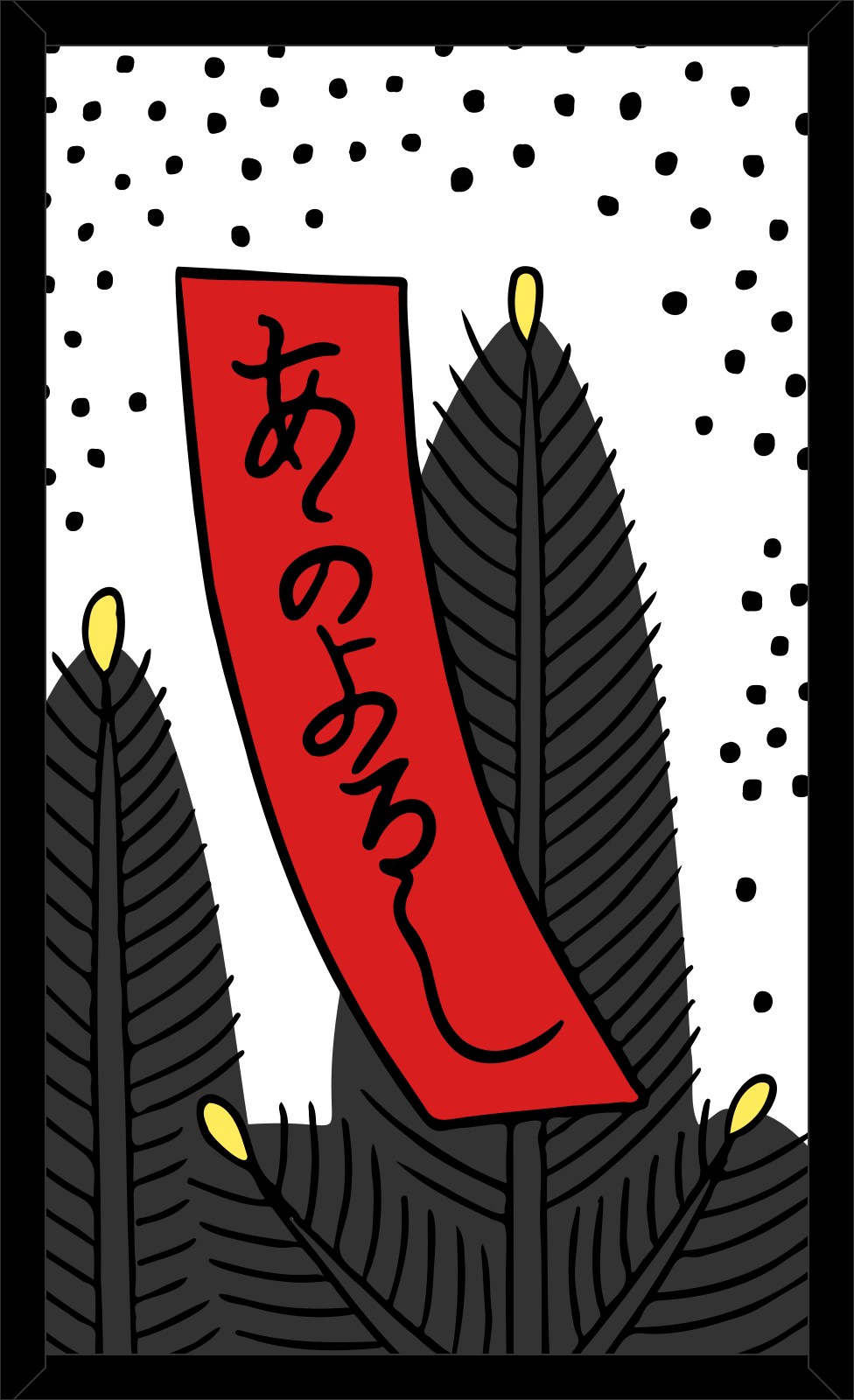
Pine ribbon「あかよろし」 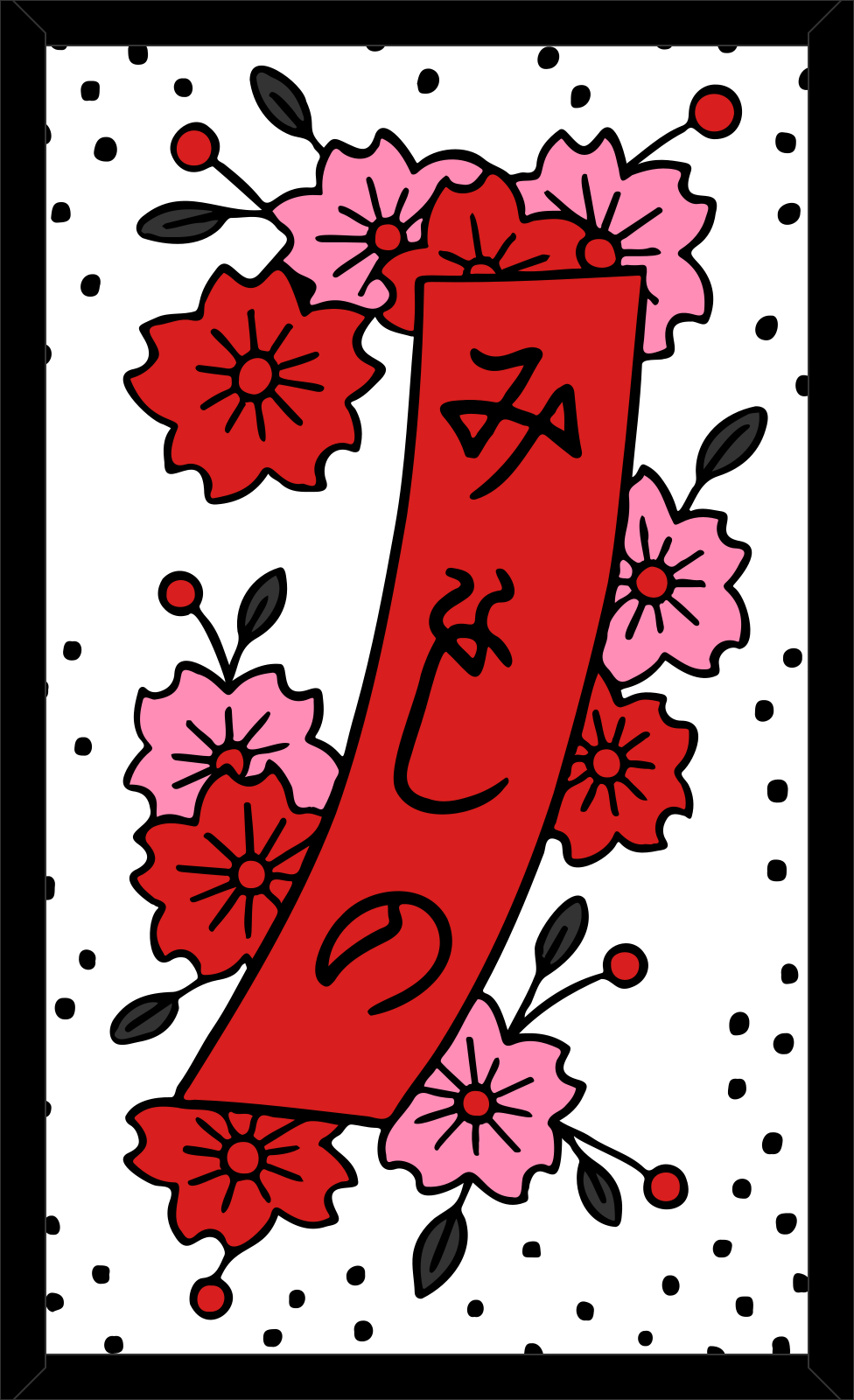
Cherry ribbon「みよしの」 RainOno no Michikaze
The Meiji government allowed flower cards again in the mid-1880s. Around then, it is said, the figure on November’s light was redrawn as the calligrapher Ono no Michikaze, and by the 1890s the hachi-hachi deck had become the standard.[6] In 1889 Fusajirō Yamauchi began making hanafuda in Kyoto; his business became Nintendo.[5] Koi-Koi came later still, a game of the twentieth century.[8] Meanwhile the cards travelled with the Japanese to Korea, Hawaii and Palau. The history of hanafuda tells the whole story, from the Portuguese pack to the 1902 card tax.
How to start playing
You need no cards and no experience. A good order is:
- Learn the twelve plants. The month grid above is enough to begin; after a few games you will know them. The card list has every card by month.
- Read the rules of Koi-Koi, then keep the yaku list at hand while you play. The table highlights the cards you can match, a help you can switch off.
- Play the computer. A practice game against the computer needs no account.
- Invite a friend. To play a friend online, sign in with Google, create a room and send the invite link.
A match here is six or twelve rounds, as you choose, and ends early if a player runs out of points; Nintendo’s rules play twelve.[2]
Sources
- 歴史・遊びかた|花札・株札. Nintendo: The name hana-karuta, the deck, and the games with their players and difficulty
- こいこい|花札の歴史・遊びかた. Nintendo: Nintendo’s Koi-Koi rules: a turn, the yaku, twelve rounds, doubling at 7 points
- 花合わせ|花札の歴史・遊びかた. Nintendo: Hana-awase for three players
- 花札・株札. Nintendo: The hanafuda and kabufuda Nintendo sells
- 会社の沿革. Nintendo: Nintendo began making hanafuda in 1889
- 花札. Wikipedia (Japanese): Other names, the 264-point total, the history, kabu games, Hawaii and Palau
- 八八. Wikipedia (Japanese): The 88-point par that names the game
- こいこい. Wikipedia (Japanese): When Koi-Koi became widely known
- こいこい (精選版 日本国語大辞典). Kotobank: Where the name comes from: the call “koi”, “come on”
- Hanafuda. Wikipedia: The cards themselves, and the Korean hwatu deck
- Karuta. Wikipedia: The word karuta, Portuguese cards in Japan, and the kabufuda deck
- Go-Stop. Wikipedia: Players, the calls and the dates, citing the National Folk Museum of Korea and Ebashi Takashi
- Games played with Flower Cards. John McLeod, pagat.com: Fishing games, kabu with flower cards, Hawaiian Sakura and scoring, Palau