
How Koi-Koi scoring works
Last updated
A Koi-Koi round is scored for the player who ends it with Shōbu: add up their yaku, double a total of 8 or more (a room setting, on by default), then multiply by 1 plus every Koi-Koi call made that round. The loser pays the result, but never more than they have left of their 25 points. Nintendo’s rules double from 7 instead, and double once more only if the loser had called Koi-Koi.
The formula in four steps
Here is one round, counted step by step: you make Tsukimi de ippai (5 points), call Koi-Koi (also written koikoi), later take the Curtain for Hanami de ippai as well, and stop with Shōbu (plain spelling: Shobu). Each step shows this game’s rule and Nintendo’s.
Add up the yaku
5 + 5 = 10
Every yaku the winner holds, added together. The loser’s yaku count for nothing.
Nintendo: the same, except that Tane is void beside Inoshikachō, and Tan beside Akatan or Aotan.
Double at 8 or more
10 × 2 = 20
A room setting, on by default. With it off, no total doubles for its size.
Nintendo: doubles every total of 7 or more.
Multiply by the calls
20 × (1 + 1) = 40
One plus every Koi-Koi call made this round, by either player, for whoever wins.
Nintendo: ×2 only when the loser had called Koi-Koi; your own call adds nothing.
The loser pays
min(40, 25) = 25
At most what the loser has left of their points. At 0 the match is over.
Nintendo: no cap: each player’s scores add up over 12 rounds.
In a game you do not have to count: when you form a yaku, the Koi-Koi or Shōbu window shows what Shōbu would pay now, line by line (the yaku points, each multiplier with its reason, the cap, and the payment), and the end of the round shows the same count.
Step 1 in detail: which yaku count
Add every yaku in the winner’s captures, each with its extra cards: Inoshikachō with two more animals is 7, not 5. Only one light yaku counts at a time, and Chōfuku takes the place of Akatan and Aotan; everything else adds up, and one card may count for several yaku. The yaku page lists every value and combination.
Step 2: doubling at 8 points
In this game a base of 8 points or more is doubled (see doubling). It is a setting of each room, “Double at 8+ points”, and of the practice game against the computer; it is on unless whoever sets up the game turns it off. With it off, a round is multiplied only by its Koi-Koi calls. The table below shows a round with no Koi-Koi calls.
| Base | Setting on | Setting off | Nintendo |
|---|---|---|---|
| 5 | 5 | 5 | 5 |
| 6 | 6 | 6 | 6 |
| 7 | 7 | 7 | 14 |
| 8 | 16 | 8 | 16 |
| 10 | 20 | 10 | 20 |
Step 3: the Koi-Koi multiplier
Every Koi-Koi call in the round raises one shared multiplier by one, whoever makes it: ×2 after the first call, ×3 after the second, and so on. It applies to whoever wins the round, so your own calls raise your own reward as well as your opponent’s. It starts again at ×1 every round. Calls are not limited: you may call again each time your total rises, and so may your opponent.
| Calls this round | This game | Nintendo |
|---|---|---|
| None | ×1 | ×1 |
| The winner called once | ×2 | ×1 |
| The loser called once | ×2 | ×2 |
| Each player called once | ×3 | cannot happen |
| Three calls in all | ×4 | cannot happen |
What this means for play, when to call and when to stop, is on the strategy page.
Step 4: who pays, and how much
Both players start the match with 25 points. The round’s loser pays its score to the winner, capped at what they have left: 40 points against a loser with 25 is a payment of 25. A player with no points left loses at once; otherwise the match ends after its last round (6 or 12, chosen when the game is set up), the player with more points wins, and equal points make a drawn match. Some Japanese rule pages count in mon (文), the traditional unit; this game says points.
This game and Nintendo side by side
| Rule | This game | Nintendo |
|---|---|---|
| Yaku points | The same as Nintendo’s | Its published table |
| Tane beside Inoshikachō, Tan beside Akatan or Aotan | Both count | Tane or Tan is void |
| The Sake cup | An animal only | An animal and a plain |
| Doubling | ×2 at 8 or more; a setting, on by default | ×2 at 7 or more |
| Koi-Koi | ×(1 + every call by both players); any number of calls | ×2 if the loser had called; the next yaku ends the round |
| Payment | From a 25-point pool, capped; 0 ends the match | Scores add up over 12 rounds |
| Nobody calls Shōbu | Drawn round: no score, the same dealer | No game; the dealer changes |
All of the differences, including the ones outside scoring, are collected on the house rules page.
Ten worked examples
Each example was checked against the game’s own scoring code. The loser has 25 points unless the example says otherwise, and the doubling setting is on.
1. One yaku, no Koi-Koi
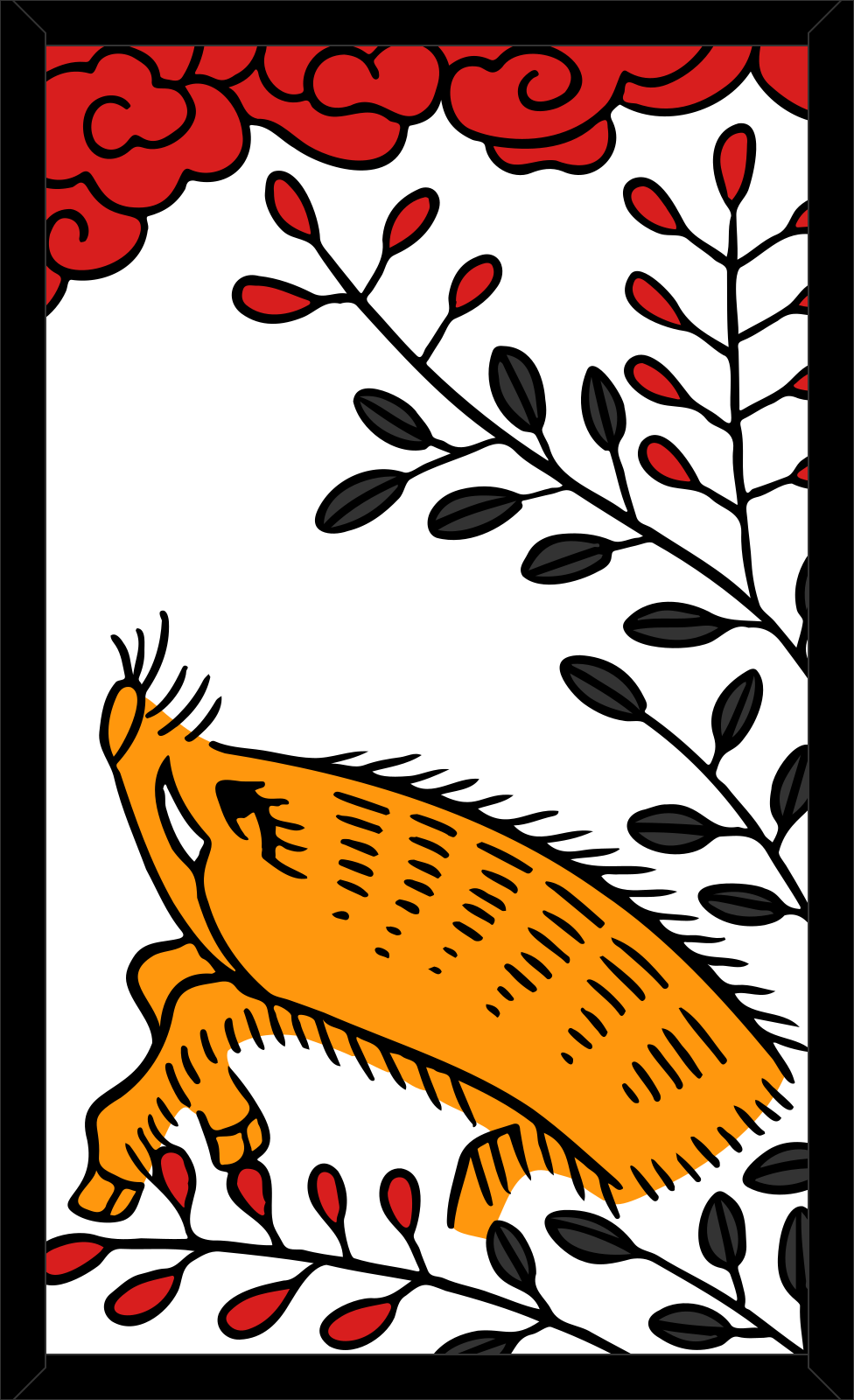
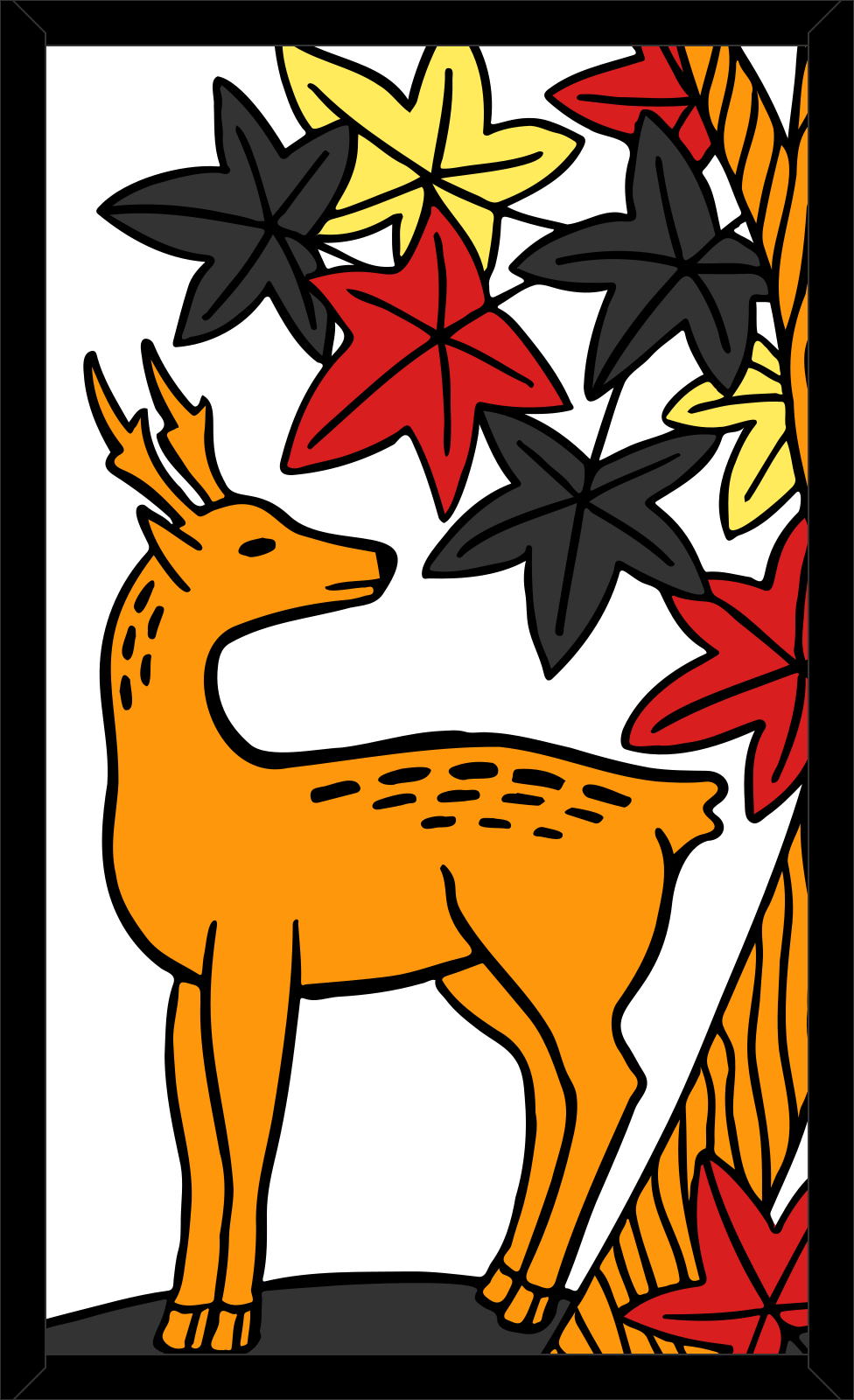
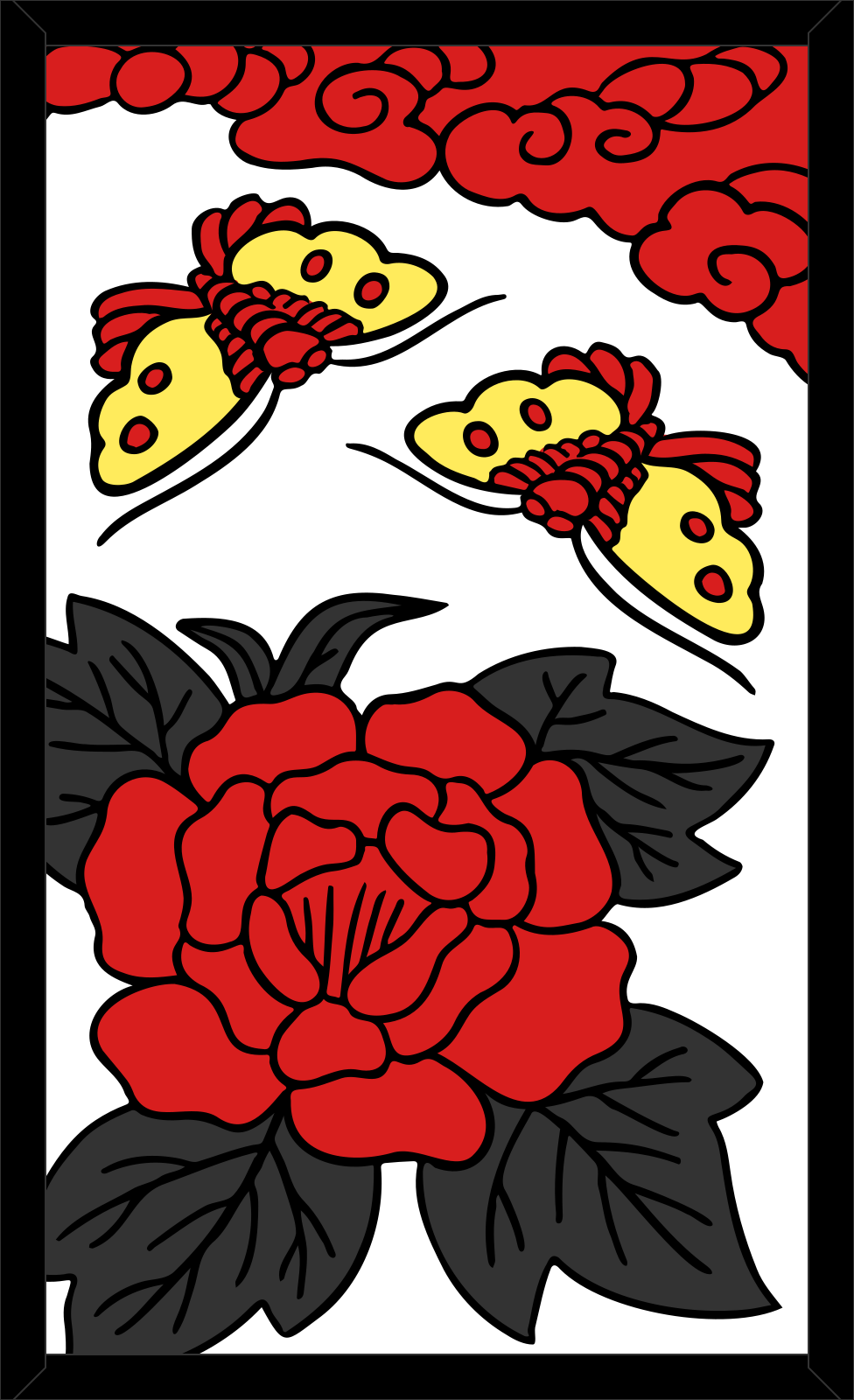
You capture the Boar, the Deer and the Butterflies and call Shōbu.
Inoshikachō 5. Below 8, so no doubling: 5 points.
Nintendo: 5 as well.
2. Two yaku add up
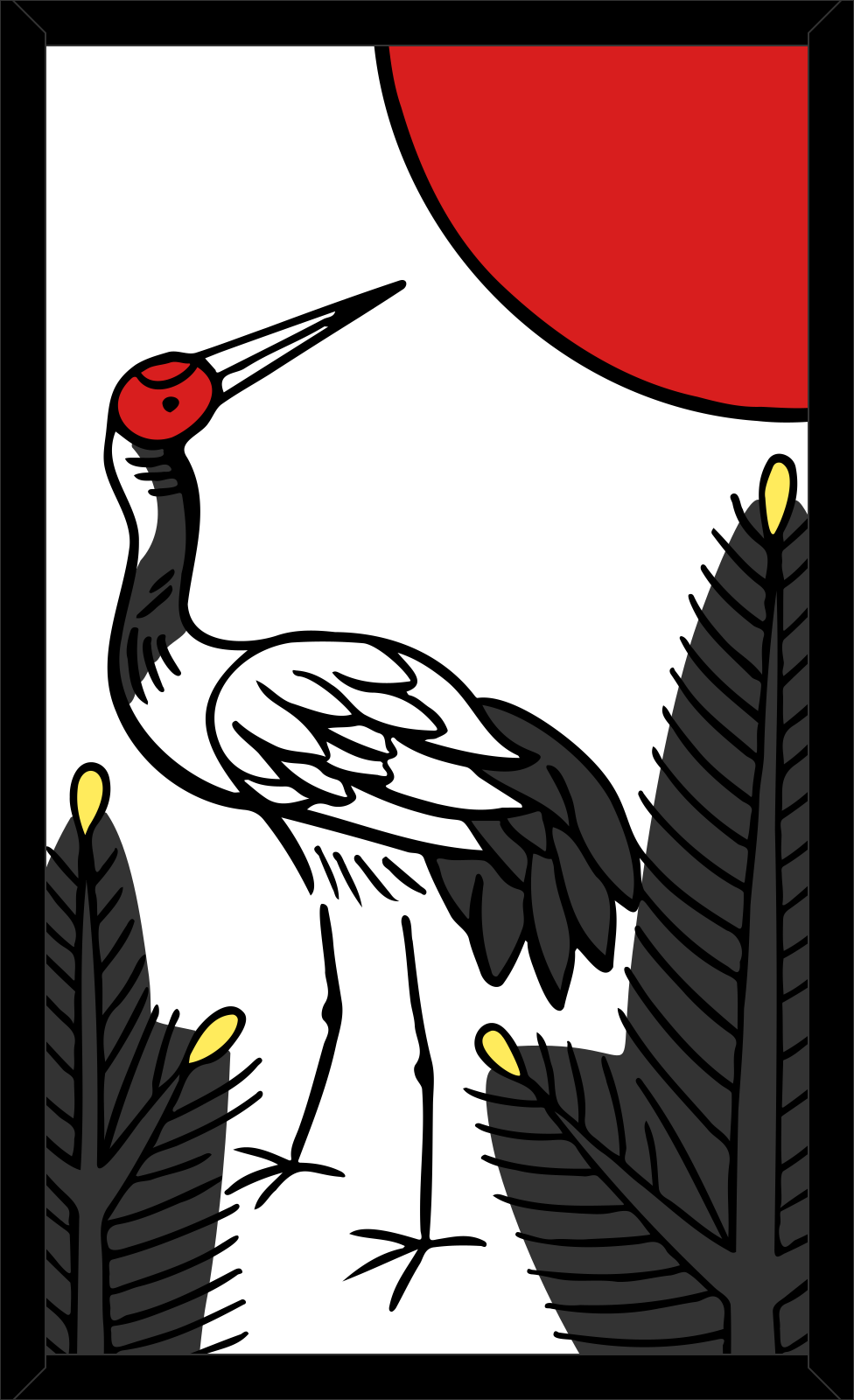
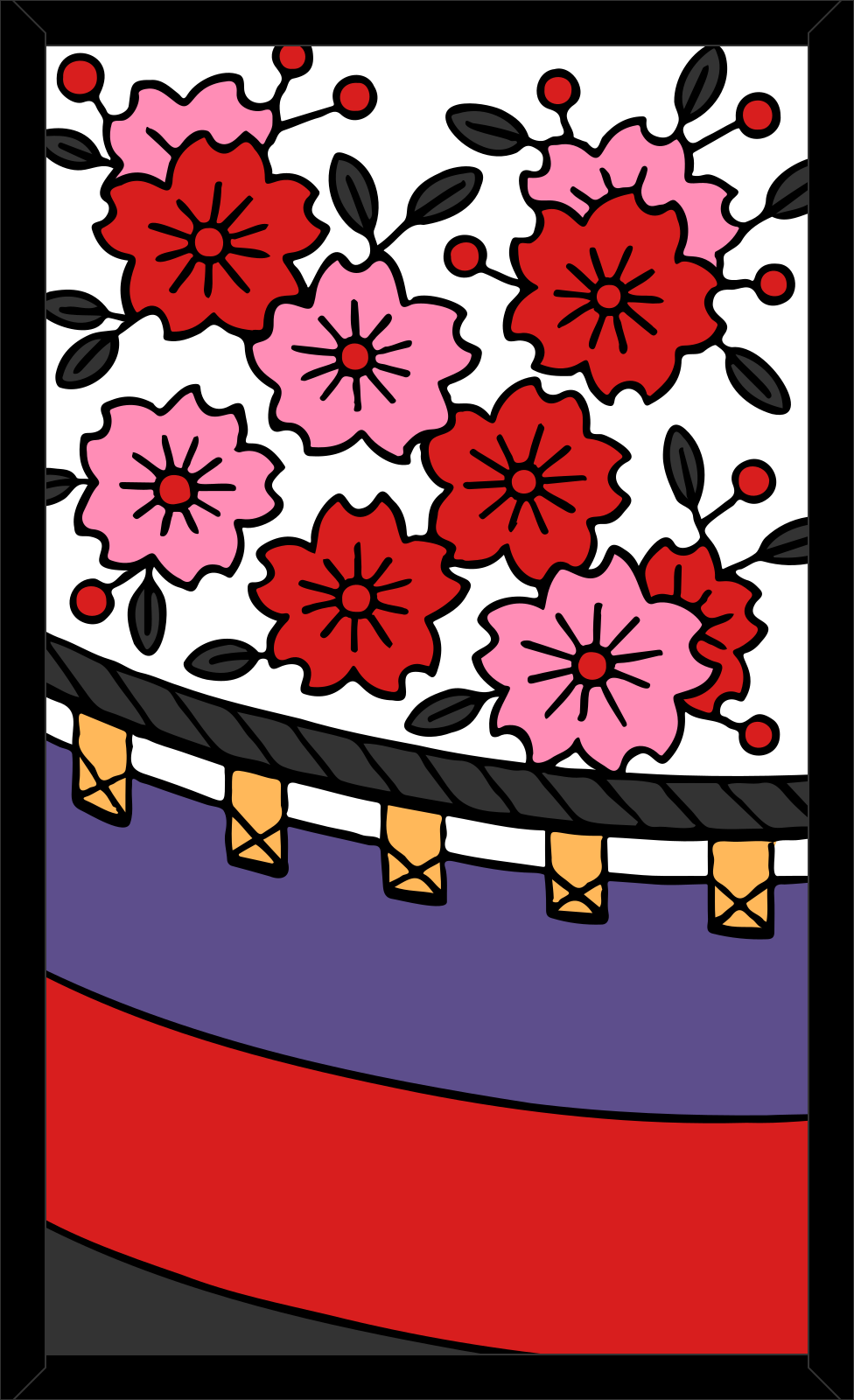
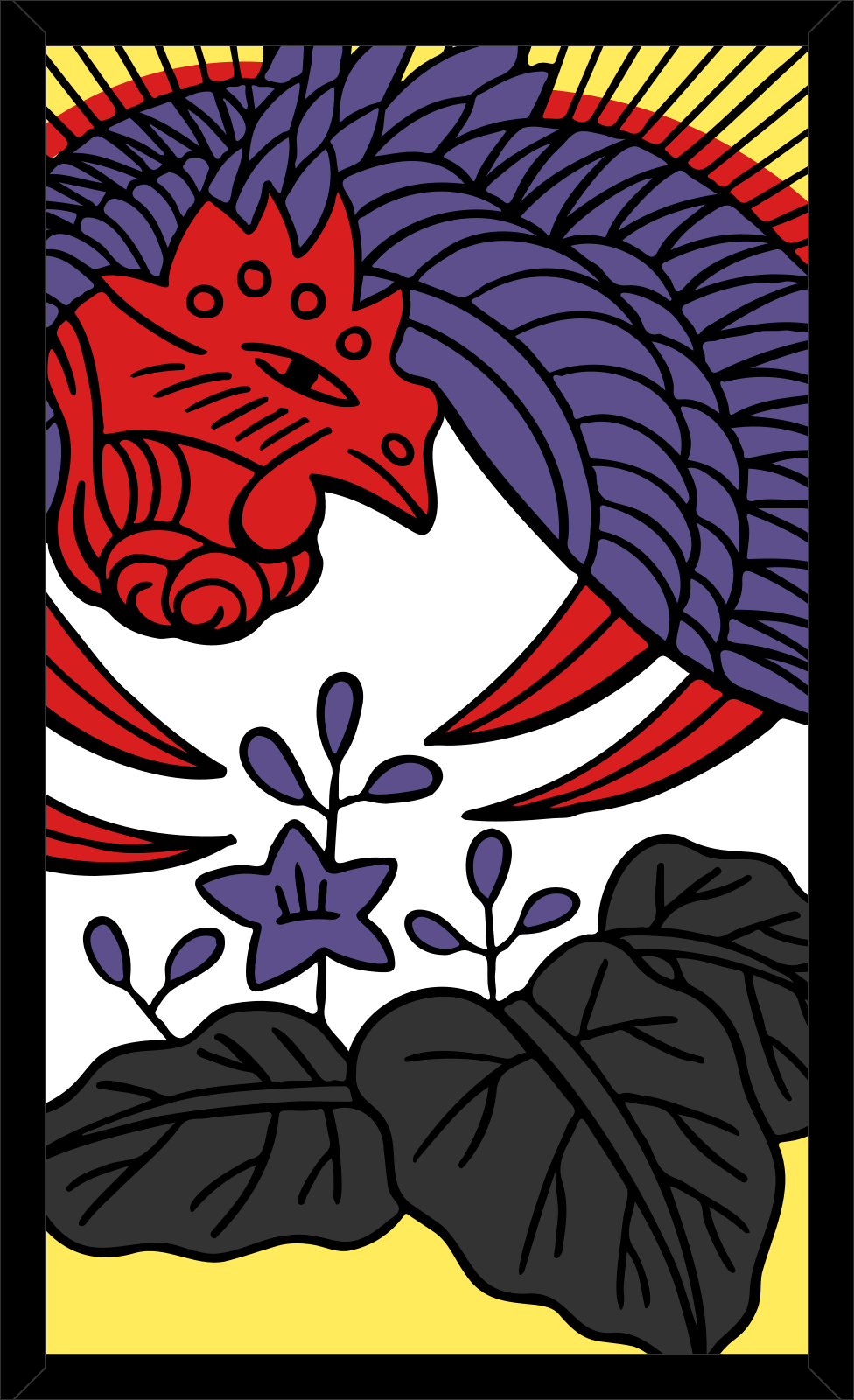
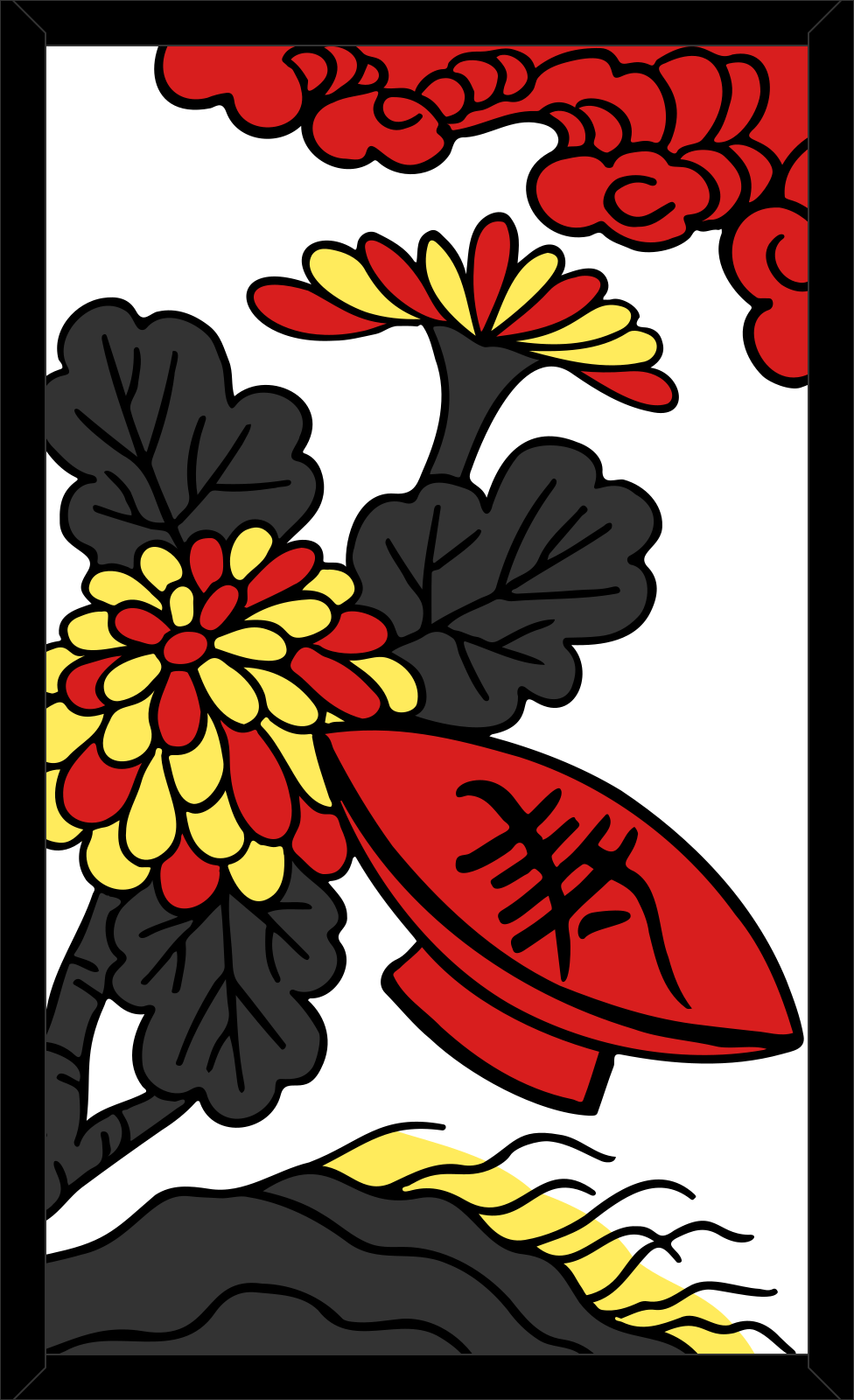
The Crane, the Curtain and the Phoenix make Sankō; the Curtain and the Sake cup make Hanami.
Sankō 5 + Hanami 5 = 10. 8 or more, so 10 × 2 = 20 points.
Nintendo: 10 is 7 or more, so also 20.
3. Extra cards, and Tan beside Akatan
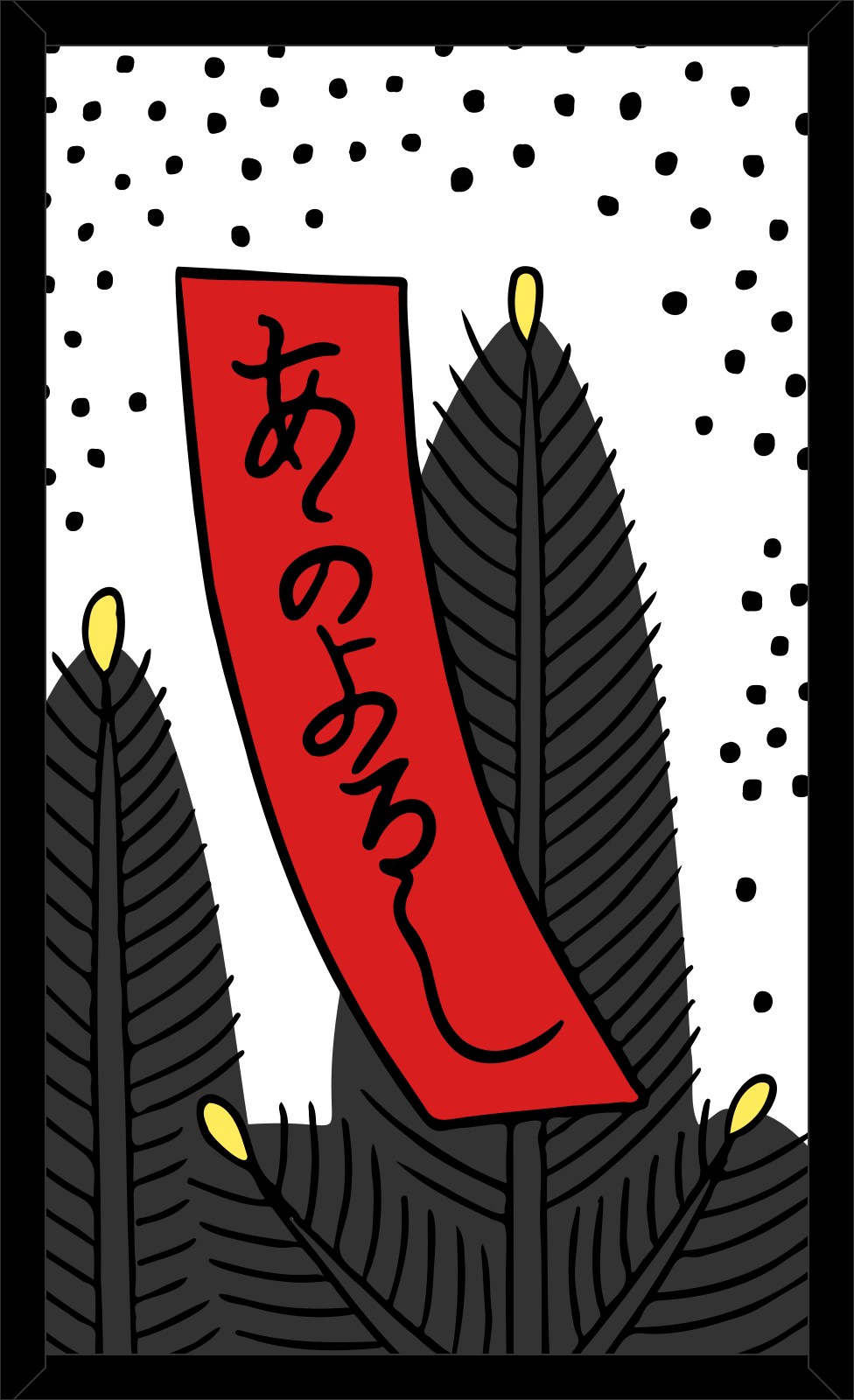
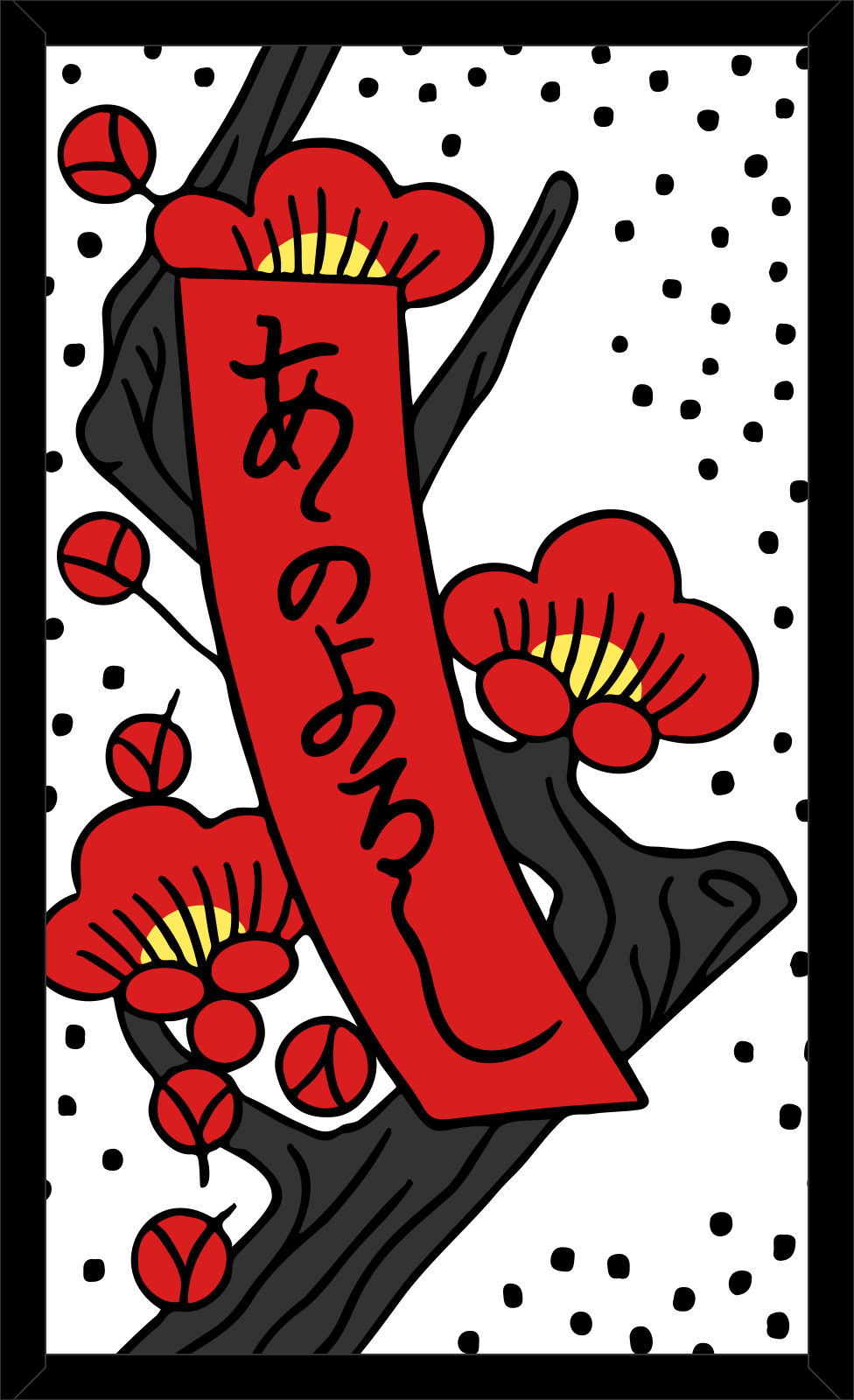
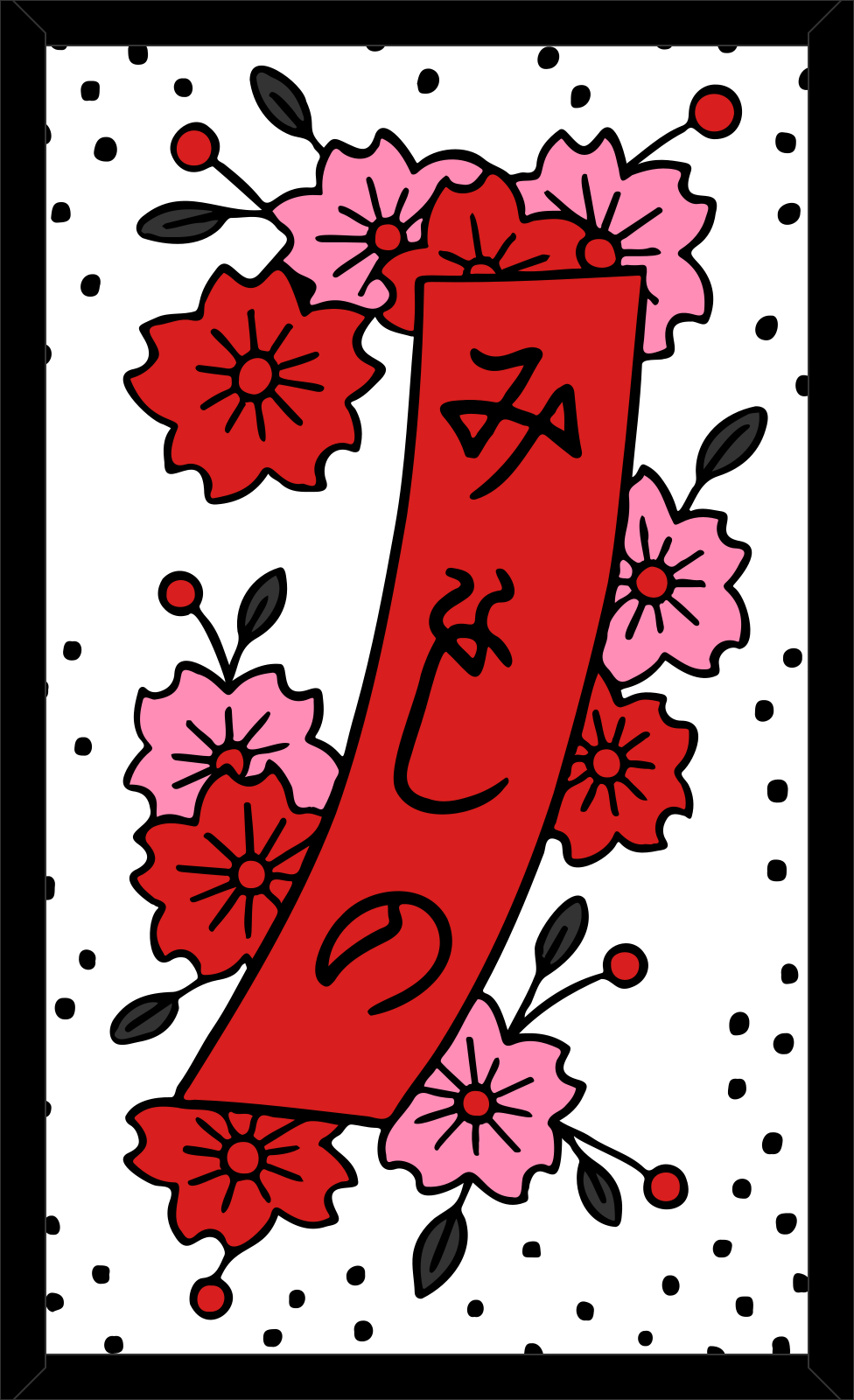
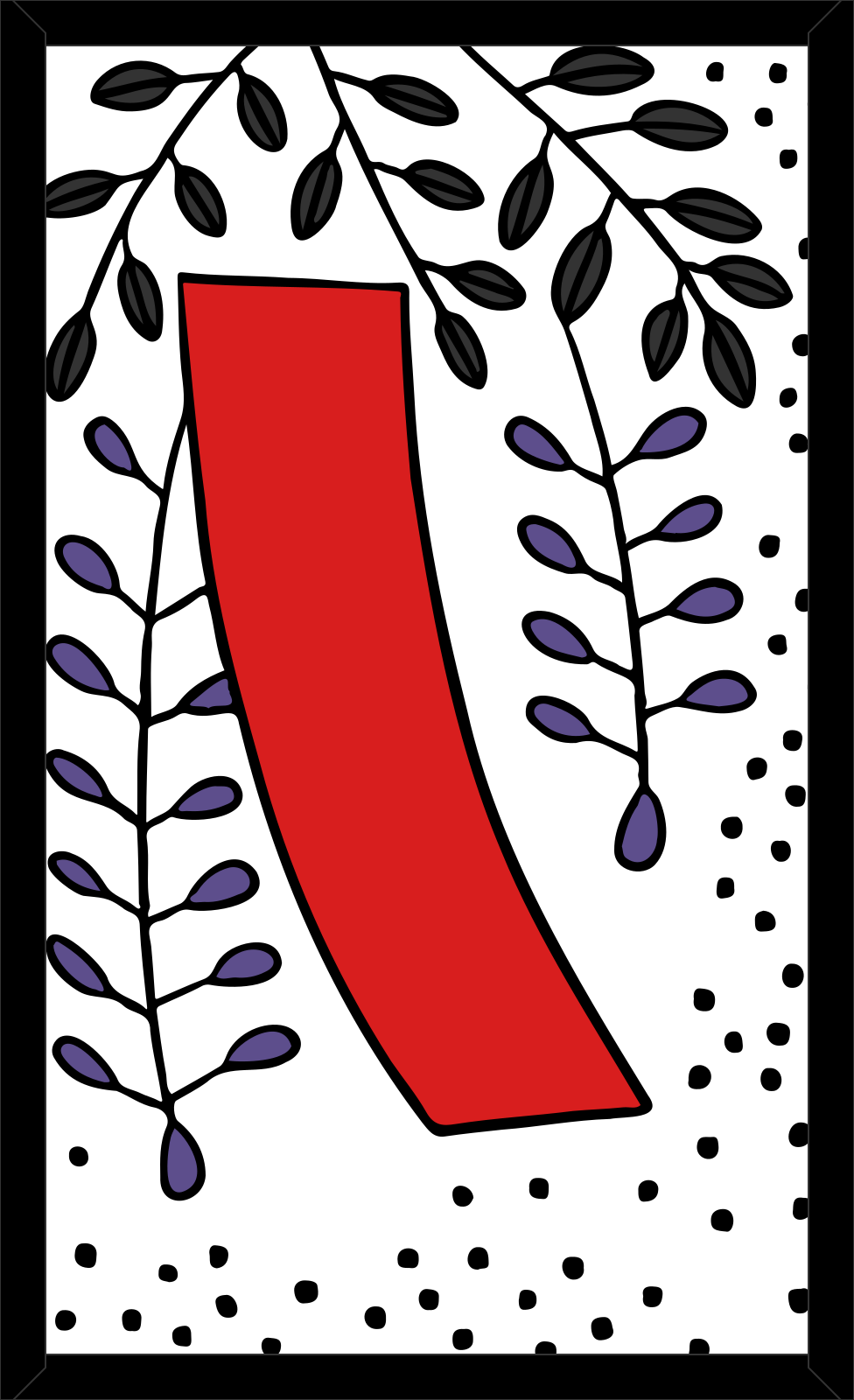
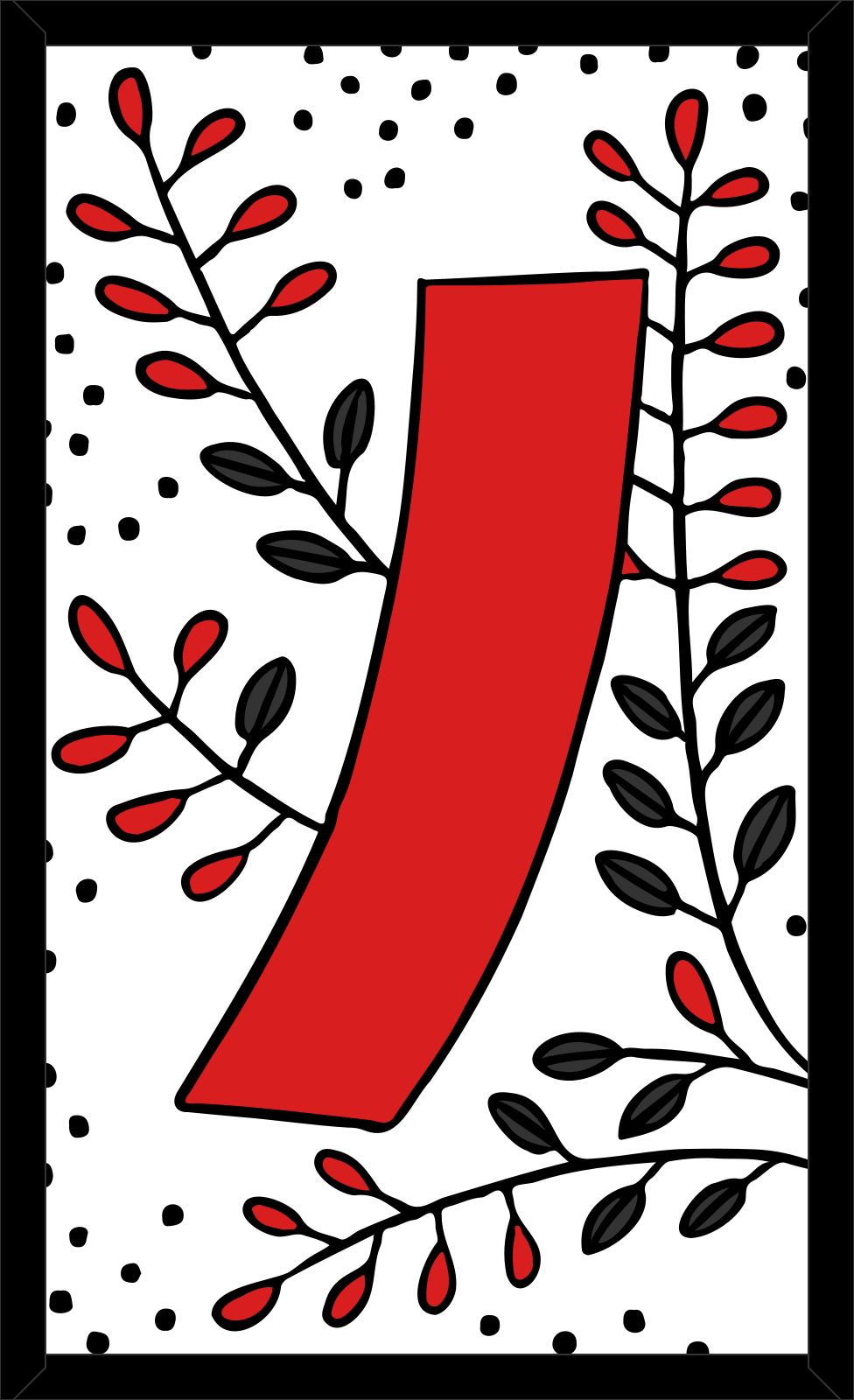
The three poem tanzaku, plus the Wisteria and Bush Clover tanzaku.
Akatan 5 + 2 extra = 7, and five tanzaku make Tan 1: 7 + 1 = 8. Doubled: 16 points.
Nintendo: Tan is void beside Akatan, so the base is 7; 7 × 2 = 14.
4. Just under the line
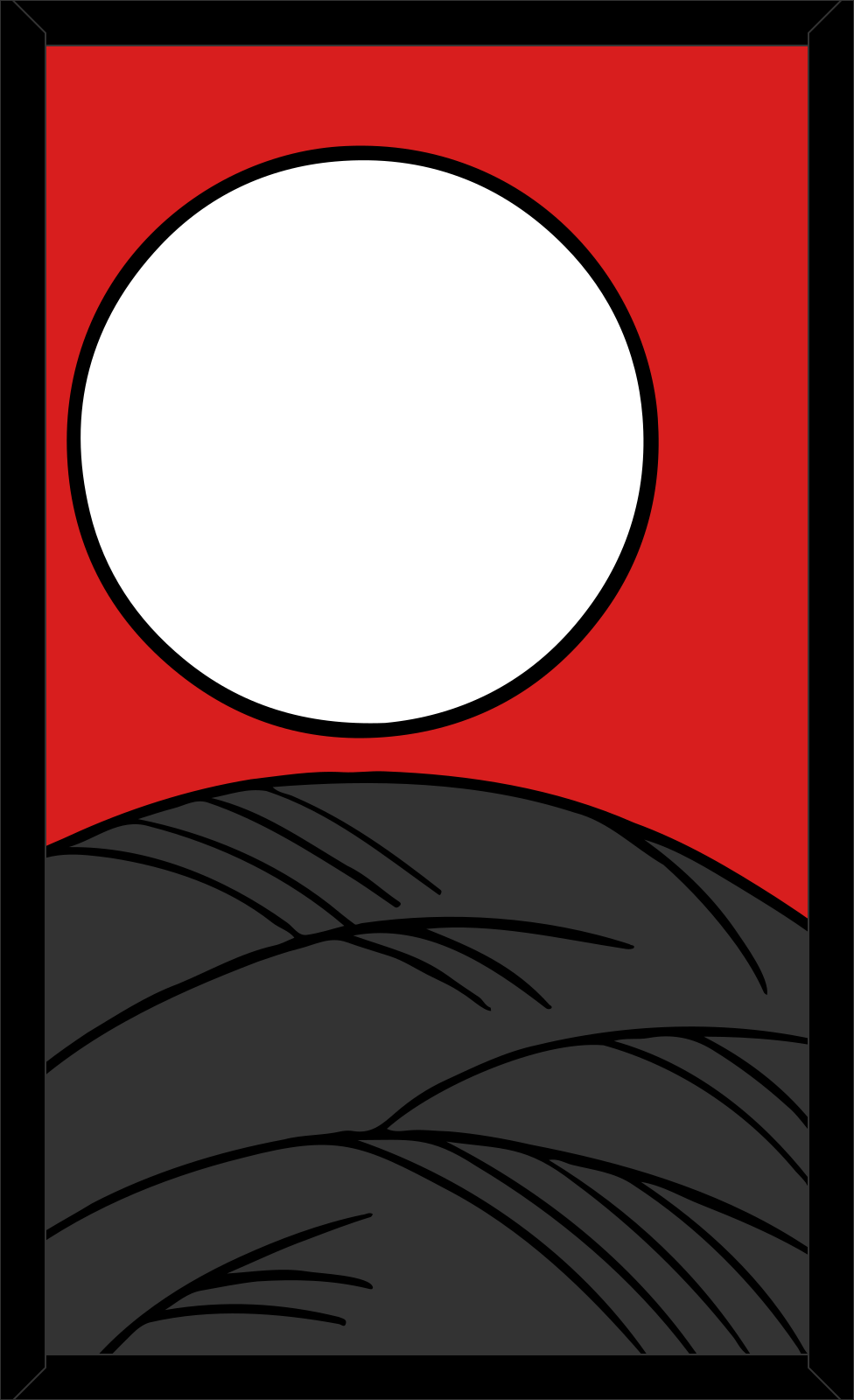
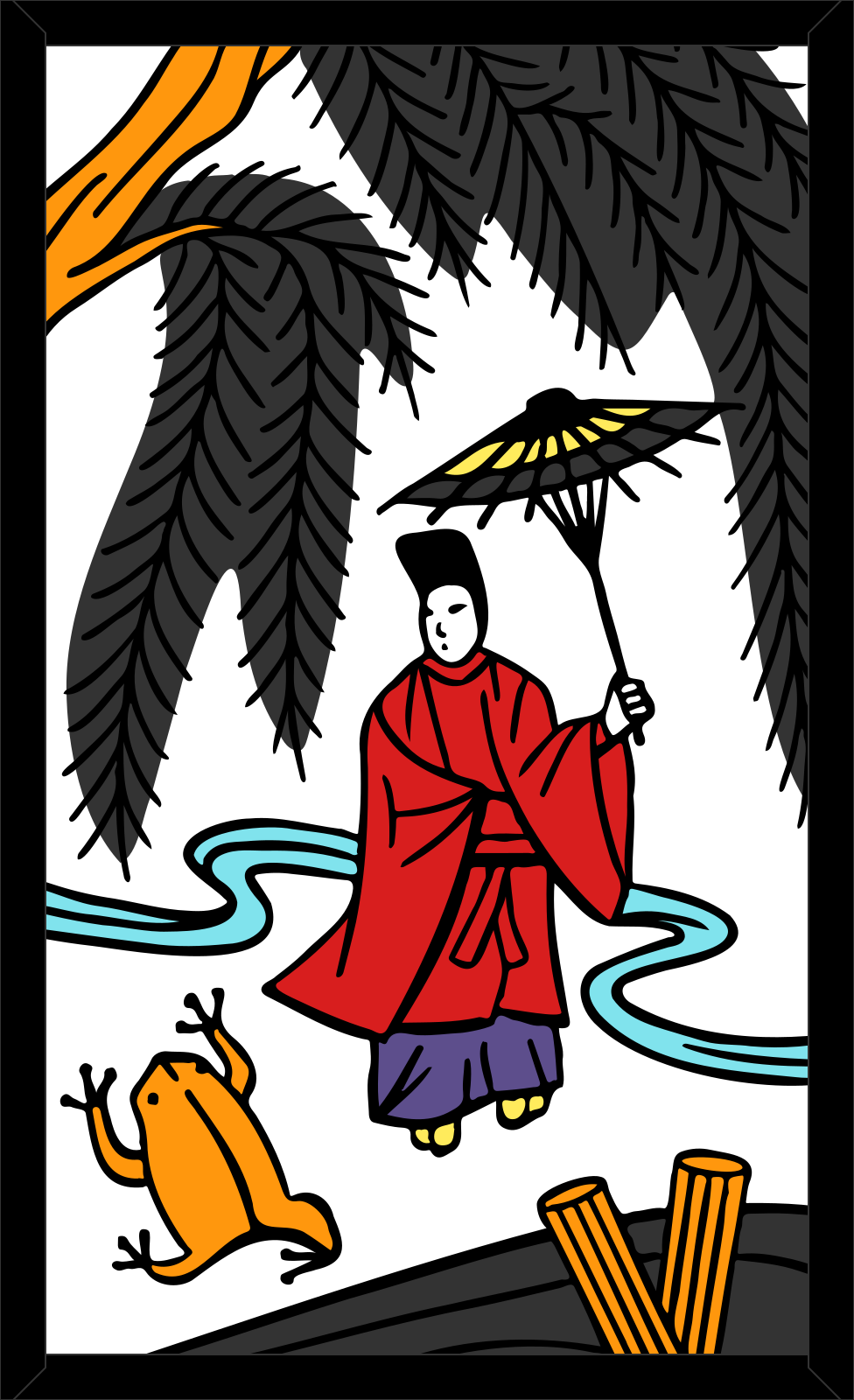
Four lights with the Rain: Ame Shikō.
Ame Shikō 7. Below 8: 7 points.
Nintendo: 7 or more doubles: 14.
5. A Koi-Koi that pays off
You make Tsukimi (5) and call Koi-Koi. Two turns later you take the Curtain: Hanami as well, and you call Shōbu.
Tsukimi 5 + Hanami 5 = 10; × 2 for 8 or more; × 2 for one call: 10 × 2 × 2 = 40. The loser has 25, so they pay 25, and with nothing left the match is over.
Nintendo: your own call does not multiply: 10 × 2 = 20.
6. A Koi-Koi that backfires
You called Koi-Koi once. Before you improve, your opponent completes Kasu with ten plains and calls Shōbu. Your yaku score nothing.
Kasu 1 × 2 for one call = 2 points to your opponent.
Nintendo: the same, 1 × 2 = 2.
7. Both players called
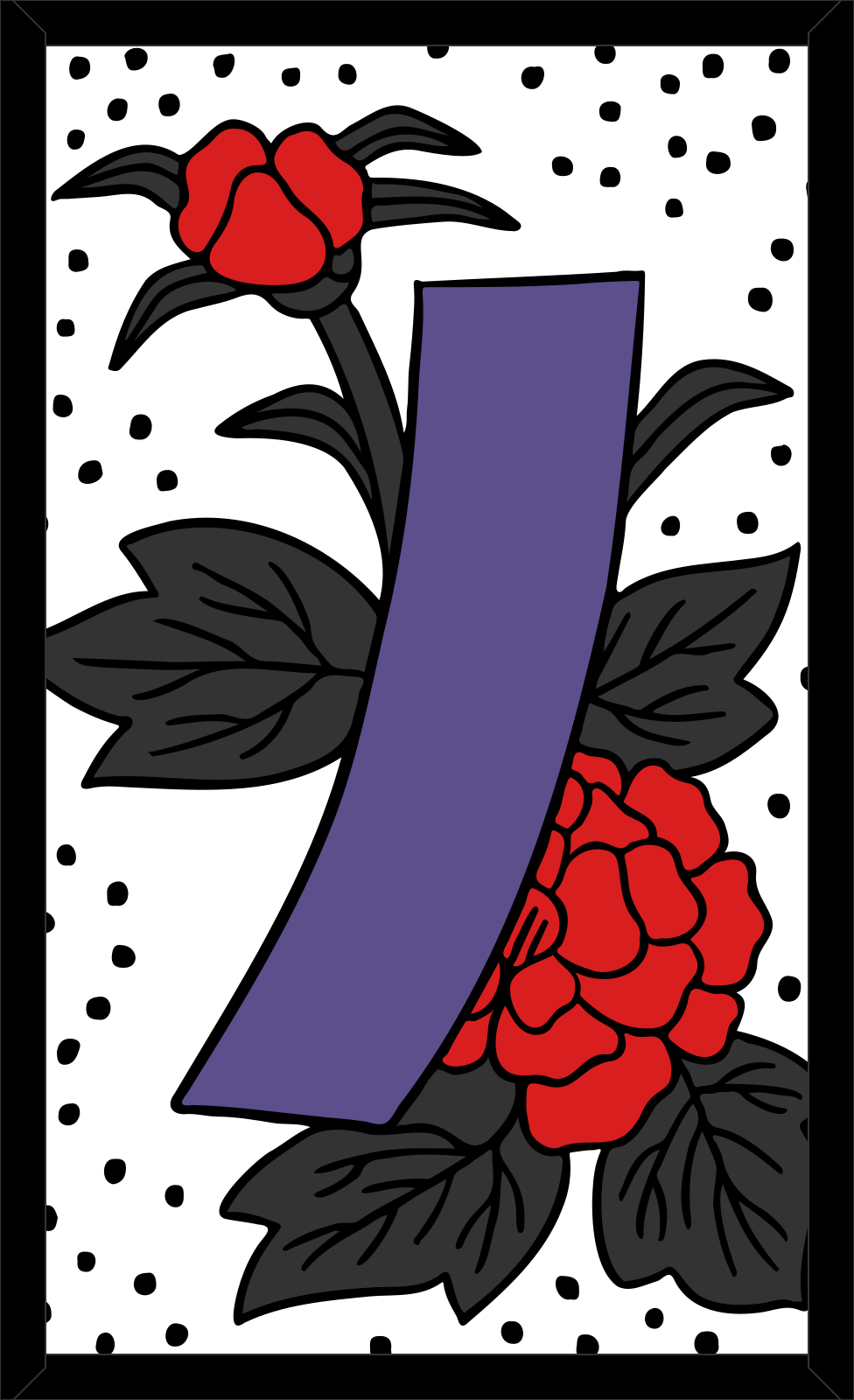
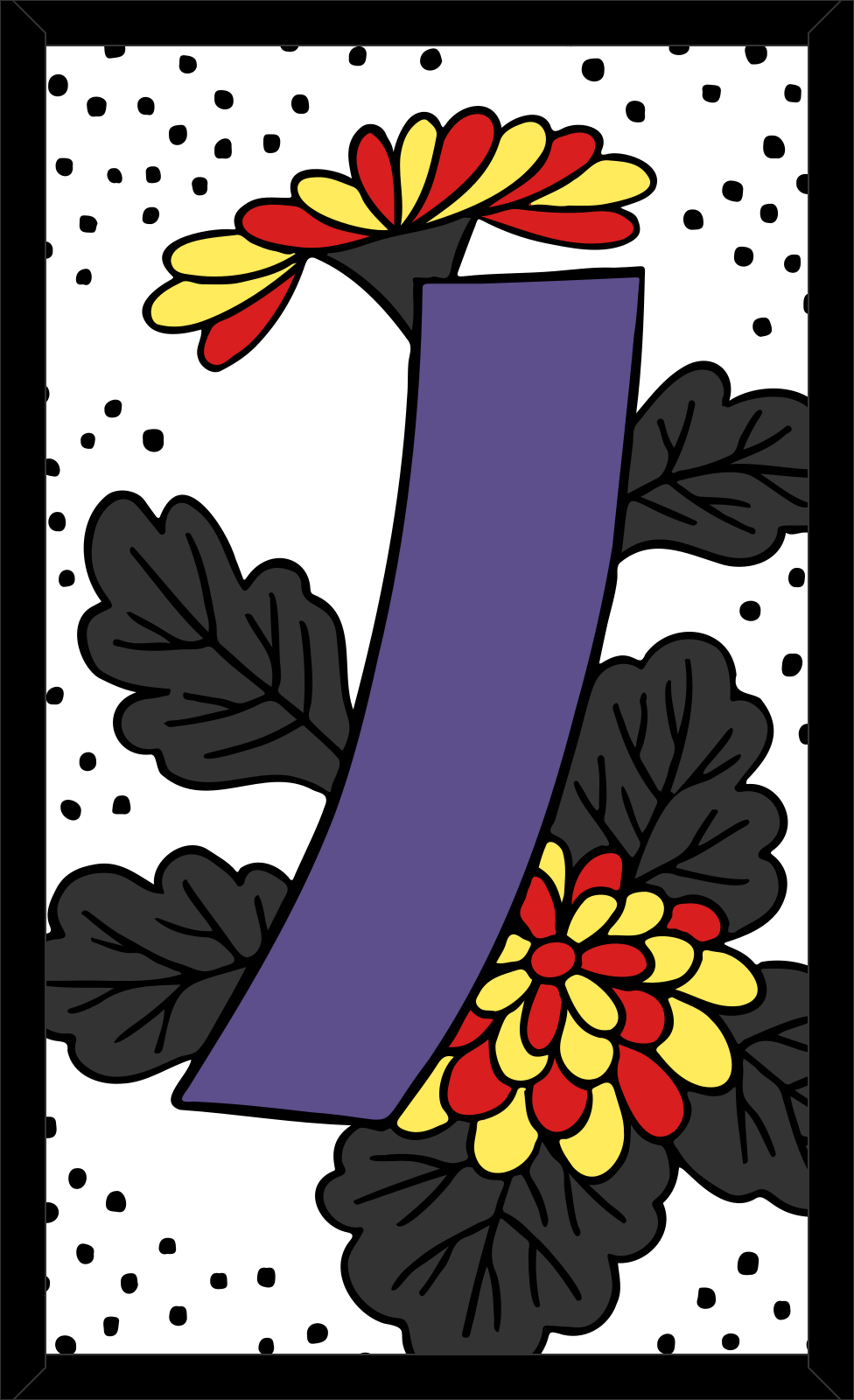
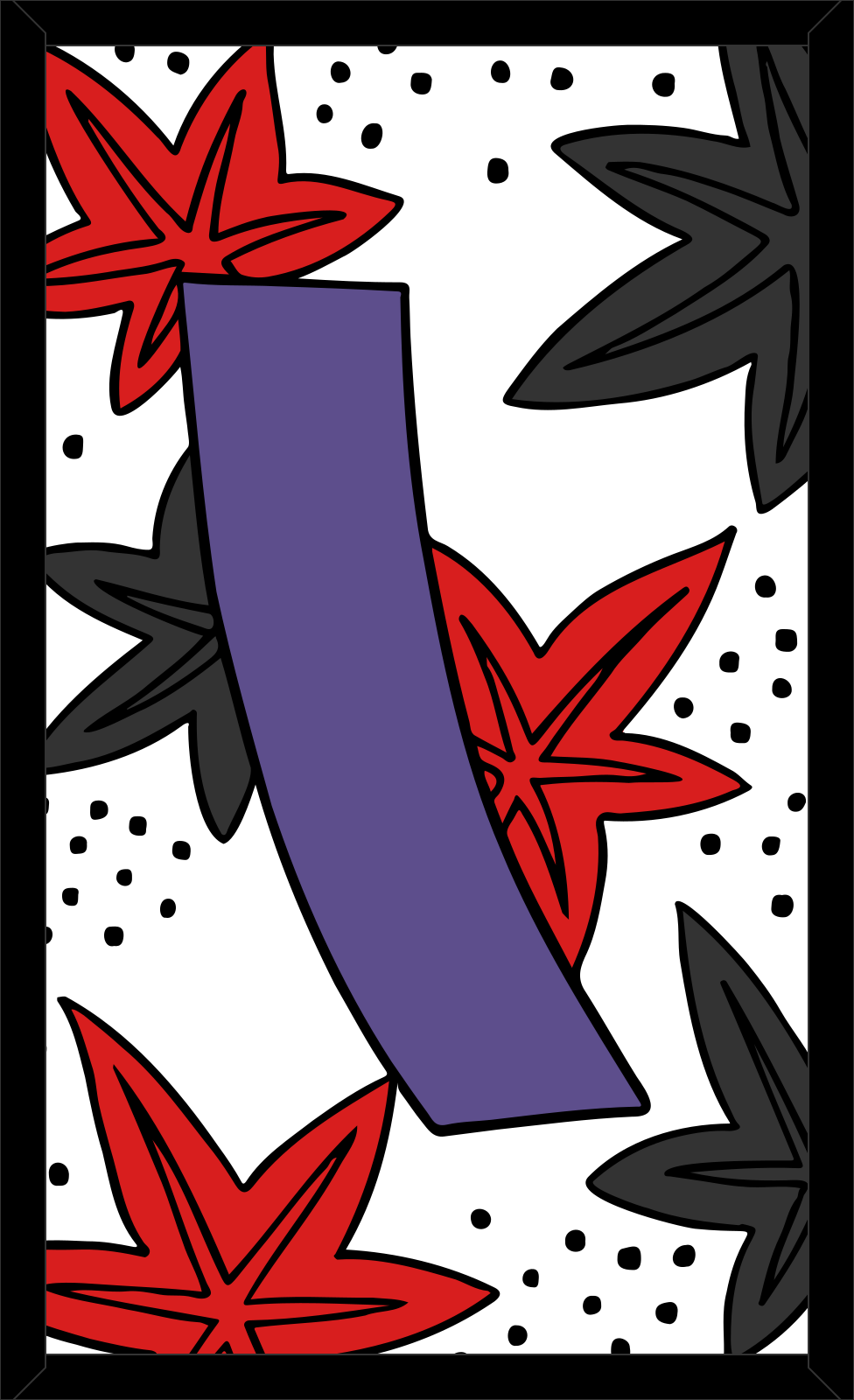

Each of you called Koi-Koi once. The winner holds the three blue tanzaku and the Willow tanzaku.
Aotan 5 + 1 = 6. Below 8, no doubling; × (1 + 2) = 18 points.
Nintendo: cannot happen: the first yaku after a Koi-Koi ends the round.
8. The doubling setting
After one Koi-Koi call you complete Shikō. The loser has 40 points.
Setting on: 8 × 2 × 2 = 32 points. Setting off: 8 × 2 = 16 points.
Nintendo: 16 if the call was yours; 32 if the loser had called, with both doublings applied as Japanese Wikipedia counts them.
9. Capped by what is left
All six poem and blue tanzaku, plus the Wisteria tanzaku.
Chōfuku 10 + 1 = 11, and seven tanzaku make Tan 1 + 2 = 3: 11 + 3 = 14, doubled to 28. A loser with 25 pays 25; a loser with 30 would pay 28.
Nintendo: Tan is void, so 11 × 2 = 22.
10. A dealt Teshi
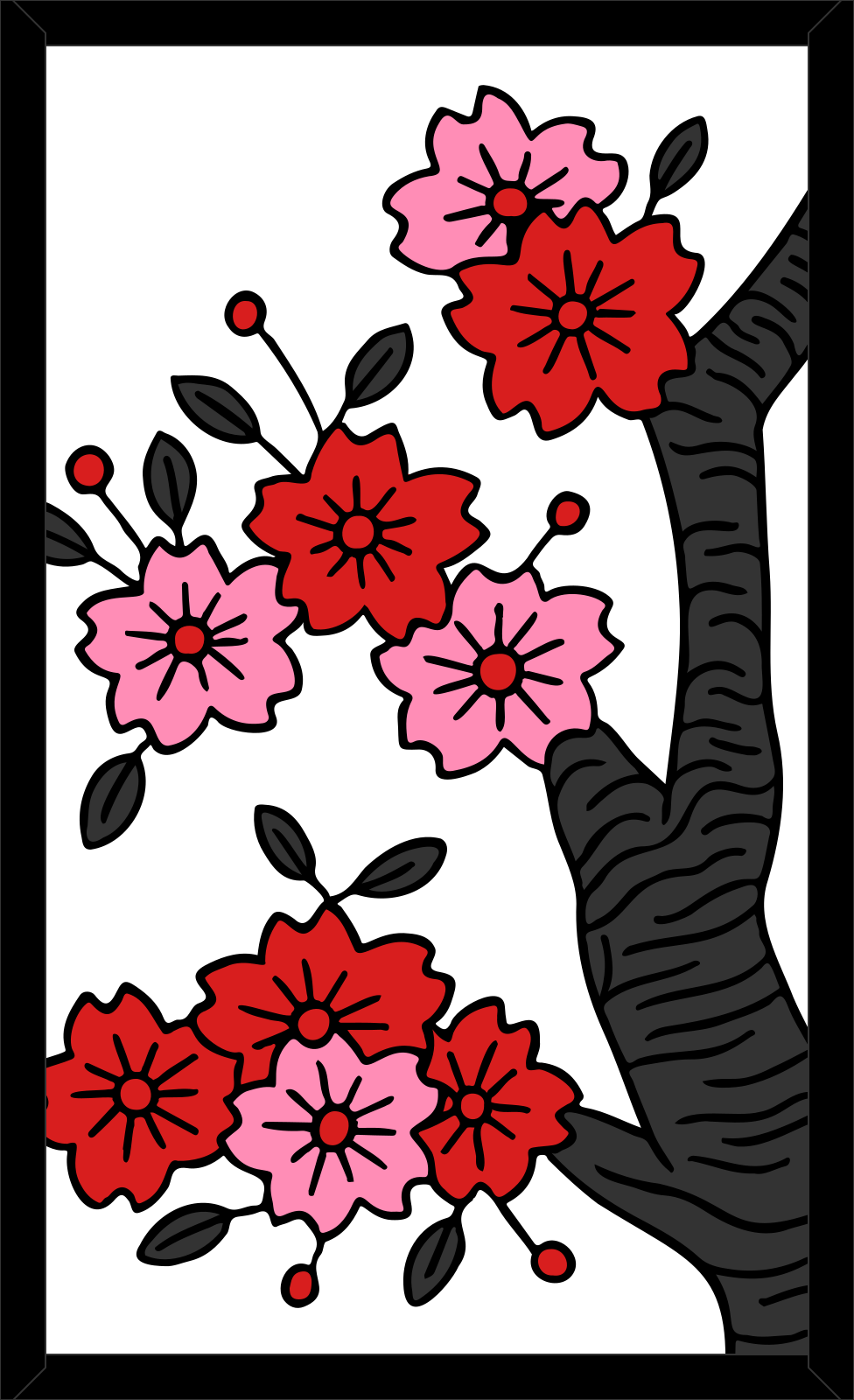
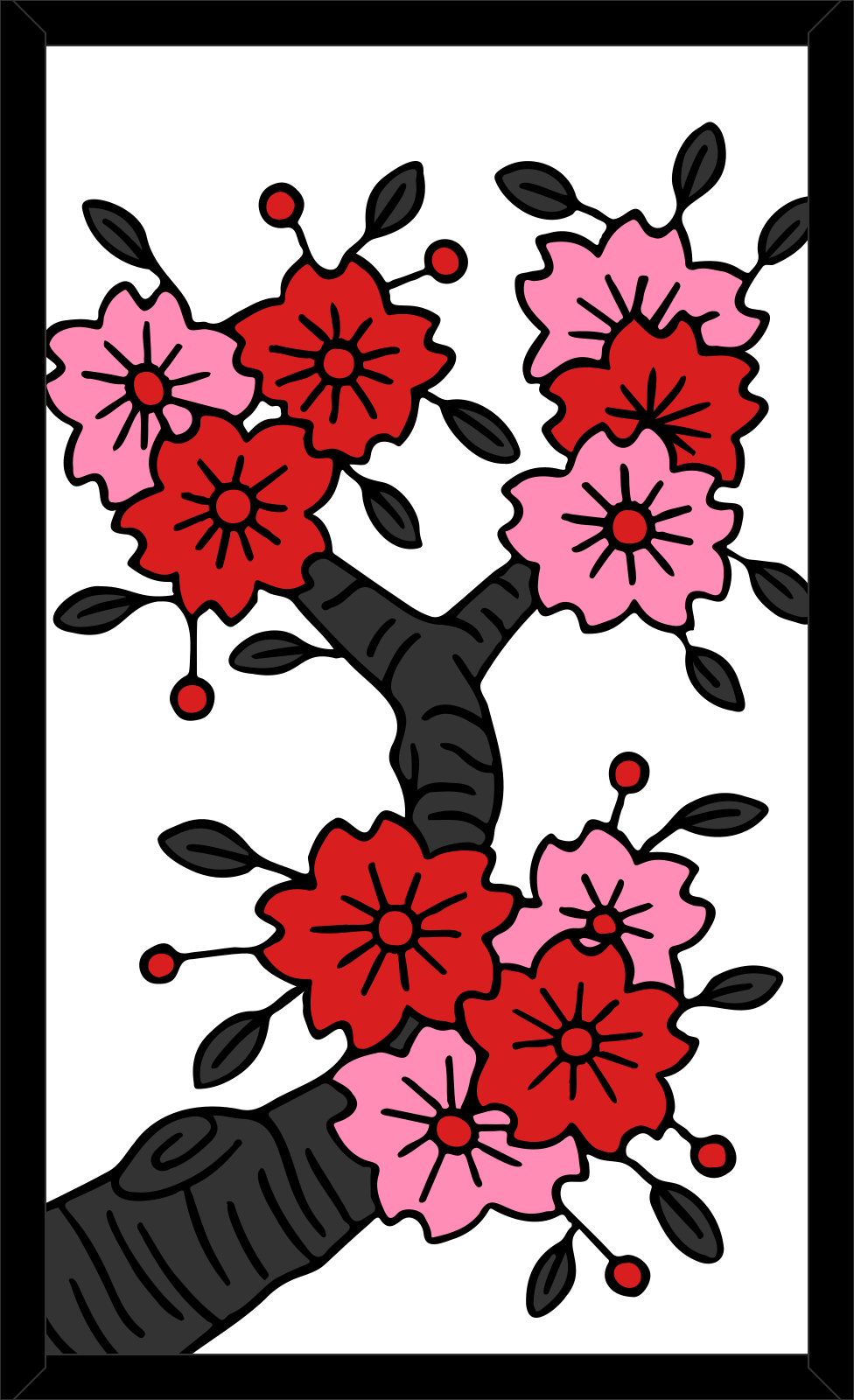
Your starting hand holds all four Cherry cards. The round ends before anyone plays.
Teshi 6, no calls and below 8: 6 points.
Nintendo: 6 as well.
Points calculator
Choose the winner’s yaku, the cards they captured of each kind and the Koi-Koi calls, and the calculator shows the count. It starts on this game’s rules; “Nintendo’s rules” switches the doubling, the multiplier and the counting of Tane, Tan and the Sake cup to Nintendo’s, and removes the 25-point cap. With this game’s rules it gives the same result as the game.
The calculator needs JavaScript. The worked examples above show the same arithmetic, step by step.
The dealt hands, Teshi and Kuttsuki, are left out: they always score 6 on their own, with nothing to multiply.
Rounds that score differently
- Nobody calls Shōbu. When both hands run out, the round is drawn and nobody pays, even if someone holds yaku or has called Koi-Koi without improving since. The same player deals again.
- A dealt hand yaku (Teshi or Kuttsuki) ends the round at once for 6 points, as in example 10. The player who had it deals next.
- The last turn. When both hands are empty, a new yaku can only be scored with Shōbu: Koi-Koi is not offered.
- After a Koi-Koi, you can stop again only when your total rises, from a new yaku or one more card for a +1 yaku. If it never rises and your opponent never scores, the round is drawn.
The rules page covers the whole turn, from the deal to the Koi-Koi decision.
Sources
- こいこい|花札の歴史・遊びかた. Nintendo: Doubling at 7 or more, ×2 after the opponent’s Koi-Koi, the round ending at the next yaku, 12 rounds with added scores, the no-game rule.
- こいこい. Wikipedia (Japanese): Both doublings applied together (×4), the mon unit, draws and oyaken.
- Koi-Koi. Fuda Wiki: Doubling at 7 or more, the “calls + 1” multiplier variant, drawn rounds.
- 花札「こいこい」のルール. 攻略大百科: The name baigaeshi.
- 花札こいこいの点数計算|役の合計→7文倍付→こい被りまで(例つき). サザノノ: The names 7-mon doubling (7文倍付) and koi-kaburi.