
The light yaku: Gokō, Shikō, Ame Shikō and Sankō
Last updated
Five of the 48 hanafuda cards are lights (hikari): the Crane, the Curtain, the Moon, the Rain and the Phoenix. Three or more of them make one of four yaku, and only the best one counts: Gokō (all five, also written Goko) scores 10 points, Shikō (four without the Rain) 8, Ame Shikō (the Rain and any three others) 7, and Sankō (three without the Rain) 5. Three lights that include the Rain make nothing.
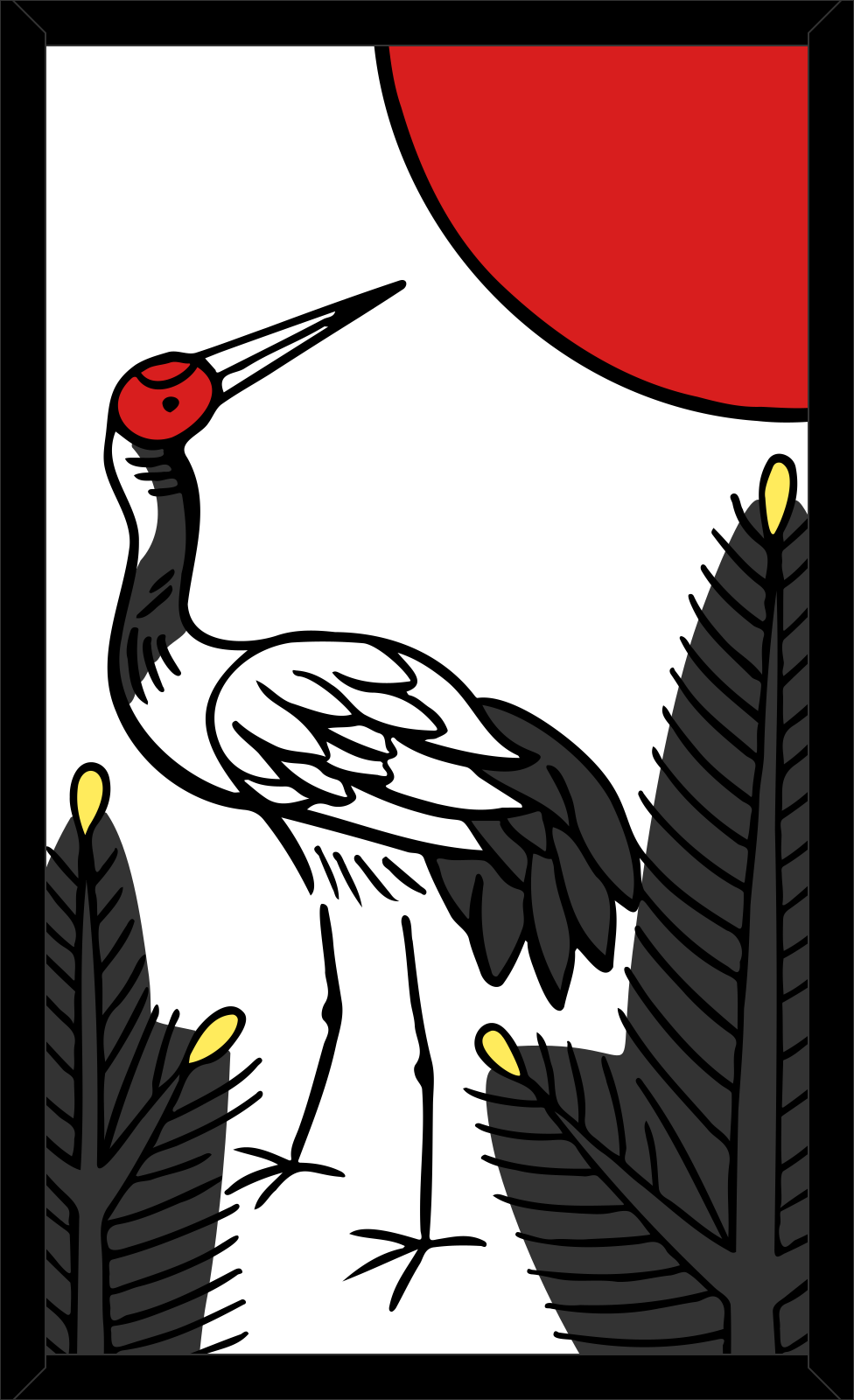
Crane松に鶴January · Light (hikari) · 20 pts 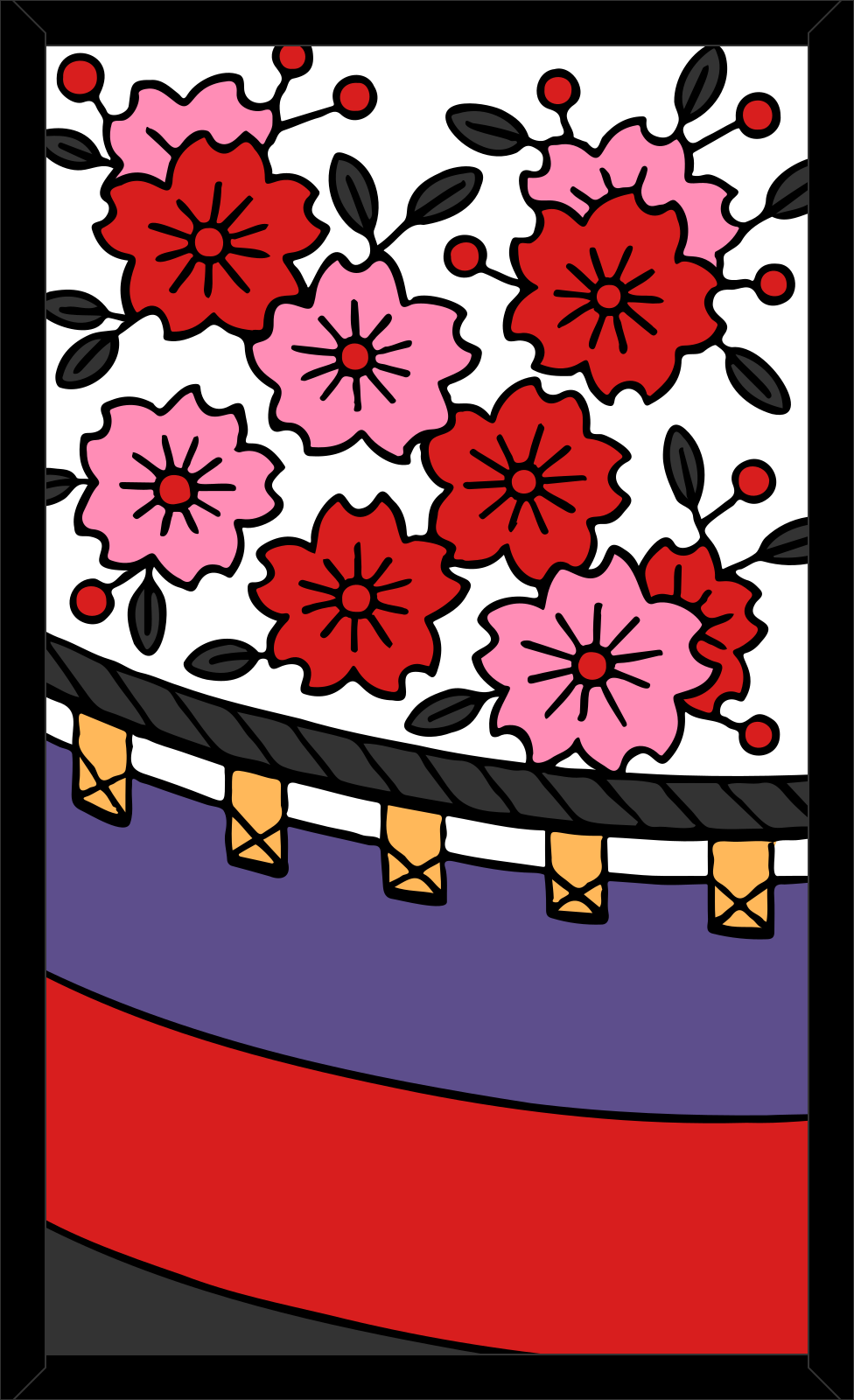
Curtain桜に幕March · Light (hikari) · 20 pts 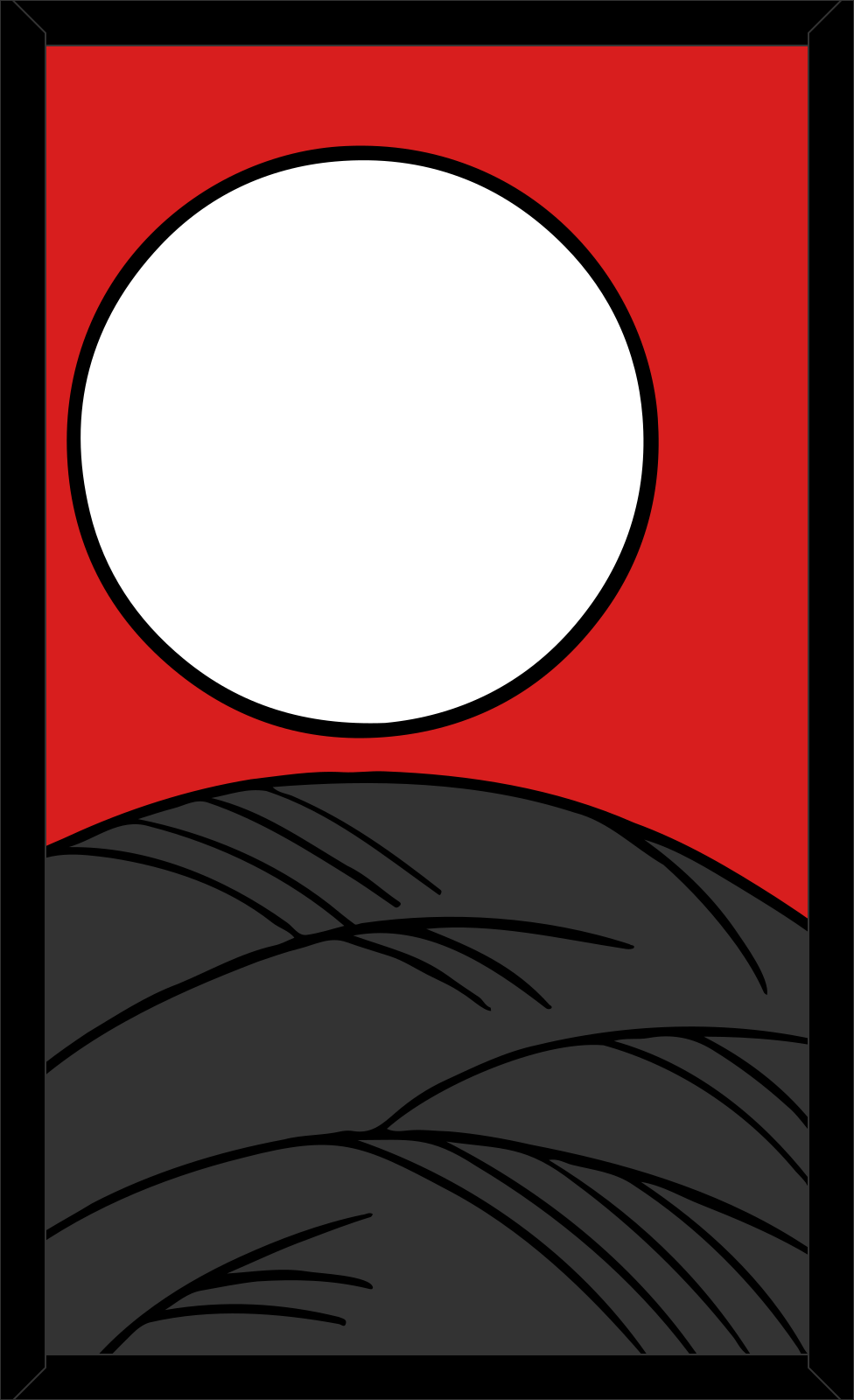
Moon芒に月August · Light (hikari) · 20 pts 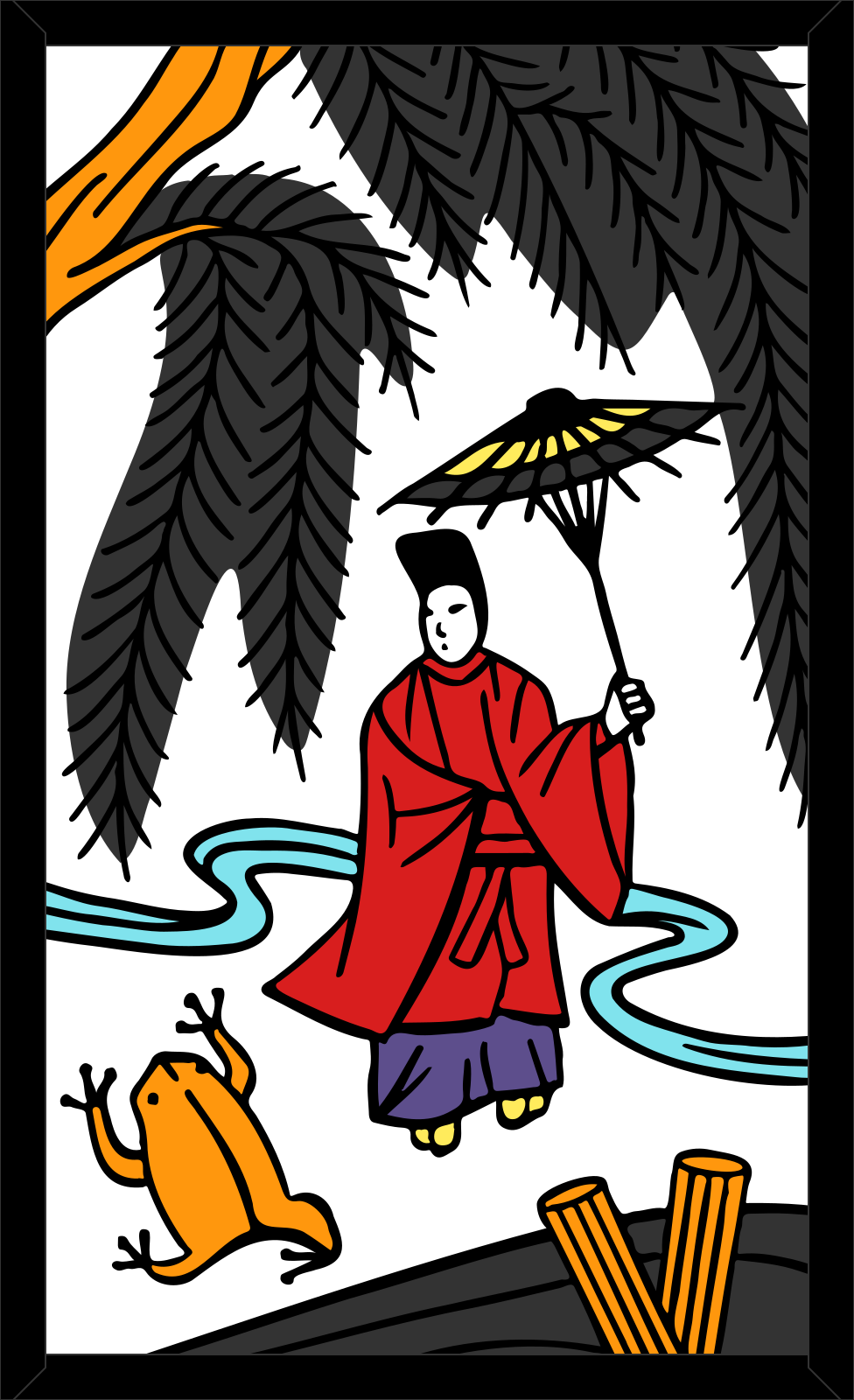
Rain柳に小野道風November · Light (hikari) · 20 pts 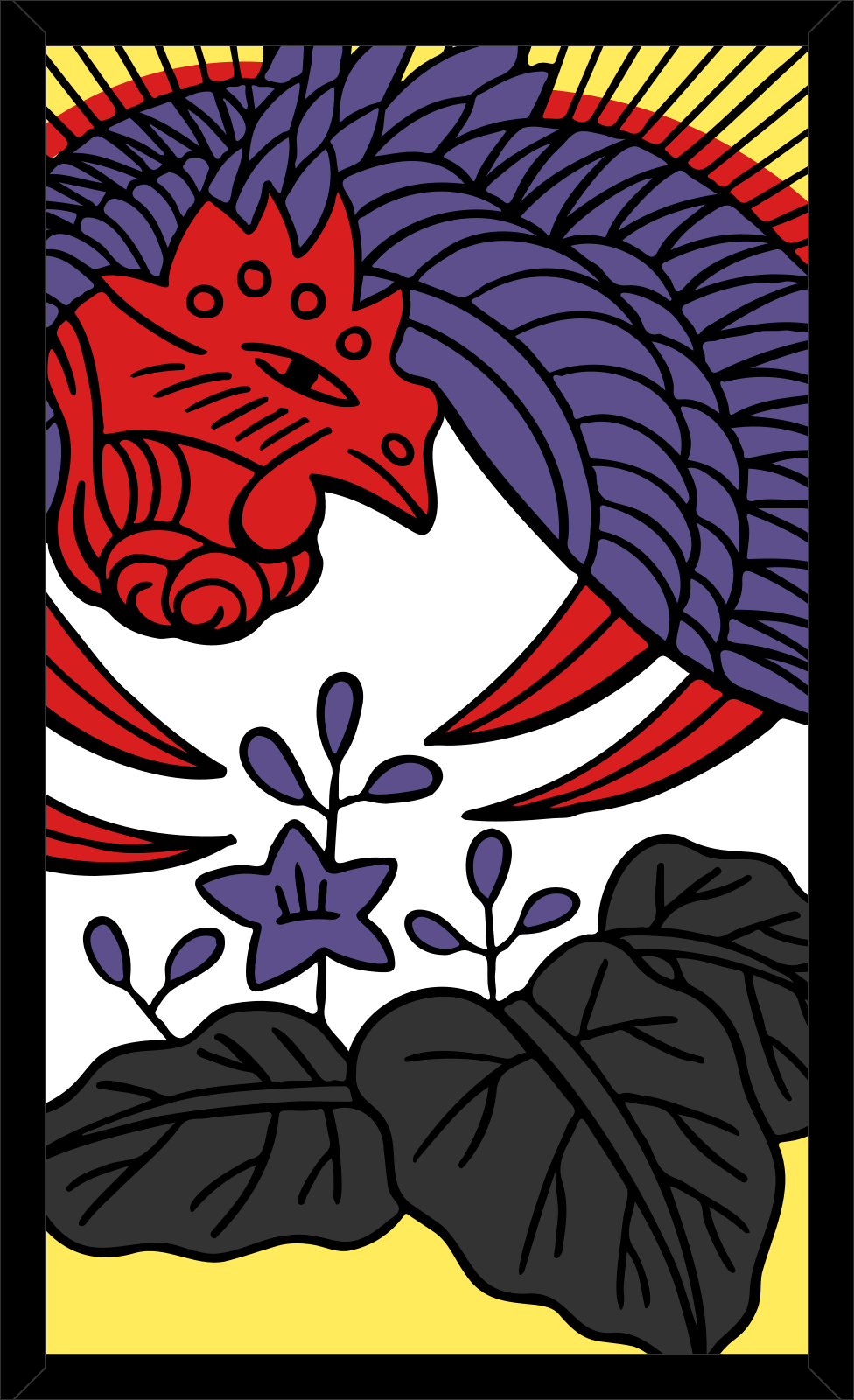
Phoenix桐に鳳凰December · Light (hikari) · 20 pts
The five light cards
Each light is the top card of its month, and no two share a month: January, March, August, November and December. Koi-Koi ignores their face value of 20 and scores only the yaku they make.
| Card | Month · flower | Counts for |
|---|---|---|
| Crane松に鶴matsu ni tsuru | January · Pine | all four light yaku |
| Curtain桜に幕sakura ni maku | March · Cherry | all four light yaku |
| Moon芒に月susuki ni tsuki | August · Pampas | all four light yaku |
| Rain柳に小野道風yanagi ni Ono no Tōfū | November · Willow | Ame Shikō, Gokō |
| Phoenix桐に鳳凰kiri ni hōō | December · Paulownia | all four light yaku |
The Rain (柳に小野道風) is the odd one out. November’s red and black Lightning card is a plain, not a light; it counts towards Kasu.
Points here and under Nintendo’s rules
The four values are the ones in Nintendo’s published Koi-Koi table[1]. What differs is the doubling that follows. This game doubles a round worth 8 points or more (a room setting, on by default), while Nintendo, like most Japanese rules, doubles from 7[1][2]. For the light yaku that changes exactly one result: Ame Shikō.
| Captured cards | This game | Nintendo’s rules |
|---|---|---|
| Crane, Curtain, Moon | Sankō 55 pts | Sankō 55 pts |
| Crane, Curtain, Moon, Phoenix | Shikō 88 × 2 = 16 pts | Shikō 88 × 2 = 16 pts |
| Crane, Curtain, Moon, Rain | Ame Shikō 77 pts | Ame Shikō 77 × 2 = 14 pts |
| All five lights | Gokō 1010 × 2 = 20 pts | Gokō 1010 × 2 = 20 pts |
| Rain, Crane, Curtain | no yaku0 pts | no yaku0 pts |
Only one light yaku counts
Light yaku never add up with each other. Four lights without the Rain are Shikō (8), not Shikō plus Sankō, so a fourth light adds 3 points and a fifth 2 more. With assisted highlighting on, the table says so before you capture: “Completes Shikō in place of Sankō, +3 pts”. The Rain never lowers your score either: with two other lights it makes nothing, and with three or four it adds 2 (Ame Shikō 7, or Gokō 10).
Light yaku do add up with everything else, and one card may count for several yaku. The Curtain and the Moon also belong to the two sake yaku, Hanami de ippai and Tsukimi de ippai:
- Crane, Curtain and Phoenix with the Sake cup: Sankō 5 + Hanami 5, and 10 is enough to double: 10 × 2 = 20.
- Rain, Crane, Moon and Phoenix with the Sake cup: Ame Shikō 7 + Tsukimi 5, so 12 × 2 = 24.
- All five lights with the Sake cup: Gokō 10 + Hanami 5 + Tsukimi 5, so 20 × 2 = 40. A loser only pays what they have left, and both players start with 25, so a round like this can end the match (how the 25-point pool works).
Lights and the koi-koi call
Sankō alone is 5 points and does not double. Stop there (Shōbu) and you score 5; call koi-koi, capture a fourth light that is not the Rain, and Shikō pays 8 × 2 × 2 = 32: doubled for reaching 8, and ×2 for the one call. Each call by either player raises that koi-koi multiplier by one, and it goes to whoever wins: if your opponent then makes a yaku and stops, your call multiplies their score (see Koi-Koi strategy).
The Rain: Ono no Michikaze and the frog
The Willow light shows a man in court dress under an umbrella, a stream, willow fronds and a frog leaping at a branch. He is the Heian calligrapher Ono no Michikaze (894–966), whose name hanafuda players usually read Ono no Tōfū. The story goes that, discouraged with his writing, he watched a frog jump again and again for a willow branch until it made it, and went back to his brush. Whether it happened is unknown: the tale spread from a puppet play first staged in 1754[5].
On the cards he is a newcomer. Earlier decks showed a rain goblin that players took for the robber Ono Sadakurō of the play Chūshingura[6][10]; the calligrapher is said to have replaced him around 1886, when flower cards were becoming legal to sell[6]. The whole Willow suit is simply called “rain” (ame), which gives Ame Shikō, “rainy four lights”, its name. Like many hanafuda games, Koi-Koi treats it as a lesser light[4]; the glossary lists its other names.
What the other four lights show
Crane (松に鶴), January
A red-crowned crane stands among pines under a huge red sun. Pine and crane are a pair of long-life emblems taken from Chinese painting[7], and the rising sun suits the first month: it recalls the first sunrise of the year.
Curtain (桜に幕), March
Cherry trees in full bloom above a striped curtain (maku), the kind hung between trees to mark off a blossom-viewing party. It is the card that turns the Sake cup into Hanami de ippai.
Moon (芒に月), August
A full moon rises over a hill of pampas grass against a red sky: the moon viewing of the eighth month of the old calendar, when pampas is set out for the moon. The black hill gives the card its nickname bōzu, “shaven head”[8]. With the Sake cup it makes Tsukimi de ippai.
Phoenix (桐に鳳凰), December
A Chinese phoenix (hōō) spreads its wings above paulownia leaves and flowers. In Chinese lore the phoenix alights only on the paulownia and appears in the reign of a wise ruler; the paulownia crest is still an emblem of the Japanese government[9].
Playing for the lights
- Watch five months. The lights are the January, March, August, November and December cards. Any card of the same month, played from the hand or turned over from the pile, takes a light from the table, so a light lying there is a race.
- Count what your opponent holds. Sankō and Shikō are made from the four lights other than the Rain, and Sankō needs three of them: once your opponent has two of those four, neither is possible for you this round. Gokō is gone as soon as they hold any light. With assisted highlighting on, a capture that puts one of your opponent’s yaku out of reach says so.
- Take the Rain when it is free. It only ever adds to your own lights, and it keeps your opponent from Ame Shikō and Gokō.
- Not every card comes out. At most 16 of the 24 draw-pile cards are turned over in a round, so an unseen light may never appear.
House rules that change the light yaku
The values of the light yaku differ from one rule set to another:
- Gokō is worth 15 in many rule sets; Fuda Wiki calls 15 the most common value and notes Nintendo’s 10[3].
- Sankō is 6 in some rules; others give Shikō 10 and Ame Shikō 8, and some leave Ame Shikō out altogether[2].
- A variant borrowed from Hachi-Hachi multiplies the round when lights are dealt face up to the table[3].
This game keeps Nintendo’s values, and no room setting changes them. The house rules page compares other common variants.
Questions
Why doesn’t the Rain count for Sankō?
Sankō is defined as three lights other than the Rain, in this game and in Nintendo’s table[1]. The Rain counts only with three other lights (Ame Shikō, 7) or with all four (Gokō, 10).
Is the Lightning card a light?
No. November’s red and black Lightning is the Willow plain: it counts towards Kasu, ten plains for 1 point, and never towards a light yaku.
Are “lights” and “brights” the same cards?
Yes. English guides use both words for hikari, the five 20-point cards, so Gokō also appears as “Five Brights”. This game says lights, as in its yaku names (Five Lights, Three Lights and so on).
Sources
- こいこい|花札の歴史・遊びかた. Nintendo: Yaku values, the 7-point doubling, the koi-koi rule
- こいこい. Wikipedia (Japanese): Common rules and other values
- Koi-Koi. Fuda Wiki: Gokō at 15; variants
- Willow. Fuda Wiki: The Rain Man and its names
- 小野道風. Wikipedia (Japanese): The frog story and the 1754 play
- 花札. Wikipedia (Japanese): The redrawn November light (after Ebashi Takashi, Hanafuda, 2014)
- 花札の謎シリーズ!1月札『松に鶴』. Ōishi Tengudō (card maker, Kyoto)
- 花札の謎シリーズ!8月札『芒に月』(山に月). Ōishi Tengudō
- 花札の謎シリーズ!12月札『桐に鳳凰』. Ōishi Tengudō
- 花札の謎シリーズ!11月札『柳に小野道風』. Ōishi Tengudō