Te-awase Koi-Koi Online: play with friends
Play Japan’s classic flower-card game free in your browser: invite a friend with a link, or practise against the computer.
How Koi-Koi works
Koi-Koi (also written koi koi or koikoi) is a card game for two players, played with hanafuda: the 48 Japanese flower cards, four for each month of the year. You capture cards by matching their month, and your captures score only in sets called yaku.
DealEach player gets 8 cards and 8 go face up on the table. The other 24 are the draw pile.
Match by monthPlay a card from your hand. If a table card shows the same flower, take both; if not, your card stays on the table. Then turn over the top card of the pile and do the same with it.
Collect yakuCaptured cards score only as yaku, such as three Lights, or the Boar, the Deer and the Butterflies.
Koi-Koi or ShōbuWhen your turn ends with a new yaku, call Shōbu (shobu) to end the round and score, or koi-koi to play on for more. If your opponent scores first, you get nothing.
ScoreYour yaku points are added up. Each koi-koi call in the round, by either player, raises one shared multiplier (×2, ×3…), and in this game a round of 8 points or more also doubles, unless the room switched that off.
Win the matchBoth players start with 25 points and the loser of a round pays the winner. After 6 or 12 rounds the player with more points wins, or sooner if one runs out.
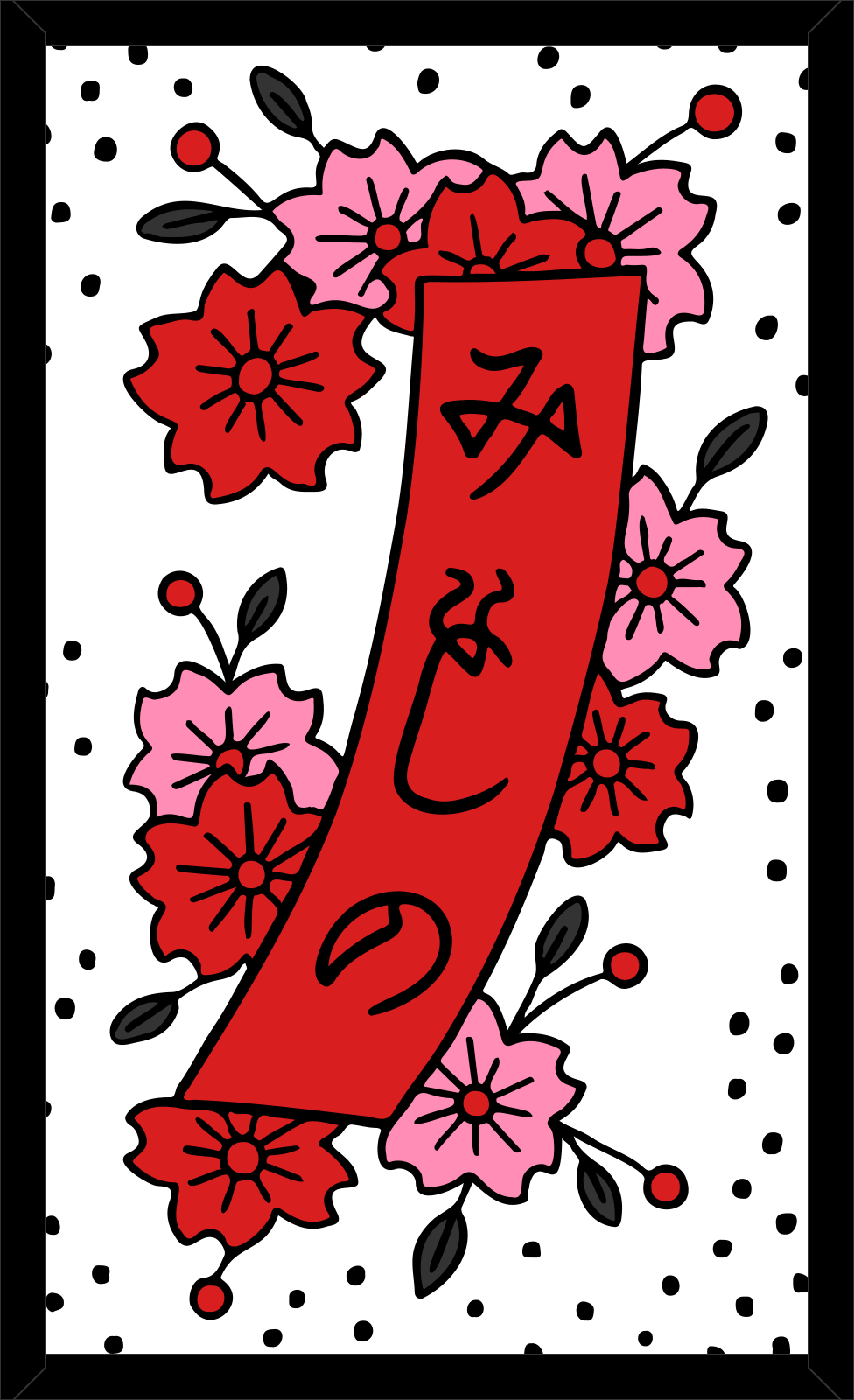

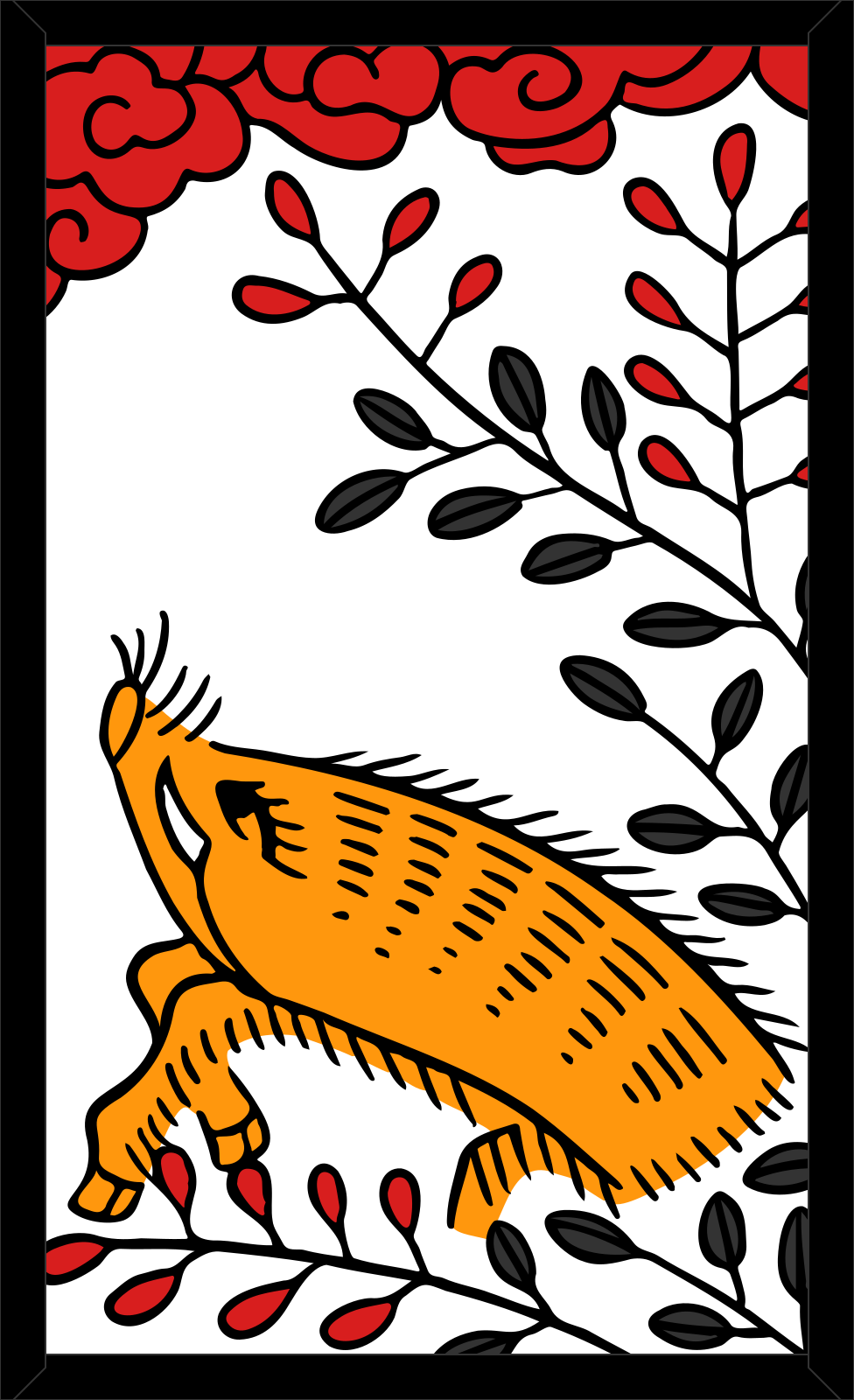
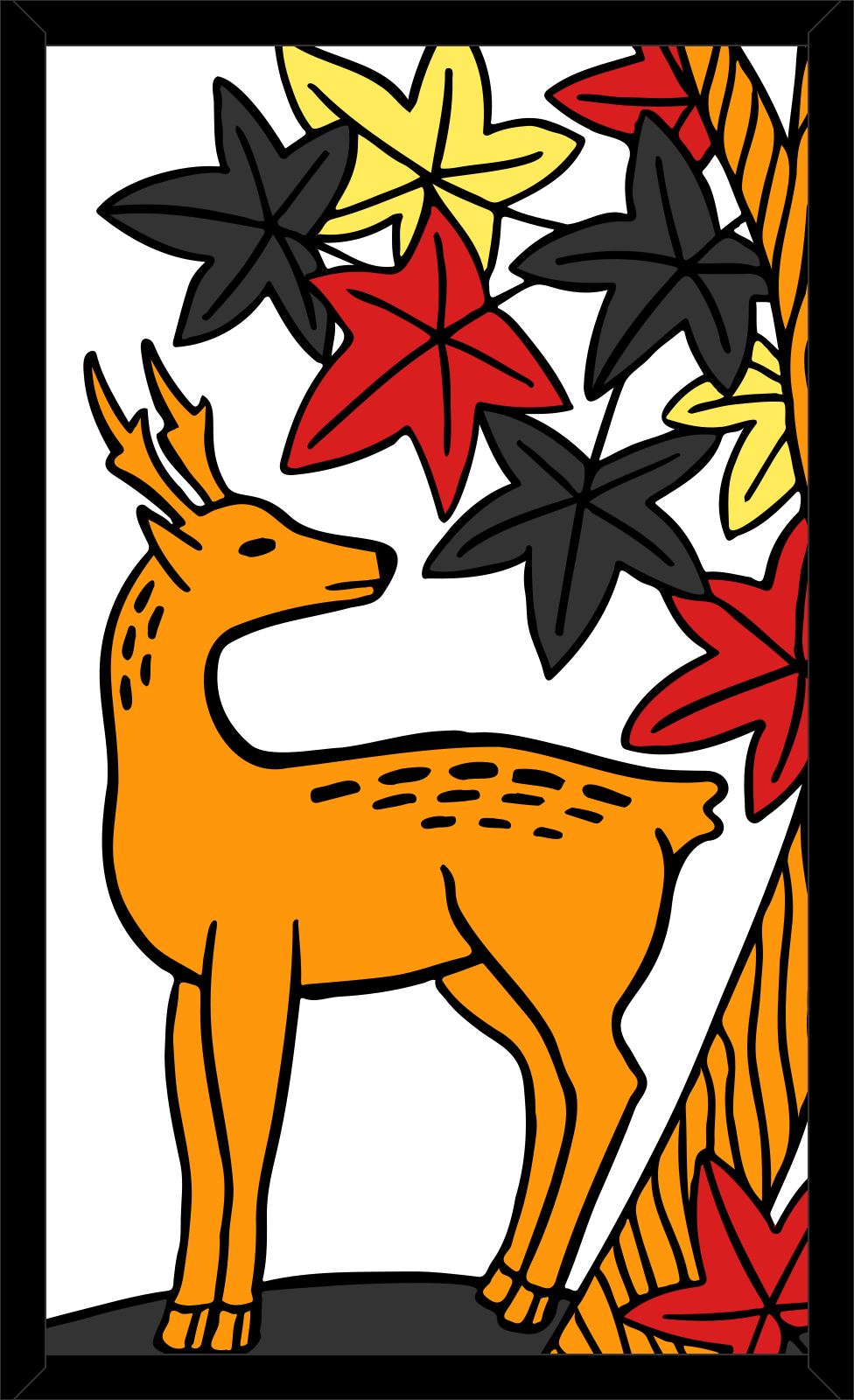
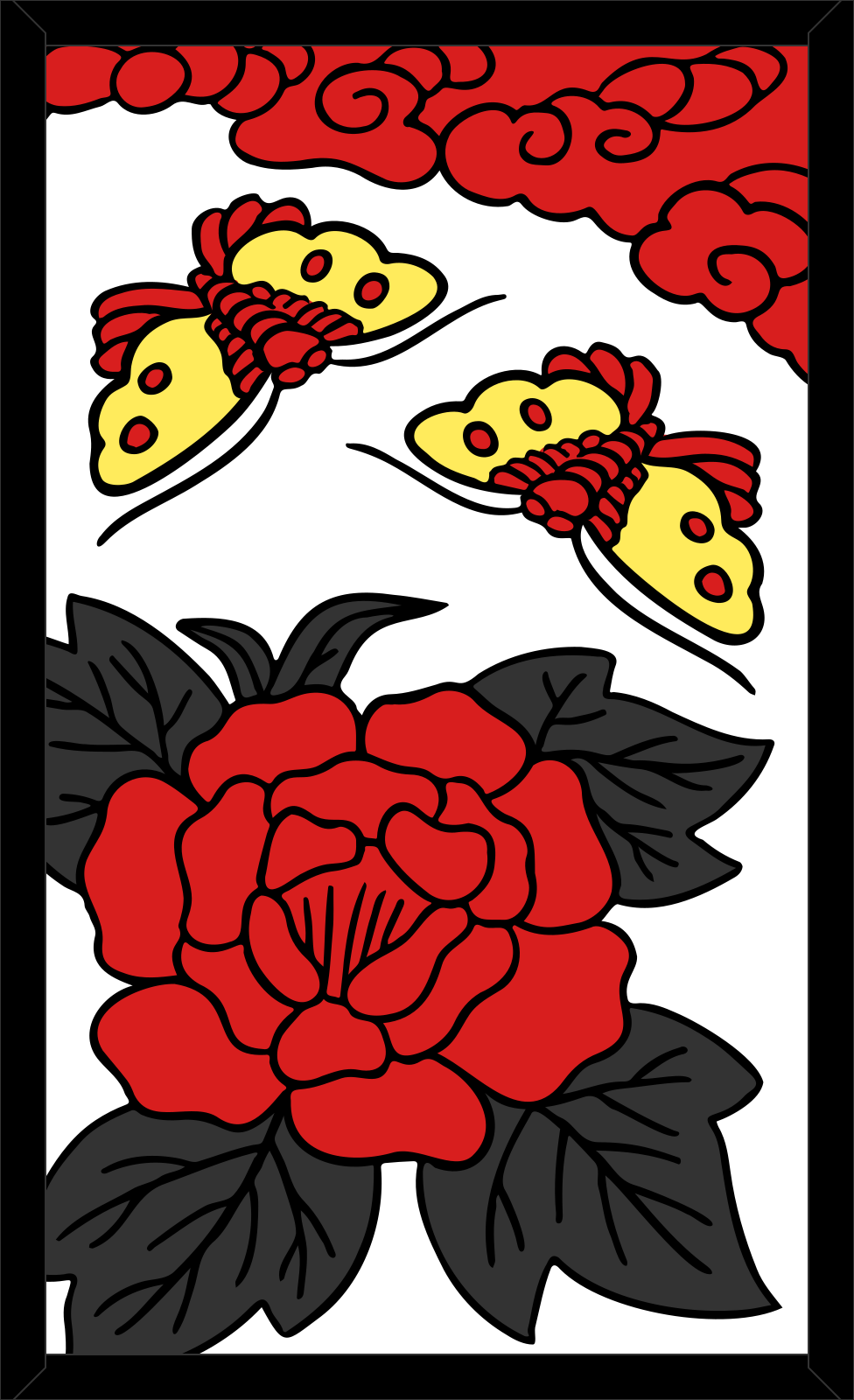
The rules with pictures go through every case, from a first dealer to a drawn round, and scoring shows the points worked out step by step.
Ways to play Koi-Koi online
Everything runs in the browser, on a phone, a tablet or a computer, and it is free.
With a friend
Create a private room and send your friend the invite link, or give them the room code. A password is optional. Online play needs a Google Account or an Apple Account.
Play with a friendIn a public room
Public rooms are listed in the lobby while their host waits for an opponent: pick one and ask to join. Online wins count towards the lobby’s rankings once both players confirm the result.
How rooms workAgainst the computer
Practise against Hokusai, the computer player, without an account. The game runs on your device, is not saved and does not count in the rankings.
Practise against the computerAs an app
Add Koi-Koi to your home screen, Dock or app list straight from the browser, with no app store. Practice then works offline too.
Install the app
The yaku at a glance
Only the best Light yaku counts, and the Red & Blue Tanzaku counts instead of Akatan and Aotan; every other yaku adds up, and one card can count towards several. Yaku marked “+” gain a point for every card beyond the set.
| Yaku | Points |
|---|---|
| Five Lights (Gokō)All five lights: Crane, Curtain, Moon, Rain and Phoenix. | 10 |
| Four Lights (Shikō)Four lights without the Rain card. | 8 |
| Rain Four Lights (Ame Shikō)Four lights including the Rain card. | 7 |
| Three Lights (Sankō)Three lights other than the Rain card. | 5 |
| Flower Viewing (Hanami de ippai)The Curtain and the Sake cup. | 5 |
| Moon Viewing (Tsukimi de ippai)The Moon and the Sake cup. | 5 |
| Boar, Deer, Butterflies (Inoshikachō)The Boar, the Deer and the Butterflies. +1 pt for each other tane card. | 5+ |
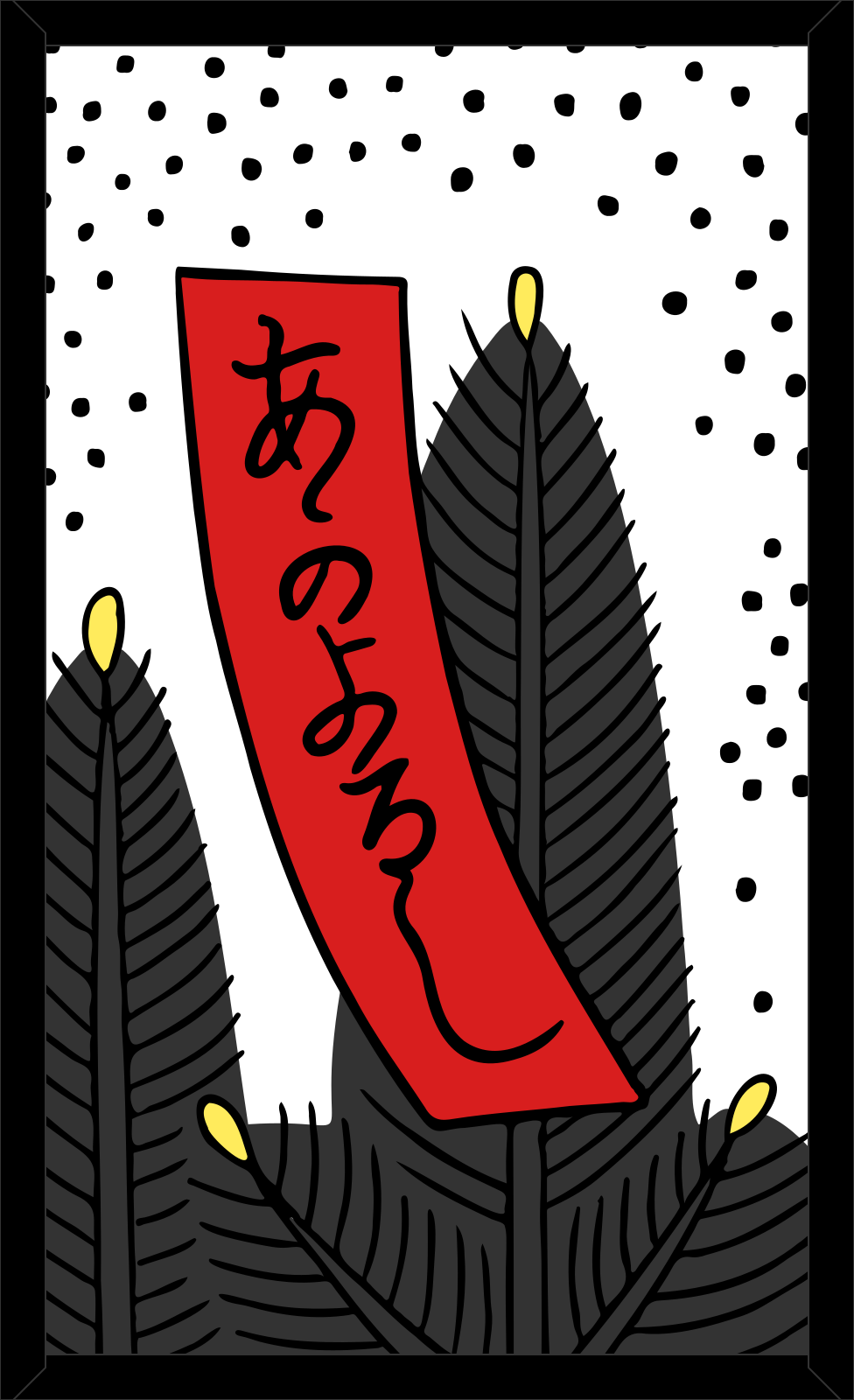
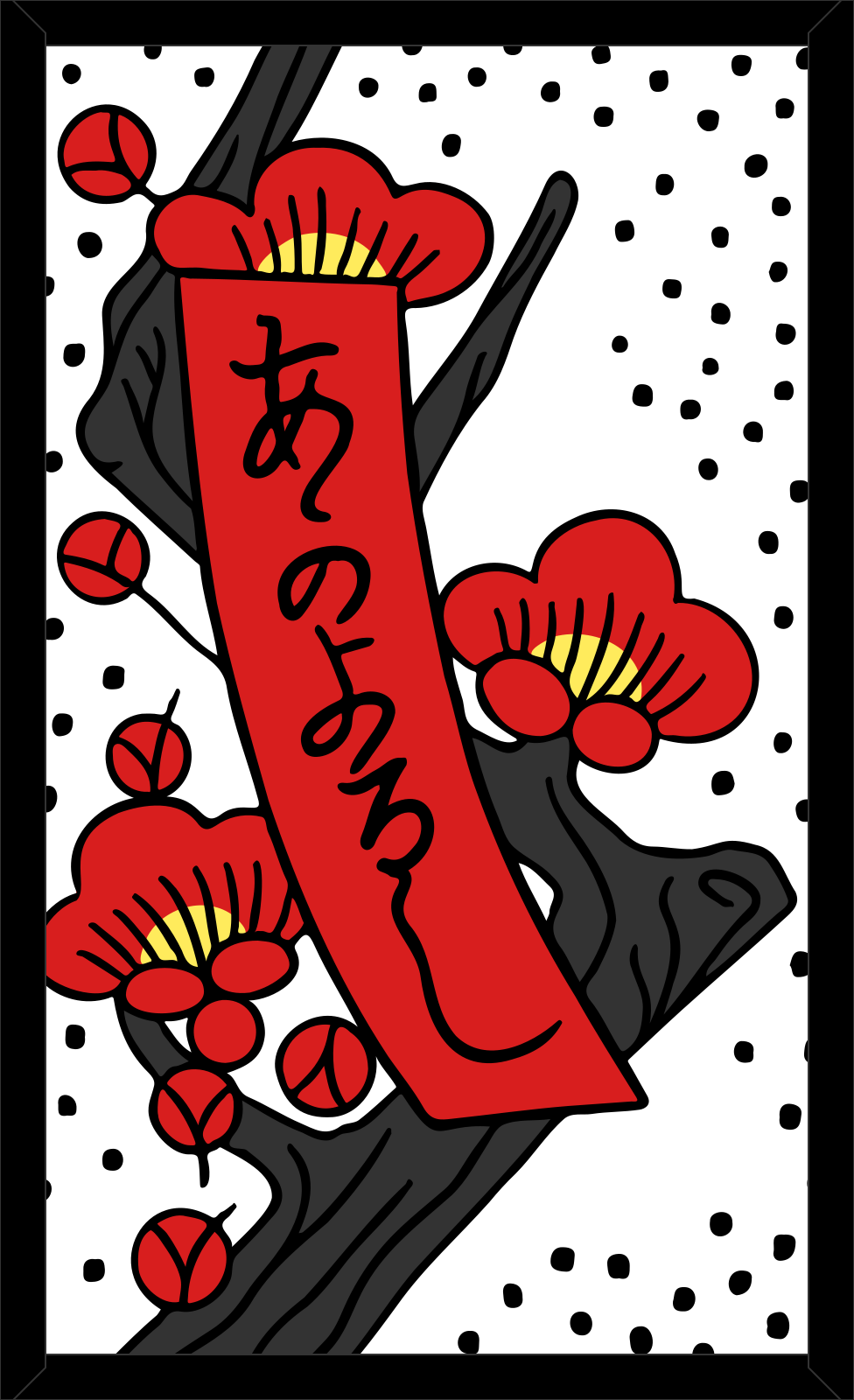
| Red Poem Tanzaku (Akatan)The three red poem tanzaku (Pine, Plum, Cherry). +1 pt for each other tanzaku. | 5+ |
| Blue Tanzaku (Aotan)The three blue tanzaku (Peony, Chrysanthemum, Maple). +1 pt for each other tanzaku. | 5+ |
| Red & Blue Tanzaku (Akatan Aotan no Chōfuku)The three red poem and the three blue tanzaku. Counts instead of Akatan and Aotan. +1 pt for each other tanzaku. | 10+ |
| Animals (Tane)Any 5 tane (10-point cards, the Sake cup included). +1 pt for each additional tane. | 1+ |
| Tanzaku (Tan)Any 5 tanzaku. +1 pt for each additional tanzaku. | 1+ |
| Plains (Kasu)Any 10 plain (1-point) cards, the Lightning included. +1 pt for each additional plain. | 1+ |
| Four of a Month (Teshi)Dealt all 4 cards of one month. Scores 6 points and ends the round at once. | 6 |
| Four Pairs (Kuttsuki)Dealt 4 pairs of different months. Scores 6 points and ends the round at once. | 6 |
The points are those of Nintendo’s published table. Where this game differs from Nintendo’s rules, the house rules page says so. For example, here a round of 8 points or more doubles (Nintendo: 7), and the Sake cup counts only as an animal, not also as a plain.
All yaku with their cardsThe hanafuda deck
The 48 cards run from the pine of January to the paulownia of December, four to a month. Each card is also a Light (20), an Animal (10), a Tanzaku ribbon (5) or a Plain (1); the values tell the kinds apart, but only yaku score.
 JanuaryPine
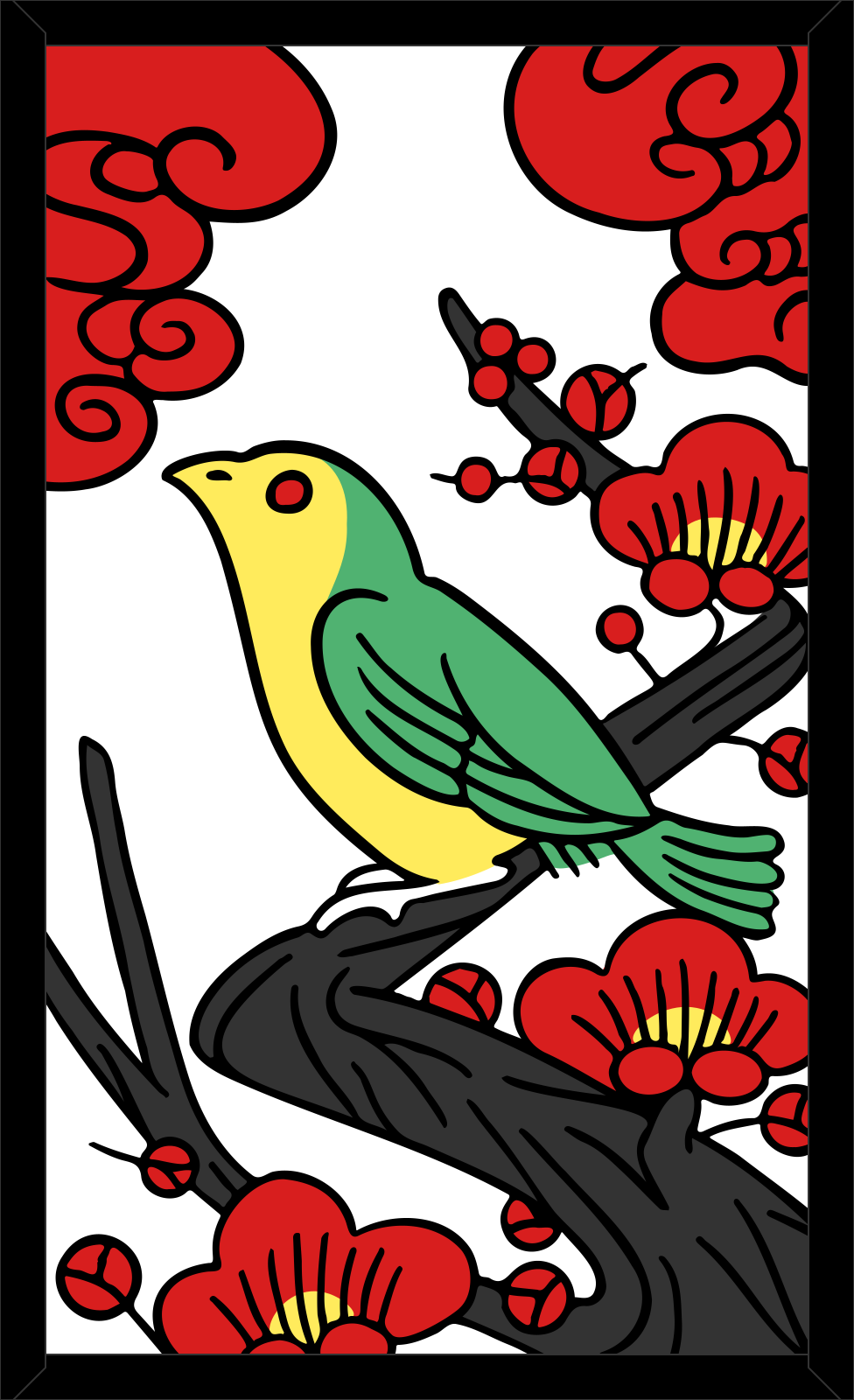 FebruaryPlum
- MarchCherry
 AprilWisteria
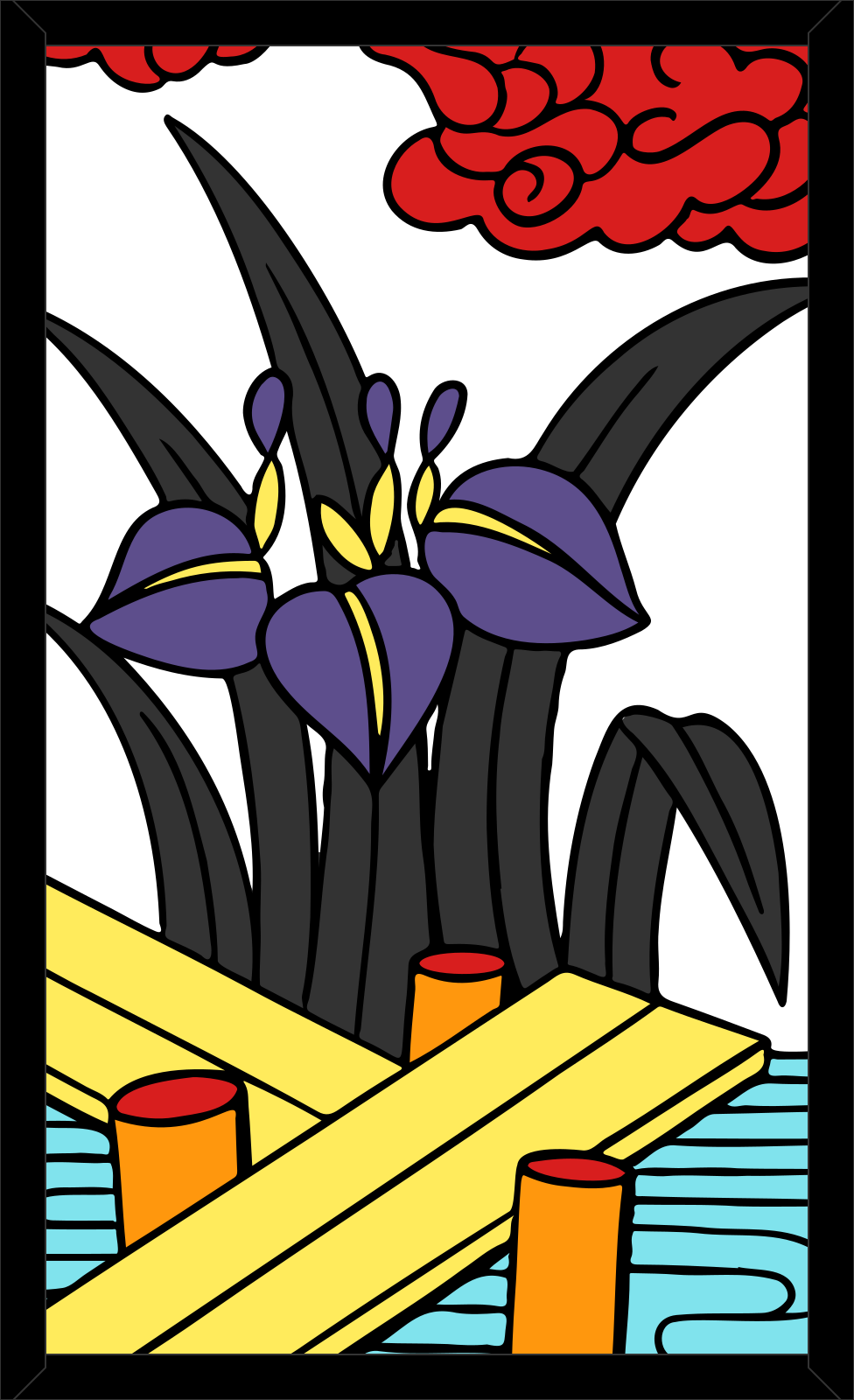 MayIris
- JunePeony
- JulyLespedeza
 AugustPampas
 SeptemberChrysanthemum
- OctoberMaple
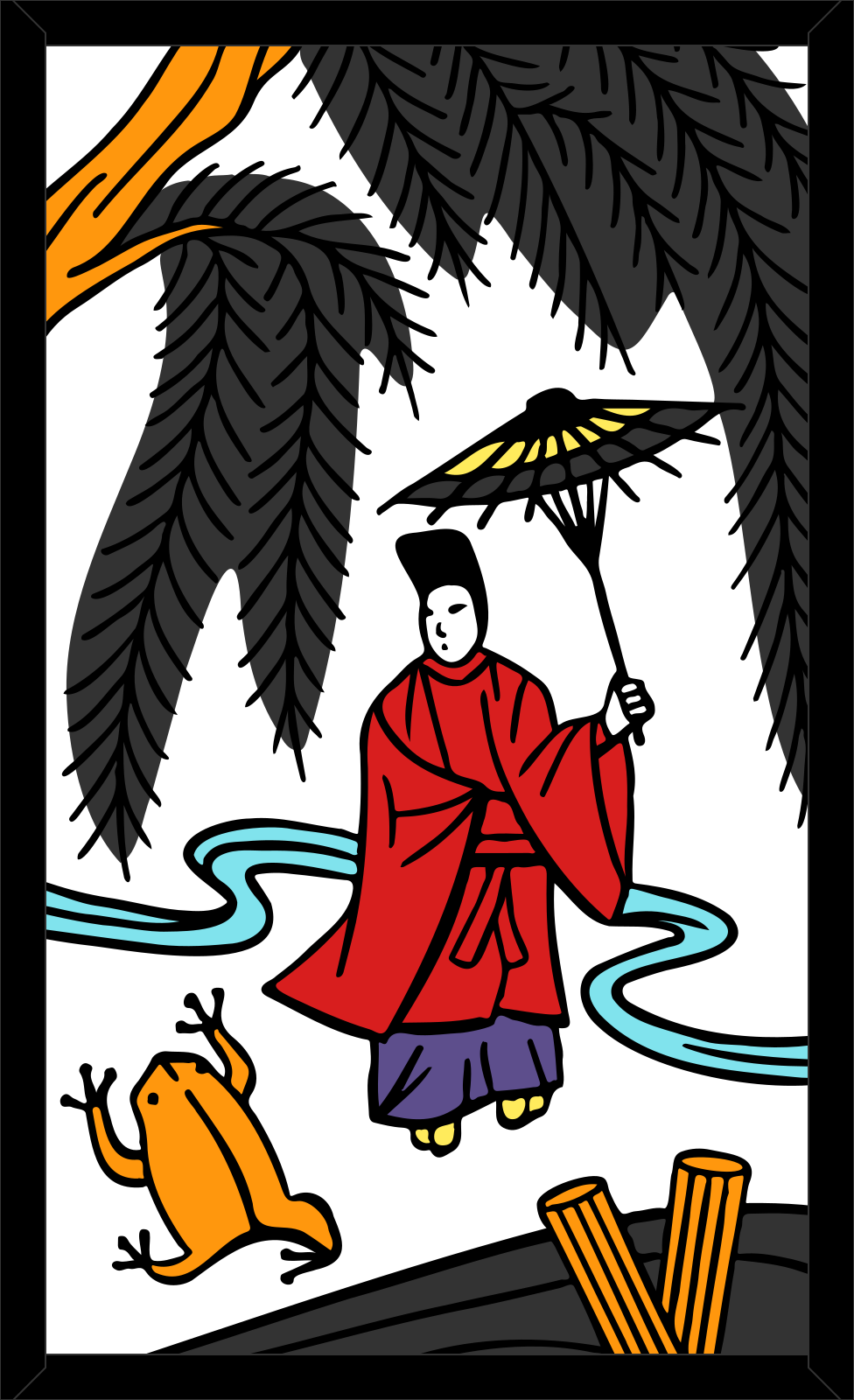 NovemberWillow
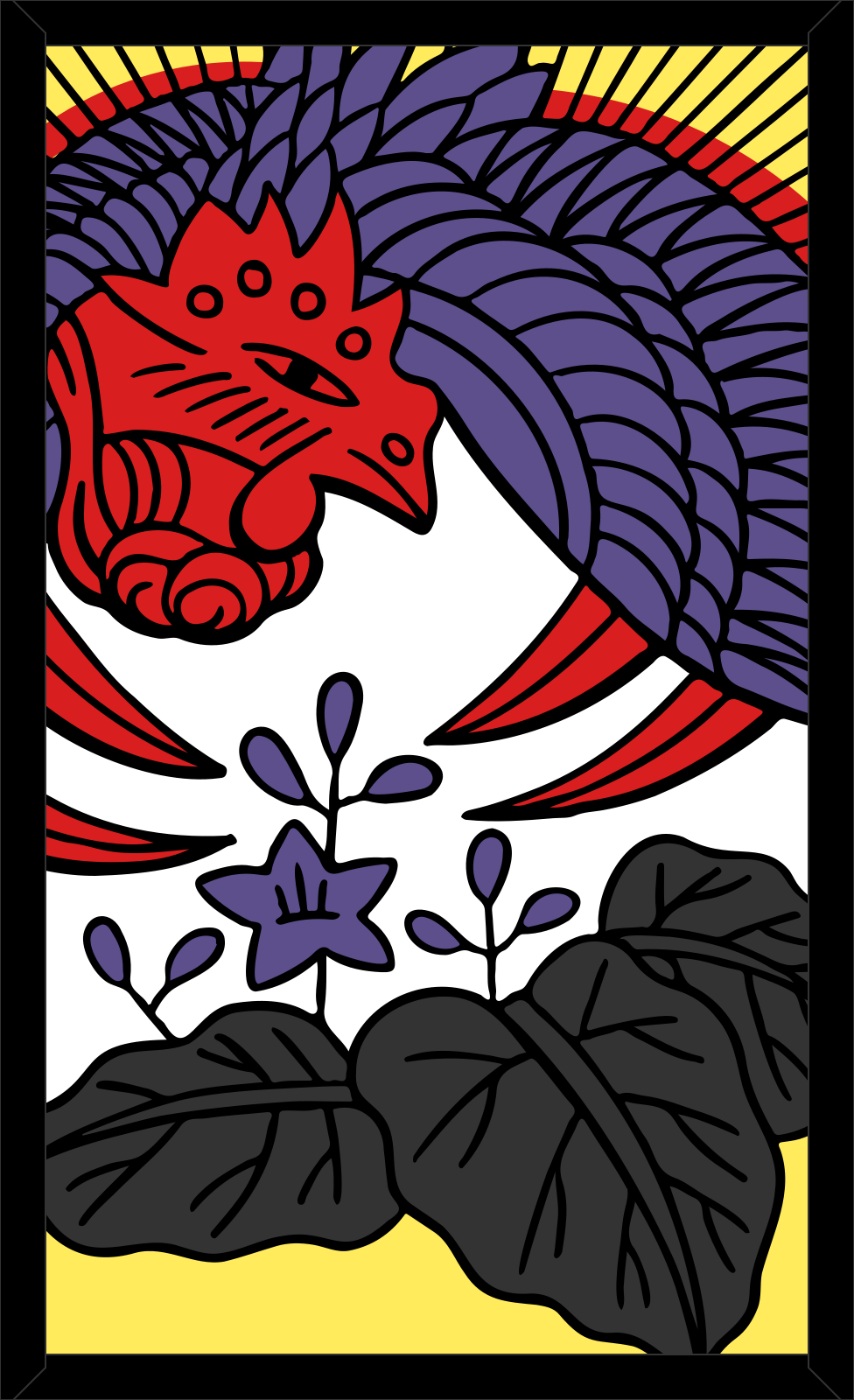 DecemberPaulownia
The card list names all 48 cards and what they show, and What is hanafuda? tells where the deck comes from.
Why play here
- Rules you can check. Every rule of this table is written out, with Nintendo’s rule beside it wherever the two differ, and a room can switch the doubling at 8 points off.
- Fair online play. Both players’ devices shuffle the deck together, so nobody, not even the server, sees your hand. Every move is encrypted end to end, signed by the player who makes it and checked by the other.
- No account for practice. You sign in with Google or Apple only to play online.
- Keyboard and screen readers. The whole game can be played from the keyboard, and moves are announced to screen readers.
- Phone, tablet or computer. It runs in the browser and installs as an app.
- English and Japanese. The game and every guide are in both languages.
Questions
What does “koi-koi” mean?
It comes from the call “koi!” (来い, “come on!”), which a player makes to keep the round going after forming a yaku; the game is named after it. It has nothing to do with koi carp (鯉) or love (恋), which only sound the same. Stopping to score is called Shōbu (勝負) or agari.
Which rules does this game use?
Koi-Koi has no single official rulebook; Nintendo’s published rules are often used as the reference. This game uses Nintendo’s yaku and point values, and the main differences are: both players play from a 25-point pool, doubling starts at 8 points instead of 7, every koi-koi call by either player raises one shared multiplier, Tane and Tan still count beside Inoshikachō, Akatan and Aotan, the Sake cup counts only as a tane, and the dealer stays after a drawn round. The house rules page lists every difference with Nintendo’s rule next to it.
Is Te-awase Koi-Koi Online free?
Yes. The whole game is free to play in your browser, against the computer or online against a friend, and there is nothing to buy.
Do I need an account?
Not to practise: games against the computer need no account. To play online you sign in with a Google Account or an Apple Account; your opponent then sees your profile name and avatar. You can link both to the same player account and sign in with either.
Can I play on my phone? Do I need to install an app?
Yes, it runs in the browser on phones, tablets and computers, with nothing to download. If you like, you can add it to your home screen or install it as an app from the browser, so it opens from its own icon; the app page explains how.