
Koi-Koi strategy: taking cards, blocking and calling koi-koi
Last updated
To win at Koi-Koi, take the cards that build your yaku and the ones your opponent needs, keep count of the cards still out, and call koi-koi only when you are likely to score again before your opponent does. When a Shōbu already takes every point your opponent has left, stop at once. This page explains each of these with the numbers of this game.
Which cards to take first
In Koi-Koi the printed values of the cards (20, 10, 5 and 1) never score; only yaku do (see the list of yaku). A card is worth what it adds to your yaku, and what it takes away from your opponent’s. Four groups matter most.
The Sake cup
The Sake cup makes two yaku: Hanami de ippai with the Curtain and Tsukimi de ippai with the Moon, 5 points each. With all three cards you have 10 points, which this game’s doubling at 8 turns into 20. It is also an animal, so it counts towards Tane. Take it whenever you can, even if you hold neither the Curtain nor the Moon: while it is in your captures, both viewing yaku are closed to your opponent.
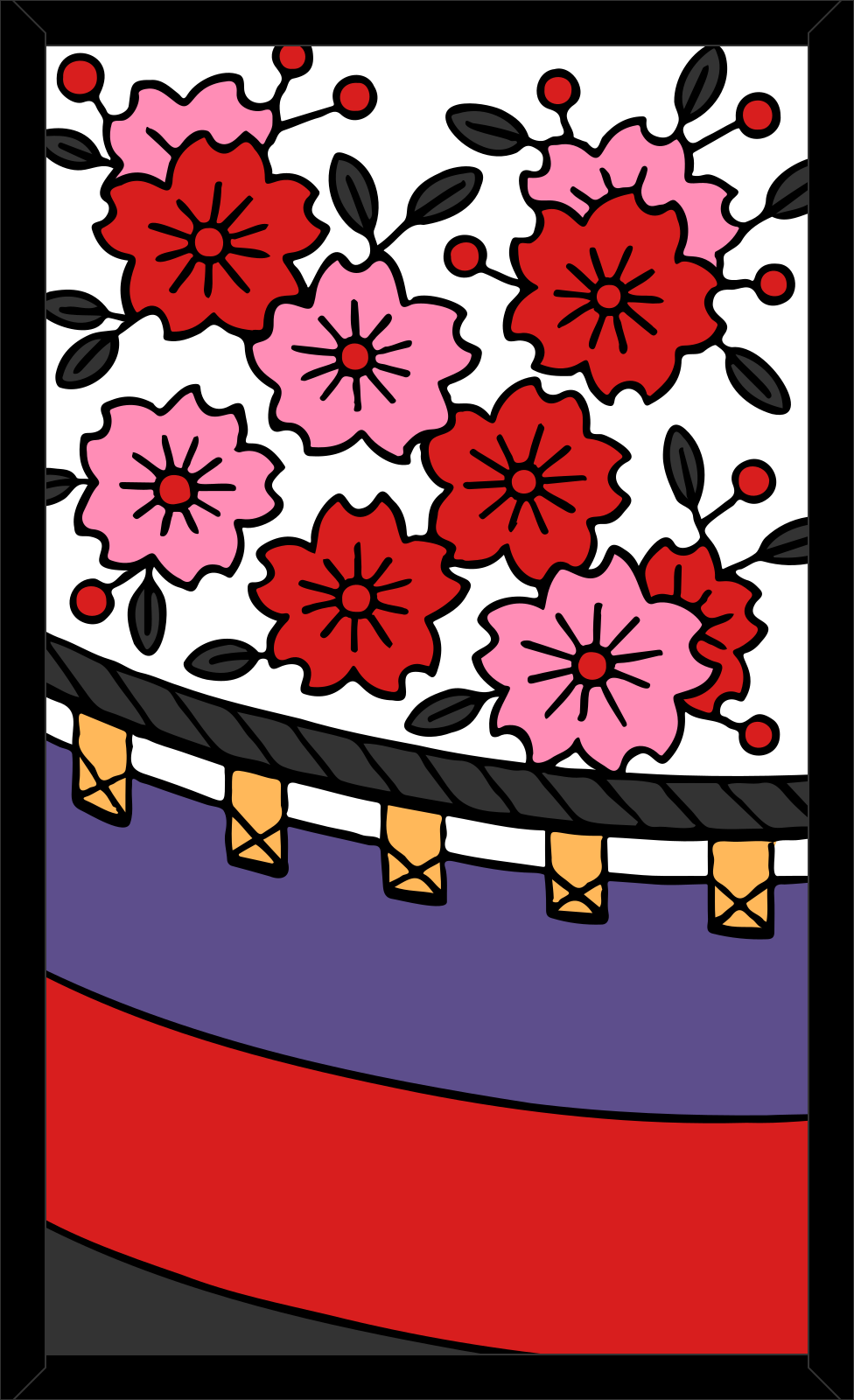
Curtain 
Sake cup 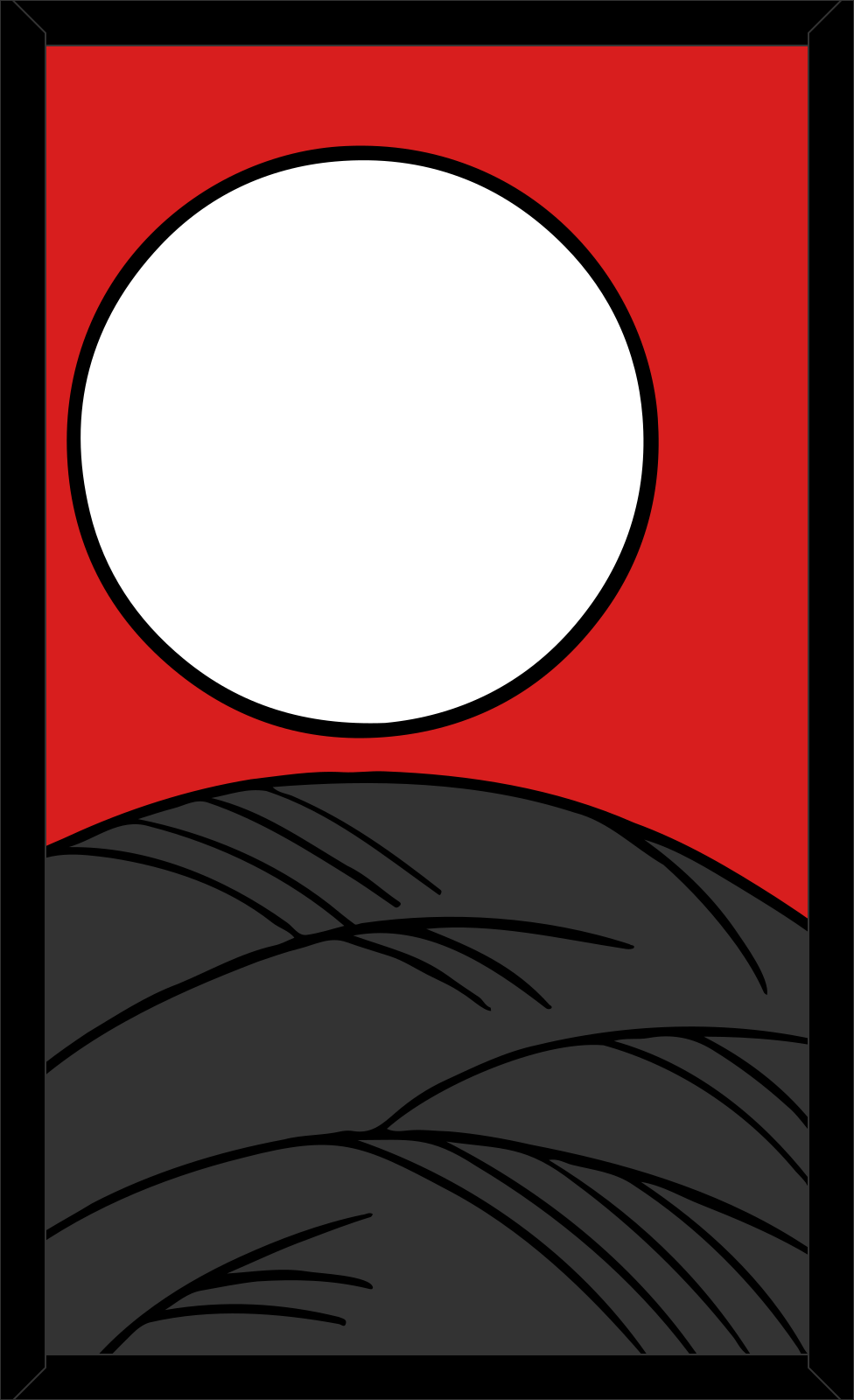
Moon
Lights
Three of the four lights other than the Rain make Sankō (5 points), all four make Shikō (8), and the Rain with three others makes Ame Shikō (7). The Rain with only two other lights makes nothing, so it is the weakest light to chase. In defence, two of the Crane, the Curtain, the Moon and the Phoenix are enough: every light yaku needs at least three of those four, so your opponent can make none this round.
Sets of three
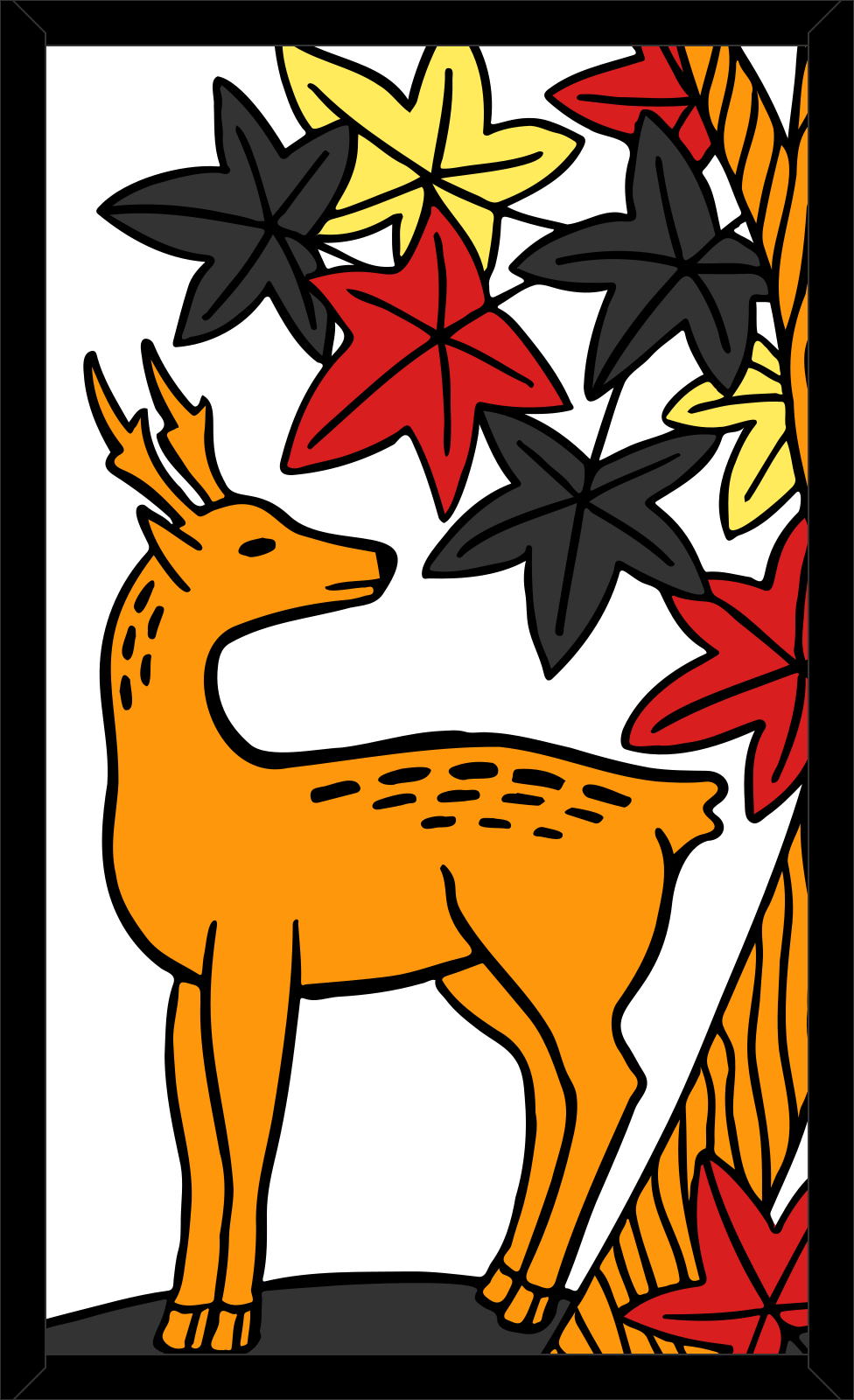
Inoshikachō (inoshikacho: the Boar, the Deer and the Butterflies), Akatan (the three red poem tanzaku) and Aotan (the three blue tanzaku) each need three named cards and are worth 5 points, plus 1 for each further animal or tanzaku. One card of a set in the other player’s captures ends that set for the round, so when your opponent holds two, the third is the most urgent card on the table for you.
Tane, Tan and Kasu
Five animals, five tanzaku or ten plains make a 1-point yaku, and each further card adds a point. They are slow but hard to block, and after a koi-koi even one more card raises your score and gives you the choice again. In this game they also count alongside the sets: Inoshikachō with two more animals is 7 points plus 1 for Tane, 8 in all.
Blocking your opponent
Both players’ captures lie face up, so you can always see what your opponent is building. They are one card from a yaku when they hold:
- two of the Crane, the Curtain, the Moon and the Phoenix;
- two cards of Inoshikachō, Akatan or Aotan;
- the Sake cup while the Curtain or the Moon is still uncaptured, or either of those while the Sake cup is;
- four animals, four tanzaku or nine plains.
When that card is on the table and you can take it, taking it is often worth more than a small gain of your own.
Opponent’s captures
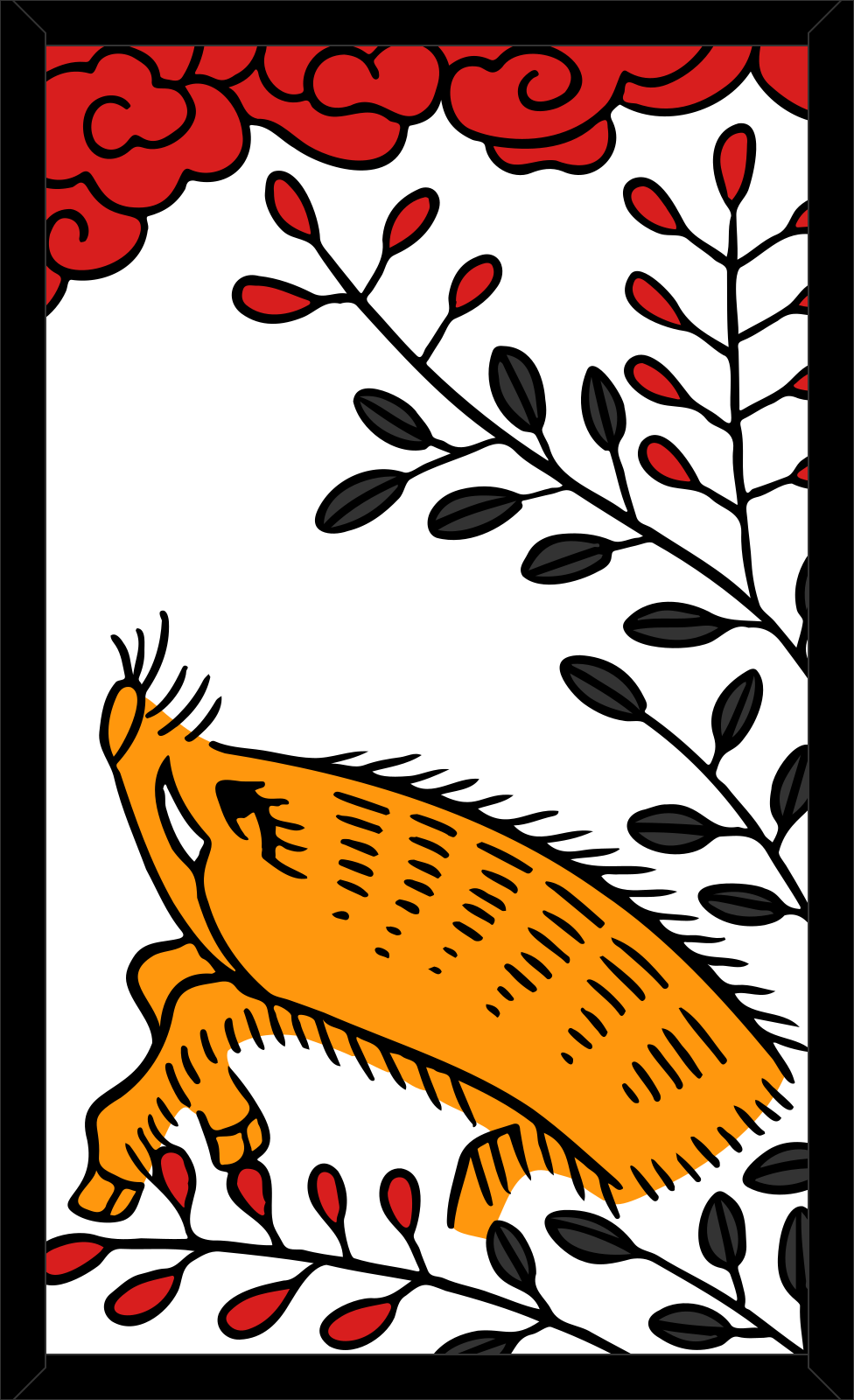
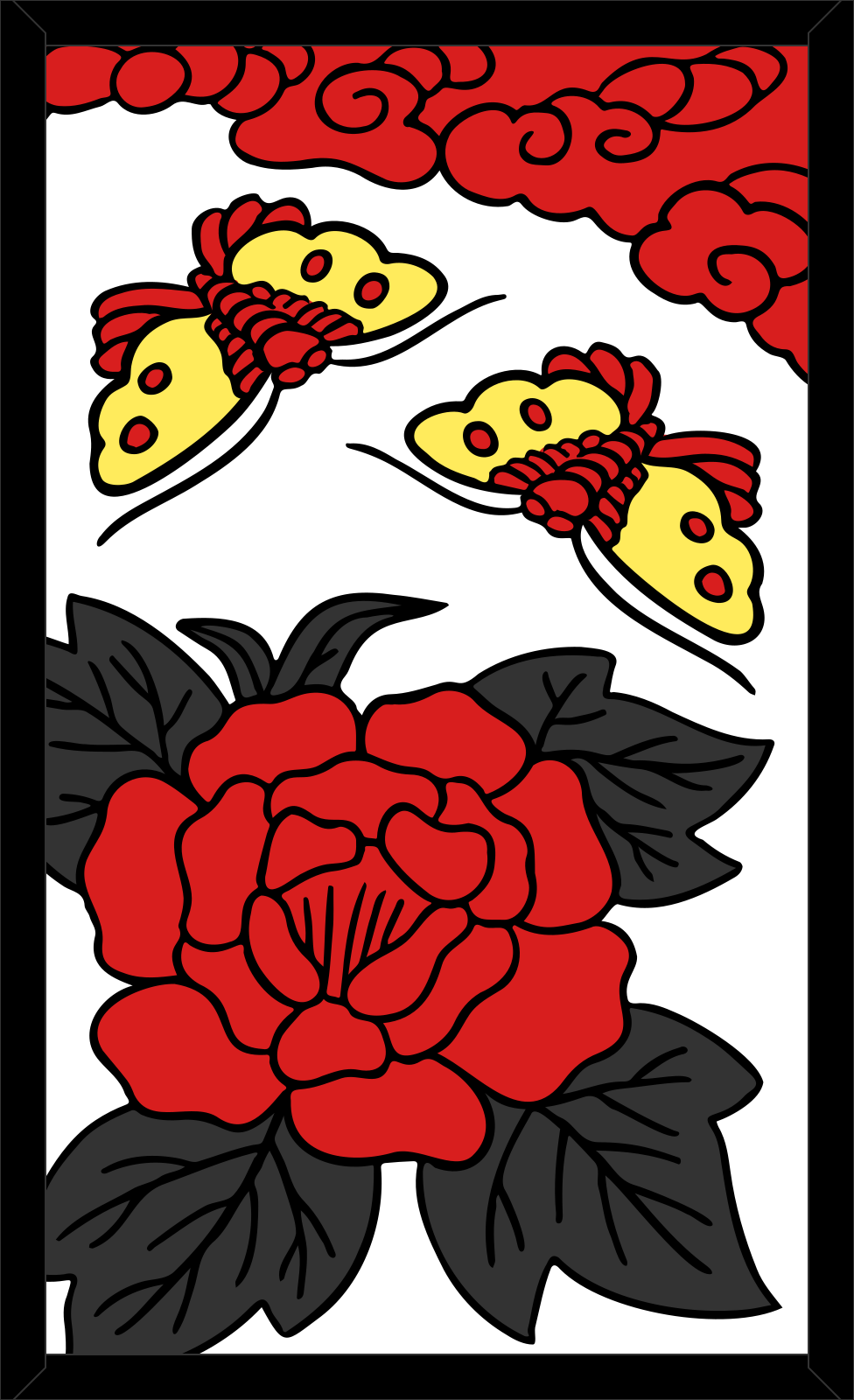
Table
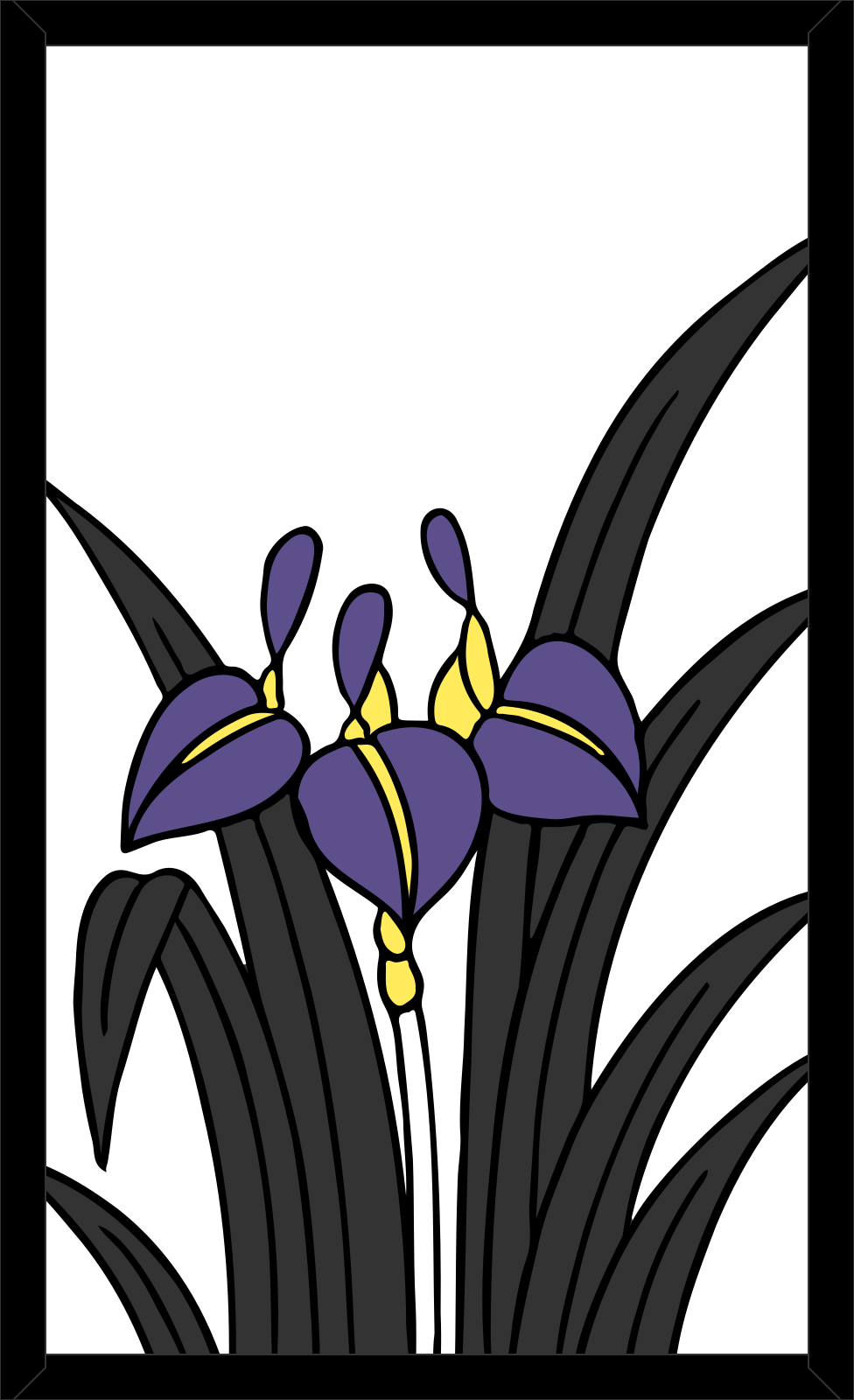
Your hand
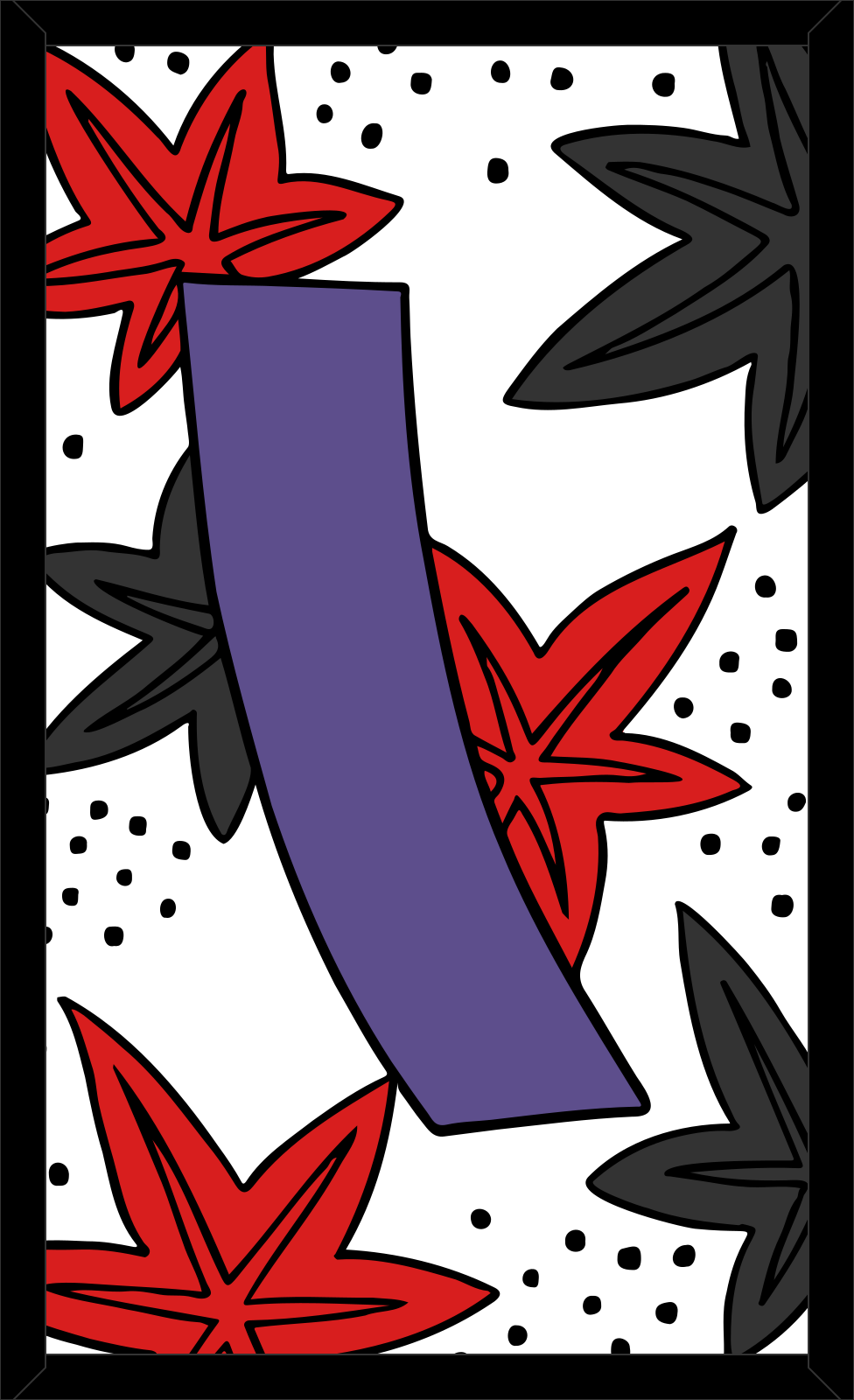
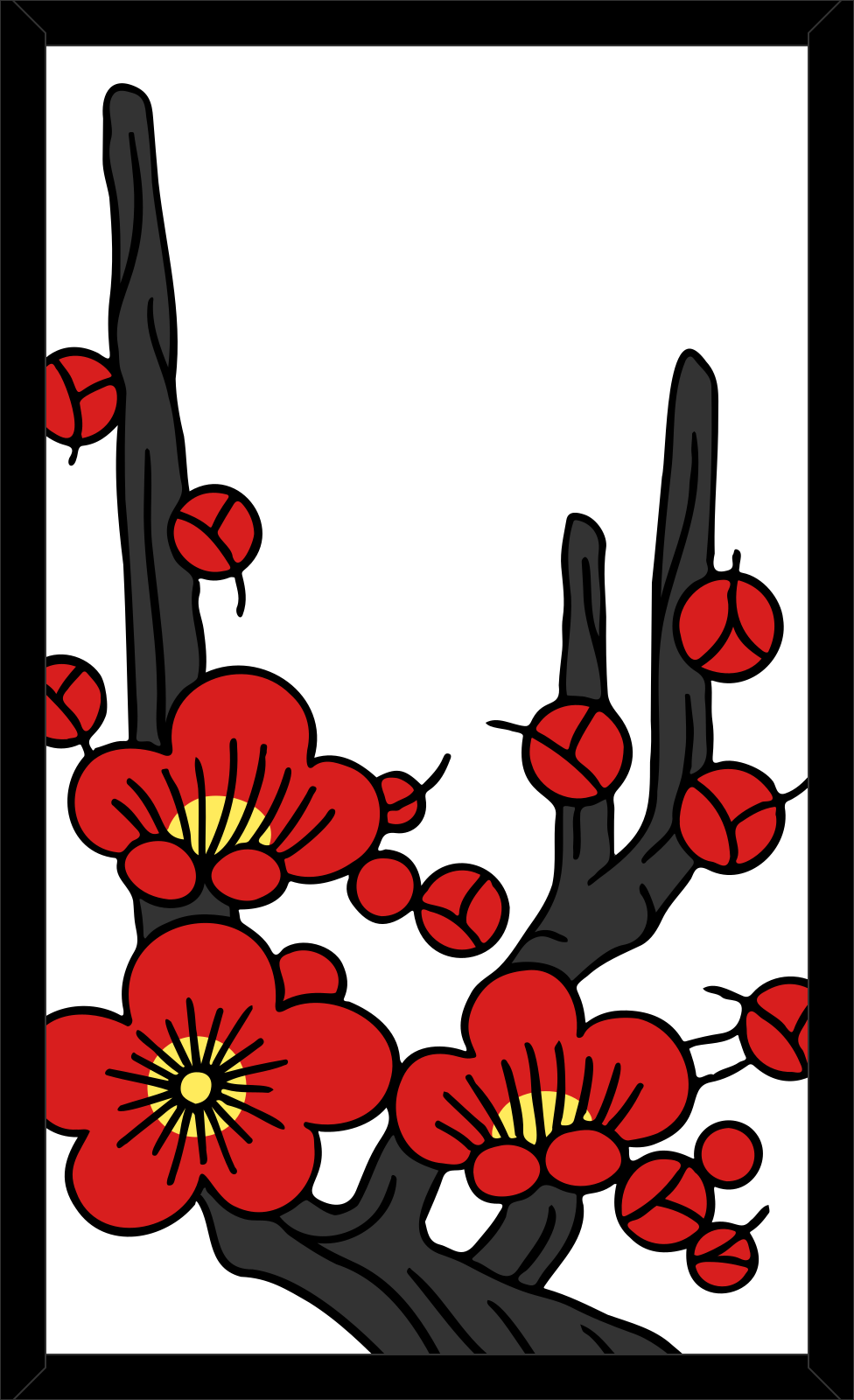
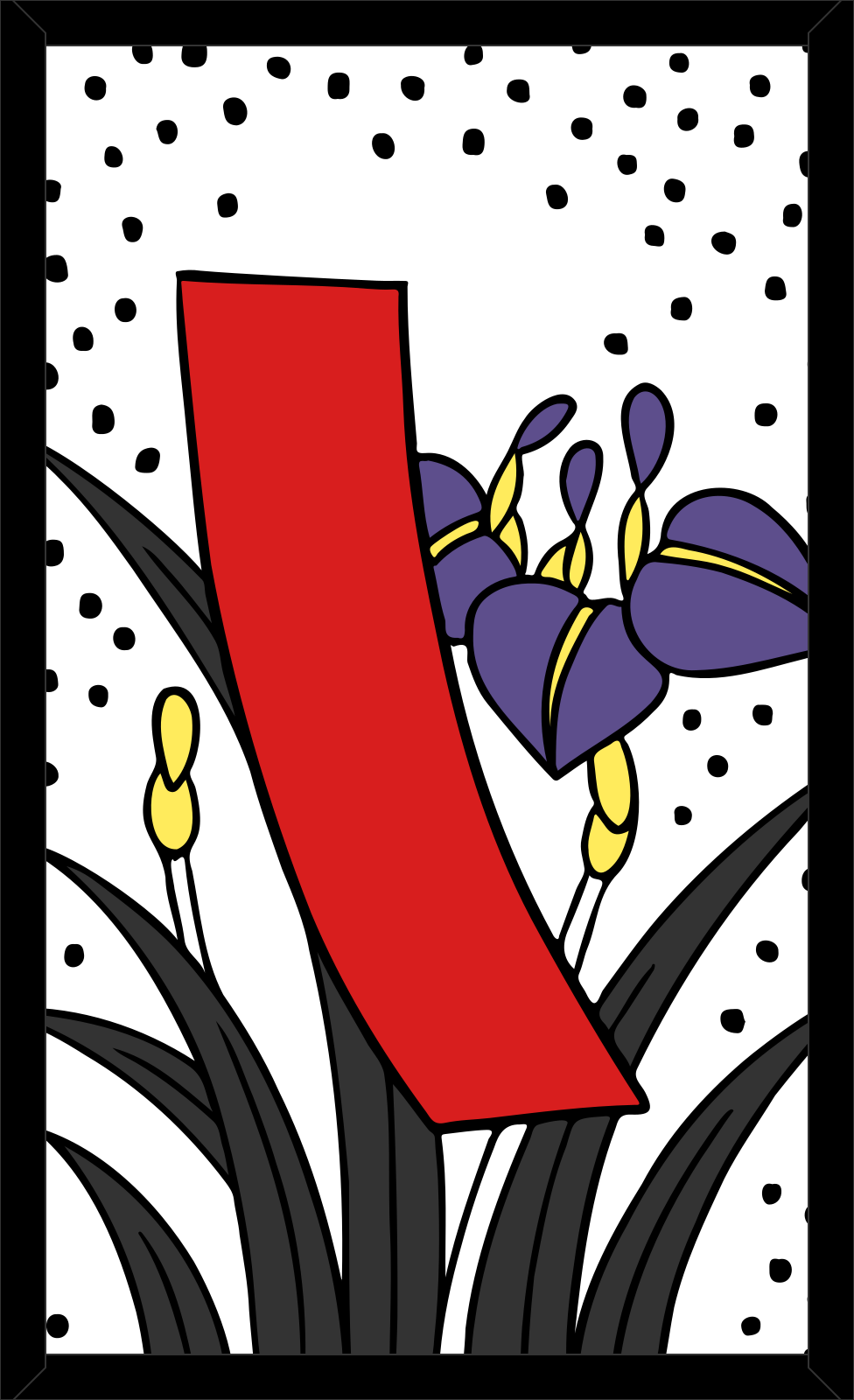
Blocking also decides what you give away: a card that captures nothing stays on the table, where your opponent’s next card or a draw can take it. Never leave the Sake cup or the third card of their set there if you can avoid it.
When to call Koi-Koi
Whenever you make a yaku or raise your score, you choose (see Koi-Koi or Shōbu in the rules). Shōbu (shobu, “showdown”) ends the round and you score. Koi-koi, also written koi koi or koikoi, plays on: you get the same choice every time your score rises again, but if your opponent makes a yaku first, they can call Shōbu and you score nothing for the round.
The sums
Two multipliers decide what a round is worth. A total of 8 points or more is doubled (a room setting, on by default), and every koi-koi call in the round, by either player, adds one to a shared multiplier: ×2 after one call, ×3 after two. The multiplier goes to whoever wins the round, so your koi-koi also raises what your opponent scores if they win it. The scoring page has the full rules and a calculator.
| Yaku total | No call | 1 call | 2 calls |
|---|---|---|---|
| 1 (Tane, Tan or Kasu) | 1 | 2 | 3 |
| 5 (Sankō, Inoshikachō …) | 5 | 10 | 15 |
| 6 | 6 | 12 | 18 |
| 7 (Ame Shikō) | 7 | 14 | 21 |
| 8 (Shikō) | 16 | 32 | 48 |
| 10 (Gokō) | 20 | 40 | 60 |
Opponent’s captures
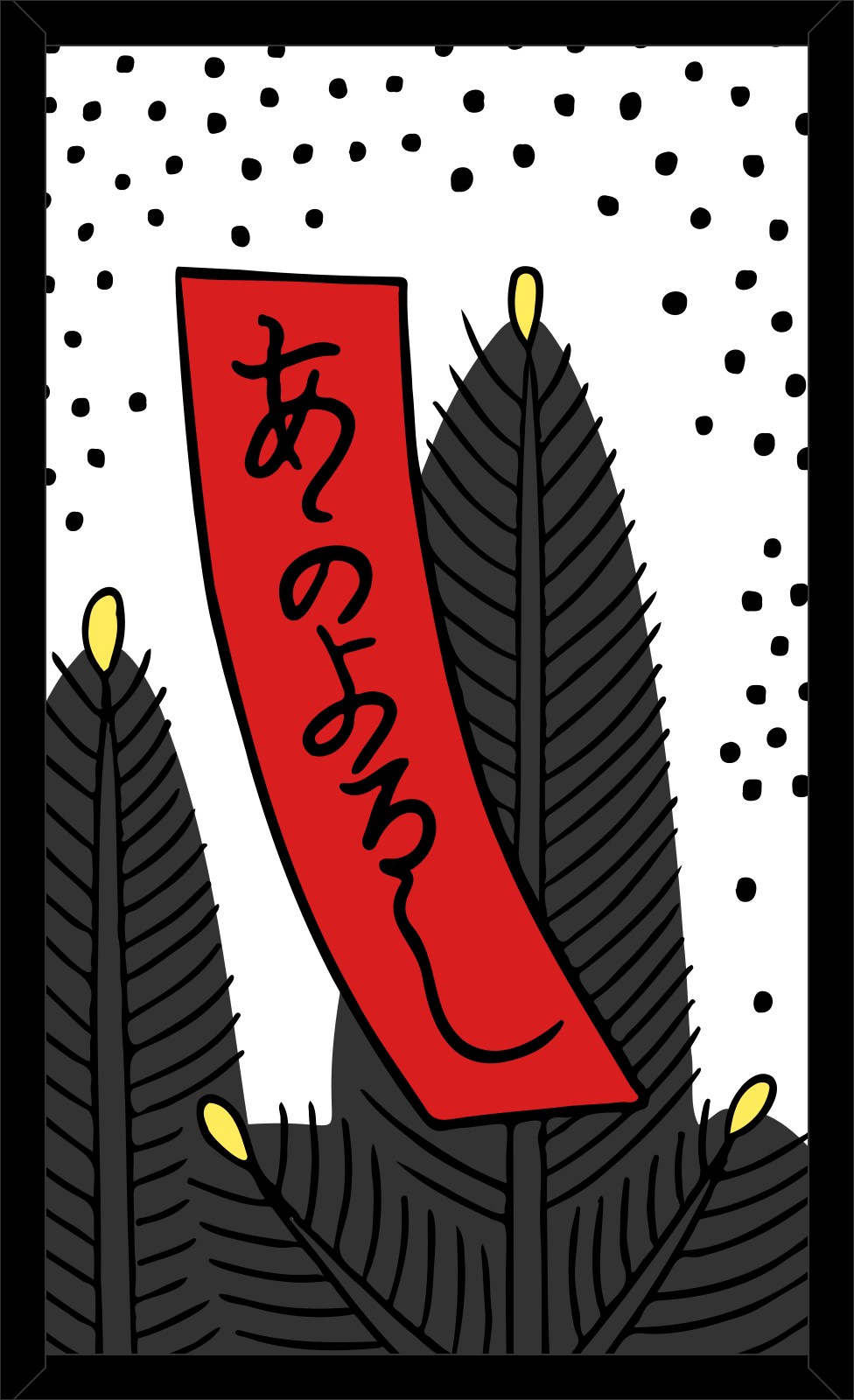
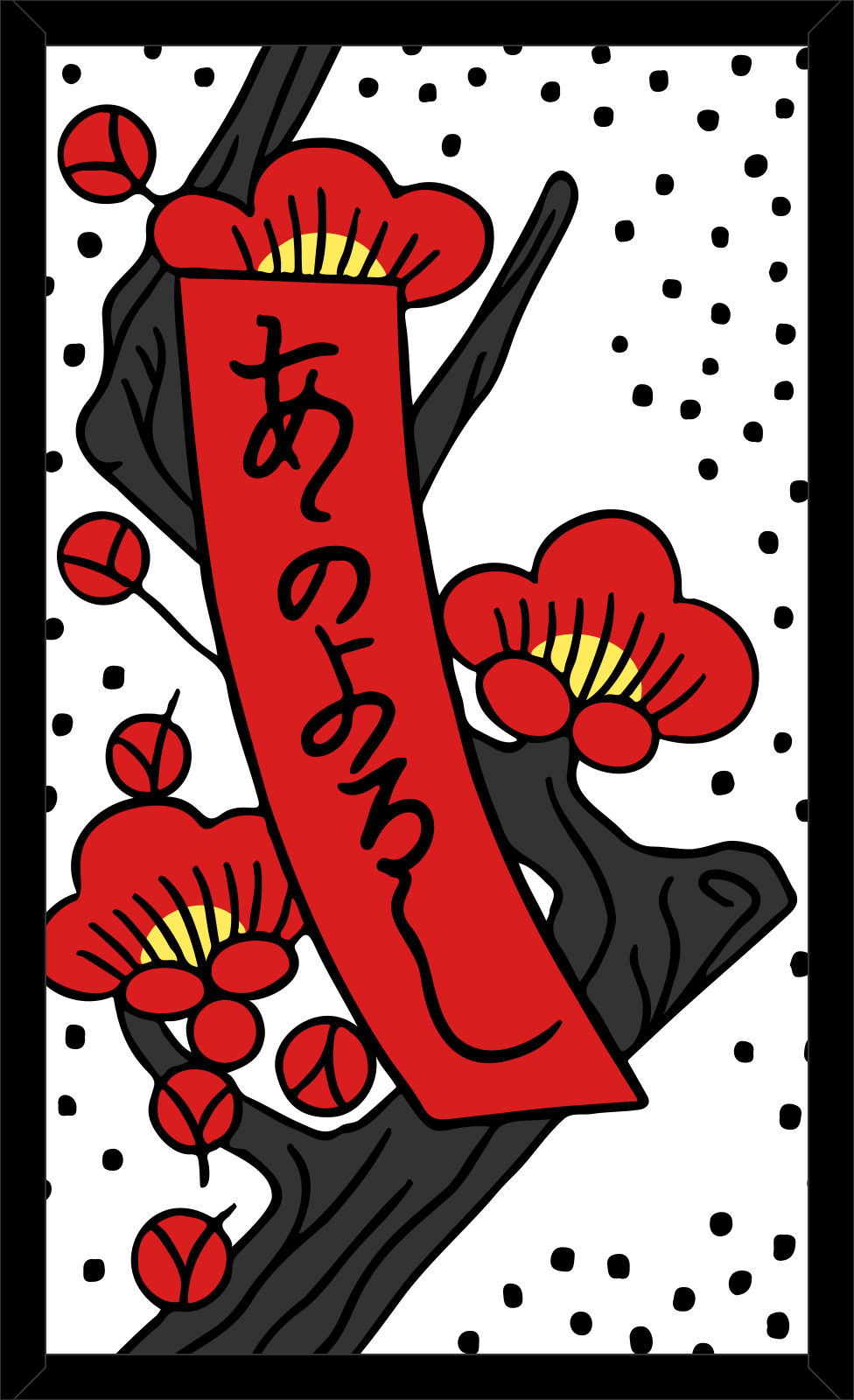

Your captures

Your hand
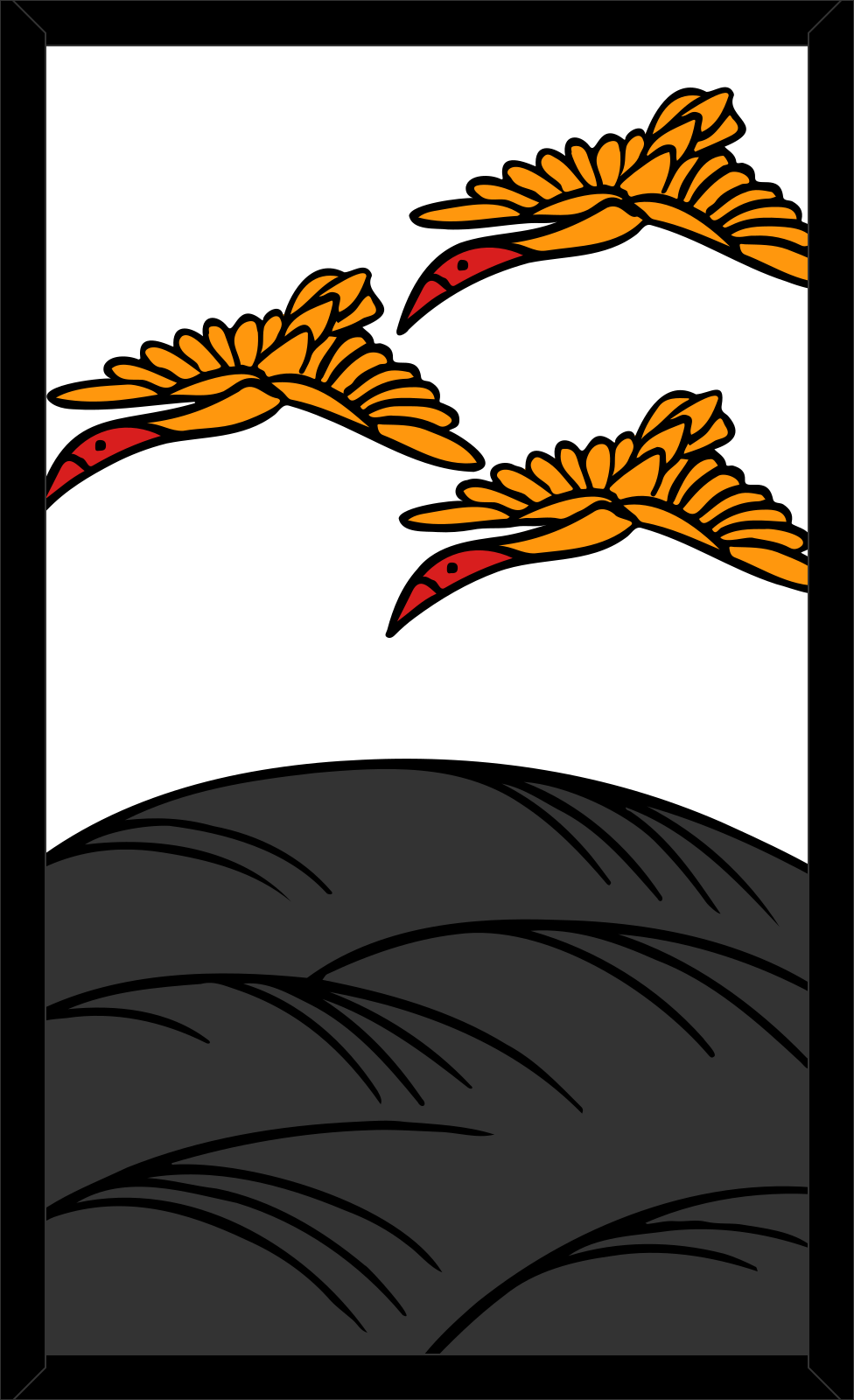
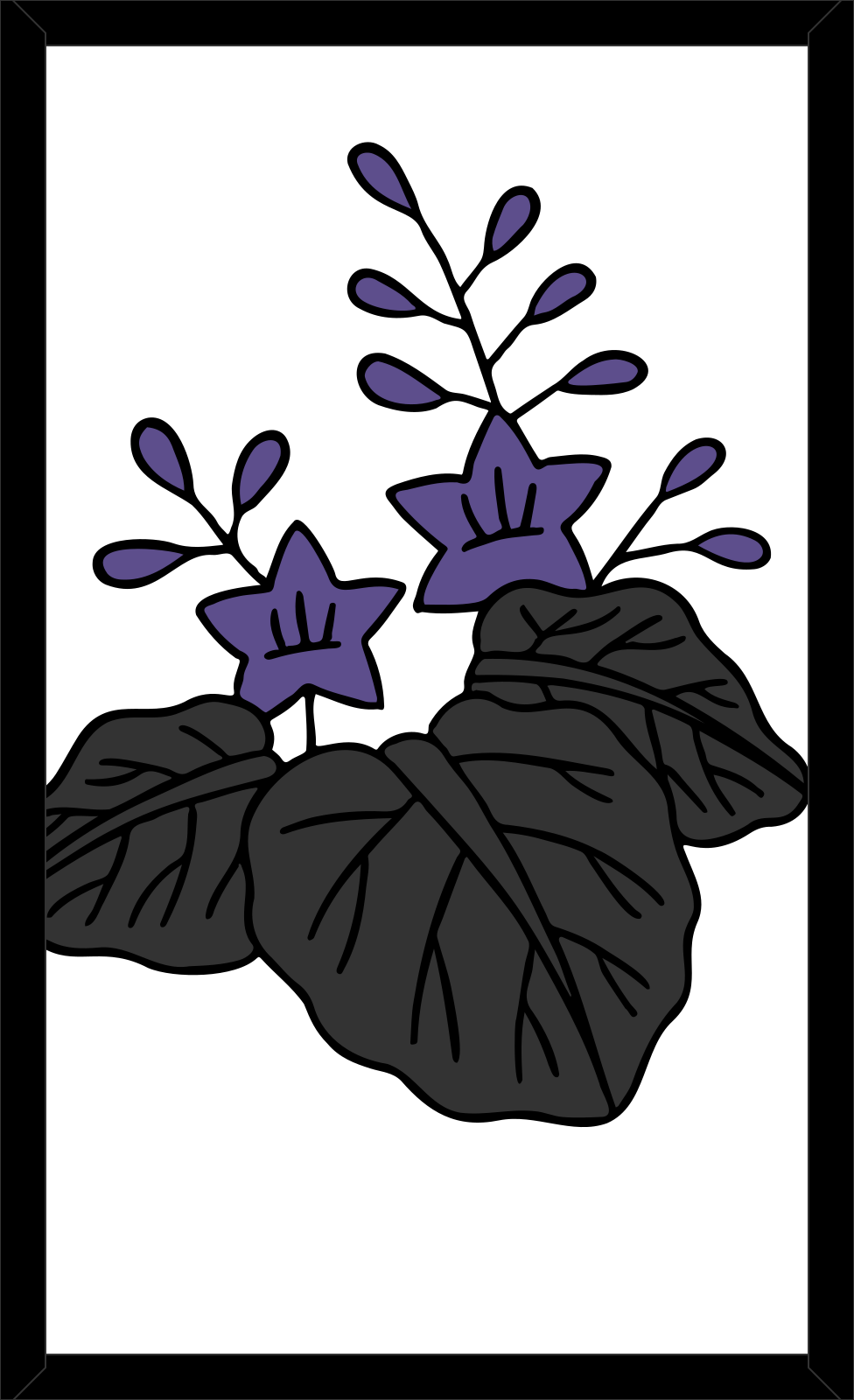
The eight-point line
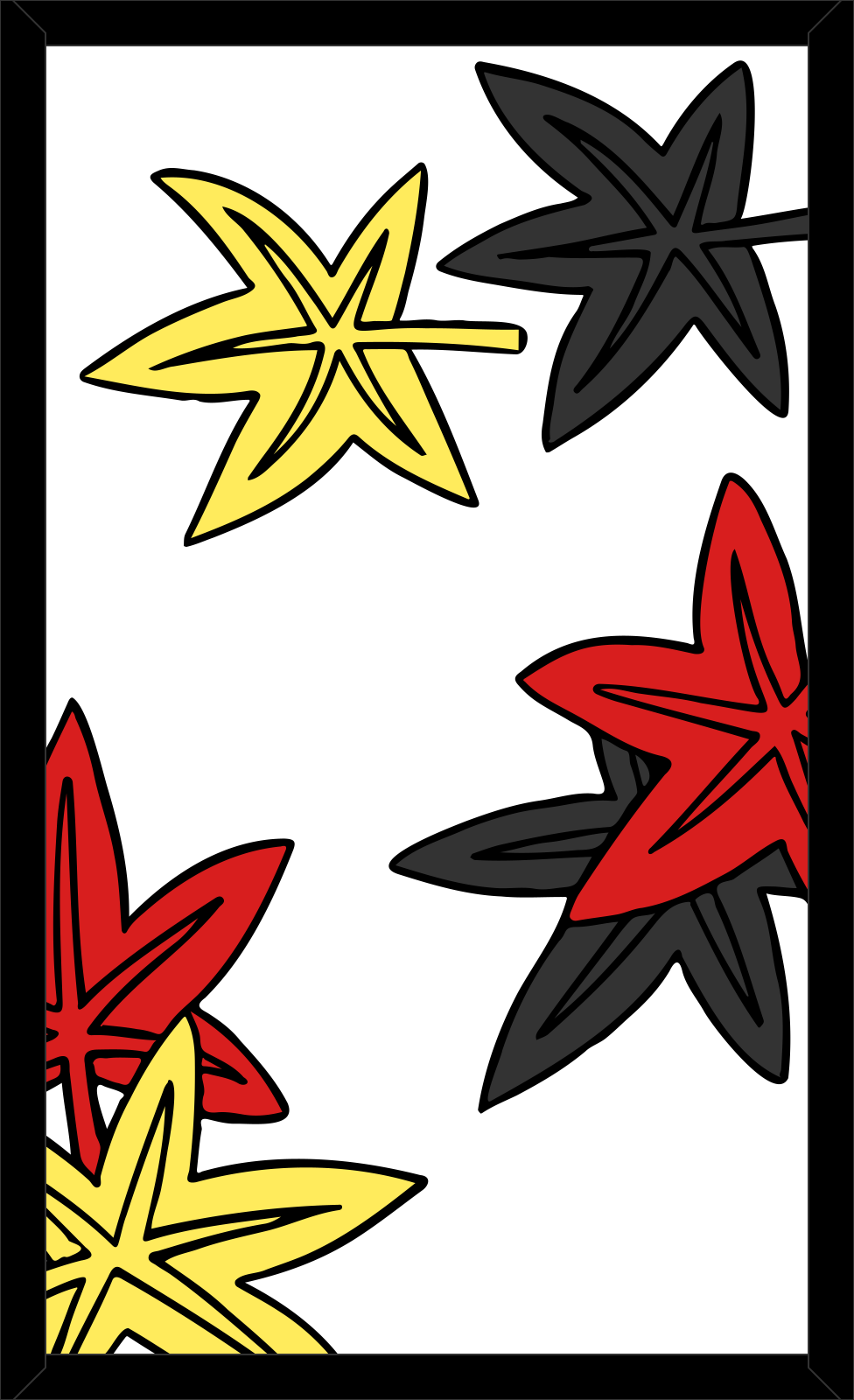
With doubling on, the step from 7 points to 8 is the largest in the game: 7 points pay 7, and 8 pay 16. With 6 or 7 points and a good chance of one more card, playing on can pay; with 8 or more you already have 16, and the pool limits how much more you can win. Inoshikachō, Akatan or Aotan with two more cards of their kind reach 8 (7, plus 1 for Tane or Tan).
Mind the pool
Each player starts a match with 25 points, the winner of a round takes the score from the loser, and nobody pays more than they have: the match ends when a player reaches 0. So when a Shōbu already takes everything your opponent has left, call it: that wins the match, and more points are worth nothing. At 25–25 a Shōbu of 8 points pays 16, so a koi-koi can add at most 9 more.
In the last round, look at the gap. With 20 points against your opponent’s 30, you need 6 to win the match, and 5 leave it drawn at 25–25. When your score is too small to change the result, koi-koi may be your only way to win; when you are ahead, any Shōbu keeps you there.
In short: stop when your opponent is one card from a yaku, when you have one or two cards left, or when the Shōbu already reaches the pool limit. Play on with cards to spare, a clear next point and an opponent far from any yaku.
If you learnt Nintendo’s rules
This game’s scoring differs from Nintendo’s in ways that change these decisions.[1]
| Situation | This game | Nintendo’s rules |
|---|---|---|
| A 7-point total, no calls | 7 | 14 (doubled from 7 points) |
| You call koi-koi at 5, then reach 10 | 40 (10 × 2 × 2), up to what your opponent has left | 20 (10 × 2); your own call does not multiply |
| Your opponent wins with 5 after your call | 10 (5 × 2) | 10 (doubled for your call) |
| After a koi-koi | You choose again at every new point | The round ends at the next yaku, by either player |
| A drawn round | The dealer deals again | The deal passes |
Your own koi-koi pays more here and can be repeated, so playing on for a big score is more attractive than under Nintendo’s rules, while a 7-point total is worth half as much. Every difference is listed under house rules.
Counting cards
Each card is either in sight (the table, both players’ captures, your hand) or hidden (your opponent’s hand or the pile). At the start of a round you see 16 cards; of the other 32, 8 are in your opponent’s hand and 24 in the pile, so any one of them is in their hand with a chance of 1 in 4. As cards are captured, count by month: with four cards to each, you always know which are still hidden.
A round has at most 16 turns and each turns over one card from the pile, so at least 8 pile cards stay face down. No hidden card is certain to appear before the round ends.
The fourth card of a month
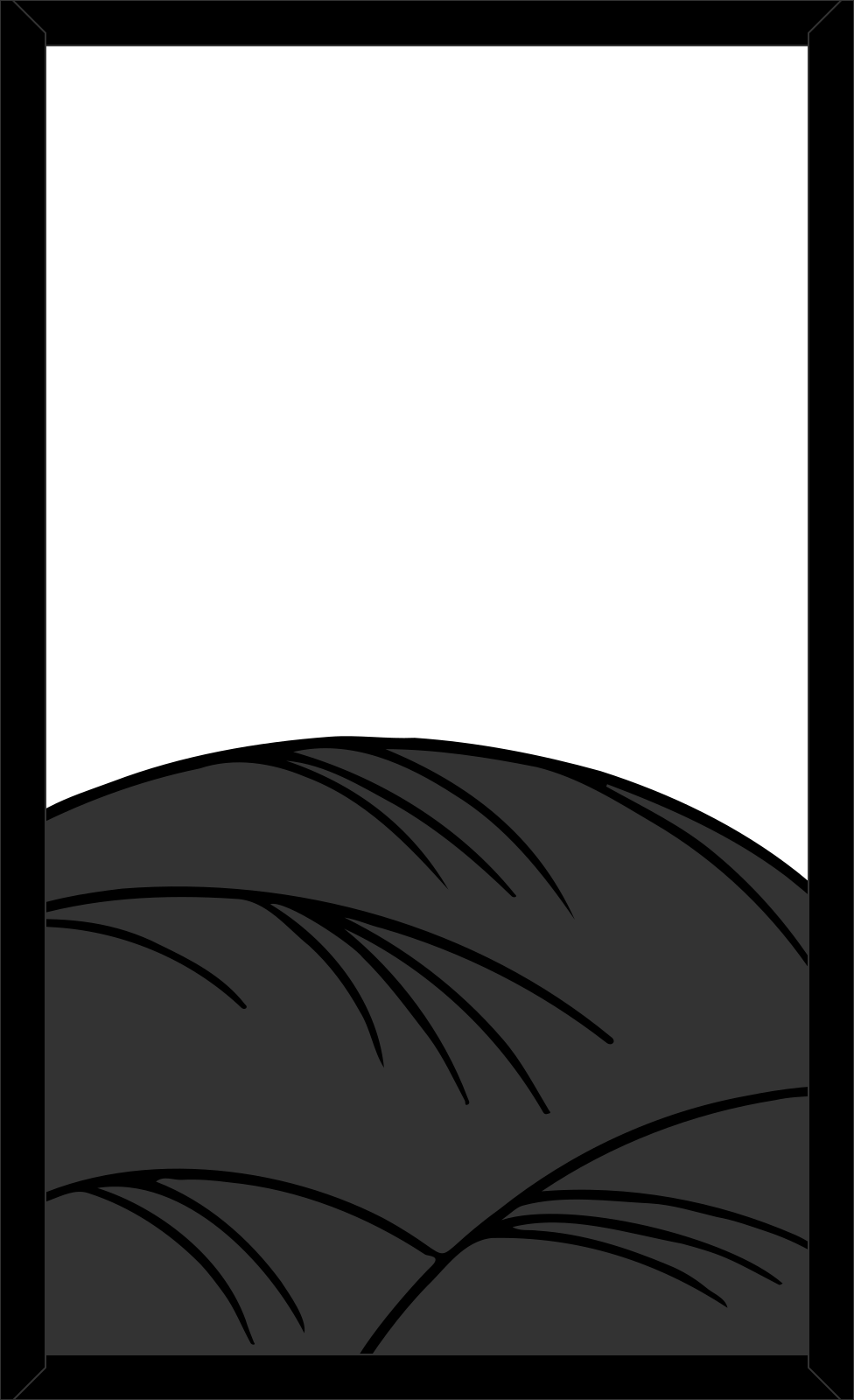
When three cards of a month lie on the table (basan), whoever plays or draws the fourth takes all of them. If the fourth is in your hand, nobody else can take the three, so they are yours to collect as long as the round lasts: play other cards first and use it when you need it.
Table

Your hand


The opposite case is a dead card: when the other three cards of a month are already captured, the fourth can never capture anything. Play it on a turn when you have nothing to take. Left on the table, it gives your opponent nothing either.
Playing around the draw
After your hand card you turn over the top card of the pile, and it captures a card of its month from the table if one is there. You cannot choose the draw, but you do choose what it can hit. A card you leave on the table can be taken by your opponent’s next hand card or by any draw, theirs or your own, since your draw comes straight after your hand card.
When you must leave a card on the table, leave a dead card first, then a plain, and never one that completes your opponent’s yaku. Leaving one card of a pair you hold is fairly safe: only the two other cards of that month can take it, and your second card can take it back later.
The dealer and the last turns
The dealer (oya) plays first in every round, which is counted as an advantage, since the dealer is the first to match the table.[2] The winner of a round deals the next one, and in this game the dealer also keeps the deal after a drawn round (under Nintendo’s rules it passes). The first dealer is decided by drawing a card each in a practice game (the earlier month deals), and by a fair coin flip online.
Dealer (oya)
Non-dealer (ko)
- Turn 15: koi-koi cannot pay
- Turn 16, the last: Shōbu only
Turn 16 belongs to the non-dealer, and nobody plays after it, so a yaku made there can only be taken with Shōbu. Turn 15 is the dealer’s last. The game still offers koi-koi there, because the other player has a card left, but it can never pay: with no turn left, the dealer either gets nothing from a drawn round or loses to a yaku made on turn 16, doubled by the dealer’s own call. As dealer, call Shōbu on turn 15.
Hand yaku
Teshi (all four cards of a month) and Kuttsuki (four pairs) in a dealt hand score 6 points and end the round before anyone plays, so there is nothing to decide. If both players are dealt one, the dealer’s counts in this game; some rule sets score nothing then.
Playing against the computer
Practice games are against Hokusai, the computer player. It has no difficulty levels and plays by a few fixed habits, read here from the game’s code:
- It always captures when it can, choosing the capture whose cards it rates highest, and of two matching table cards it takes the one it rates higher. When nothing matches, it plays the card it rates lowest.
- Its ratings, highest first: the Curtain and the Moon; the Sake cup; the Boar, the Deer and the Butterflies; the Crane, the Rain and the Phoenix; the six poem and blue tanzaku; the other animals; the plain red tanzaku; the plains.
- With a yaku it calls Shōbu when it has 7 points or more, when any multiplier applies (8 points or more, or a koi-koi call by either player this round), when it has two cards or fewer in hand, or when you have captured two lights or more. Otherwise it calls koi-koi.
- Apart from counting your lights, it does not look at your captures, so it never blocks you on purpose.
So Hokusai calls koi-koi at most once a round, never after you have called, and only on a small score. When it does, your yaku pays double if you make one first, and its next point ends the round: take the cards it needs first. Practice settings are on the page about playing the computer.
A checklist for every turn
- Look at your opponent’s captures: which yaku are they one card from?
- If you can take that card, it usually comes first.
- Otherwise take what brings your own yaku closest, the Sake cup and the lights first.
- If nothing matches, leave the card that helps your opponent least: a dead card, then a plain.
- With three cards of a month on the table and the fourth in your hand, keep it for later.
- With a yaku, check the pool first: if a Shōbu takes everything your opponent has, stop.
- Play on only with cards to spare, a clear next point and an opponent far from a yaku.
- As dealer on turn 15, always call Shōbu.
Sources
- こいこい|花札の歴史・遊びかた. Nintendo: Nintendo’s Koi-Koi rules and scoring
- 花札. Wikipedia (Japanese): the dealer’s advantage of playing first
- こいこい. Wikipedia (Japanese): common rules, such as what happens when both players are dealt a hand yaku