
Hanami de ippai: flower viewing with sake
Last updated
Hanami de ippai (花見で一杯, “a drink at the flower viewing”, also called hanami-zake) is the Curtain of March and the Sake cup of September. The two cards score 5 points, here and under Nintendo’s rules. With the Moon as well, it adds up with Tsukimi de ippai to 10, which doubles to 20.
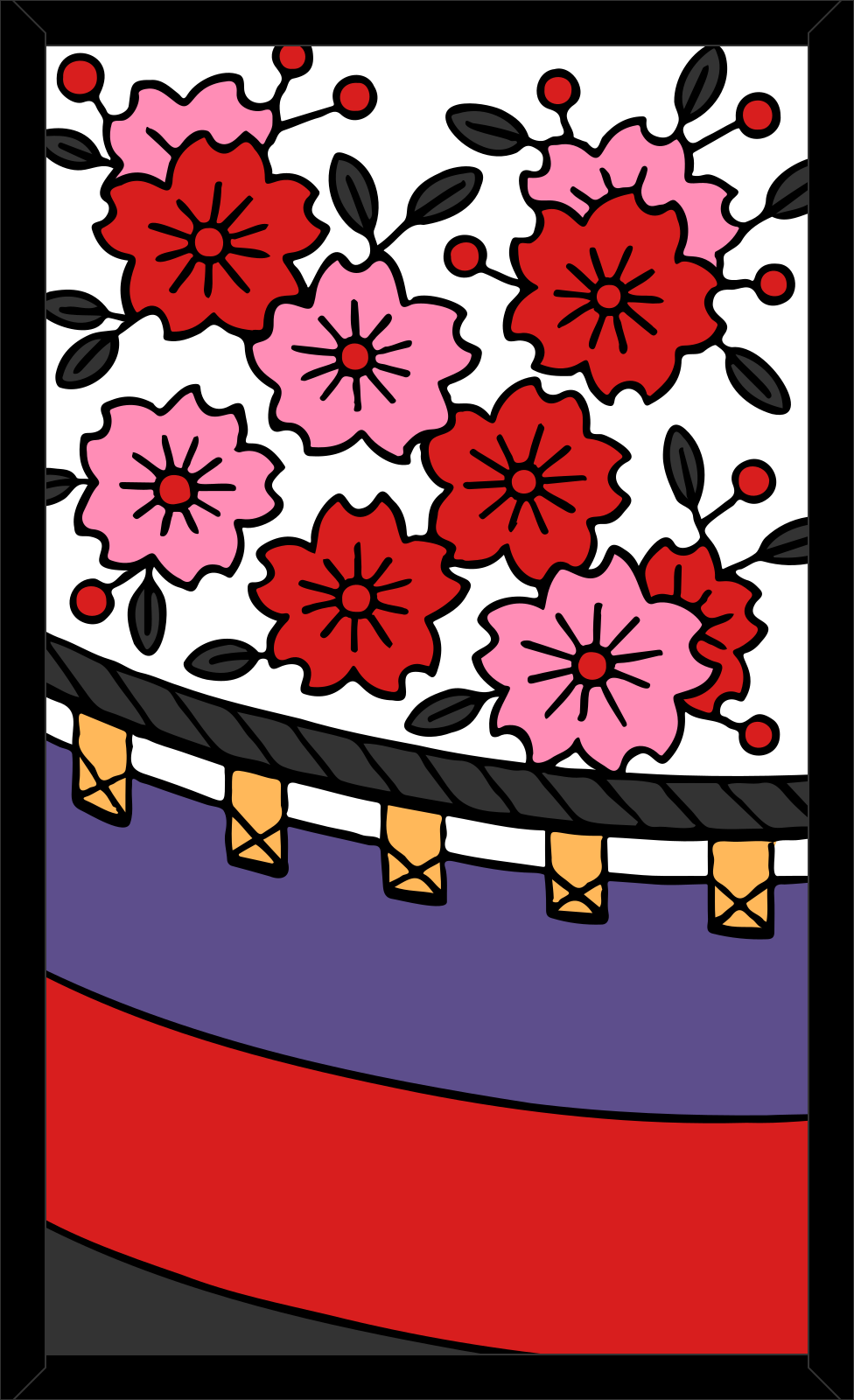
Curtain桜に幕March · Light (hikari) · 20 pts 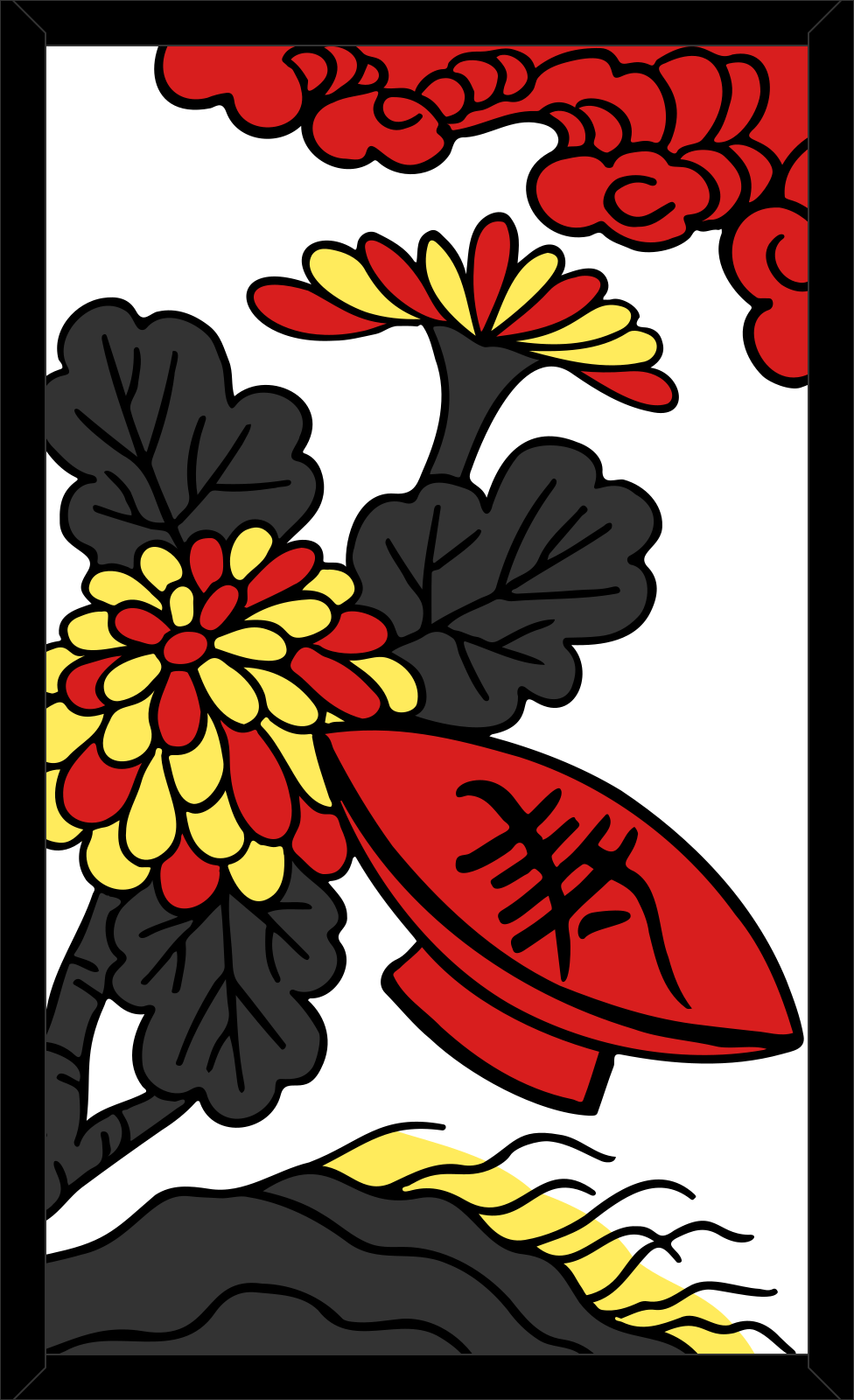
Sake cup菊に盃September · Animal (tane) · 10 pts
The two cards
| Card | Month · flower | Also counts for |
|---|---|---|
| Curtain桜に幕sakura ni maku | March · CherryLight (hikari) | Sankō, Shikō, Ame Shikō, Gokō |
| Sake cup菊に盃kiku ni sakazuki | September · ChrysanthemumAnimal (tane) | Tsukimi de ippai, Tane; +1 to Inoshikachō |
With Tsukimi de ippai, it is one of only two yaku in this game made of just two cards. Both cards work elsewhere too: the Curtain is one of the five lights, and the Sake cup is a tane (animal card).
Points here and under Nintendo’s rules
Hanami de ippai is worth 5 points in this game and in Nintendo’s published Koi-Koi table[1]. On its own it never doubles under either rule; the rule sets part only when other yaku join it, because Nintendo doubles a total of 7 or more and this game doubles from 8.
| Captured cards | This game | Nintendo’s rules |
|---|---|---|
| Curtain, Sake cup | Hanami 55 pts | Hanami 55 pts |
| Curtain, Sake cup, Moon | Hanami 5 + Tsukimi 510 × 2 = 20 pts | Hanami 5 + Tsukimi 510 × 2 = 20 pts |
| Curtain, Sake cup, Crane, Phoenix | Sankō 5 + Hanami 510 × 2 = 20 pts | Sankō 5 + Hanami 510 × 2 = 20 pts |
| Curtain, Sake cup and five other animals | Hanami 5 + Tane 27 pts | Hanami 5 + Tane 27 × 2 = 14 pts |
Adding up with Tsukimi and other yaku
Hanami de ippai adds up with every other yaku, and the Sake cup serves both sake yaku at once. The Curtain, the Moon and the Sake cup make Hanami 5 + Tsukimi 5, so 10 × 2 = 20: three cards worth as much as Gokō. The Curtain is also a light, so the Crane, the Curtain, the Phoenix and the Sake cup make Sankō 5 + Hanami 5, again 10 × 2 = 20.
Here the Sake cup counts for Hanami, Tsukimi and Tane, and adds a point to Inoshikachō. Under Nintendo’s rules it also counts as a plain for Kasu[1]. Some rule sets replace the pair with a single yaku (see house rules).
Hanami and the koi-koi call
Two cards are enough, so Hanami can come early in a round, and at 5 points it does not double. Holding the Sake cup has a second effect: your opponent can no longer make either sake yaku. If the Moon is still out, it alone would add Tsukimi: 10 points, doubled, and after one koi-koi call 10 × 2 × 2 = 40. The call still raises the multiplier for whoever wins, so if your opponent makes any other yaku first and stops, your call multiplies their score.
The Curtain: a party behind a screen
Cherry trees in full bloom above a striped curtain (maku). Blossom-viewing parties marked off their place with a curtain tied between the trees, a custom said to go back to Heian nobles that spread to ordinary people in the Edo period; sometimes fine kimono were hung instead[8][9]. The card maker Ōishi Tengudō notes that the curtain had vertical stripes on cards up to the Meiji era and horizontal ones later[9].
The cherry is the flower of the third month of the old calendar, which falls around April today[8]. Among players, hana and even hanami can simply mean a game of hanafuda[7].
The Sake cup and the chrysanthemum festival
A red lacquer sake cup marked 寿 (kotobuki, “long life”) among chrysanthemums. The ninth day of the ninth month was Chōyō, the chrysanthemum festival, one of the five seasonal festivals whose dates come from the Chinese calendar. The chrysanthemum, believed to lengthen life, arrived from China in the Heian period, and sake with petals floated in it was drunk for long life and to ward off misfortune. In the old calendar the festival fell in late September or October, when chrysanthemums bloom[10].
The festival is also the reason given for letting the cup count as a plain as well in many rule books[7]. This game counts it only as a tane.
Playing for Hanami de ippai
- The Sake cup decides both sake yaku. Only the player who captures it can make Hanami or Tsukimi this round, so taking it builds your yaku and blocks two of your opponent’s.
- Watch March and September. Any March card takes the Curtain from the table and any September card takes the cup, whether played from your hand or turned over from the pile.
- Use the hints. With assisted highlighting on, a capture that would complete the yaku says so, such as “Completes Hanami, +5 pts”, and a capture that blocks your opponent’s yaku is marked too. Hover over or tap a captured card to see its owner’s progress, such as “Hanami 1/2” or “out of reach”.
House rules for the sake yaku
Because the Sake cup counts for so many yaku, many tables limit it. Common house rules:
- Hanami and Tsukimi are not used at all[2]; many video games let players switch them off[3].
- They are worth 3 points each instead of 5[2].
- They count only when the player also has a yaku that is not a sake yaku[3].
- Ame-nagare, “rained out”: in one version a willow card on the table spoils Hanami until someone captures it[3]; in another, a player who captures a November card cannot score either sake yaku that round[4].
- Nomi: the Curtain, the Moon and the Sake cup form one yaku worth 10 (or 6) in place of Hanami and Tsukimi[5][2].
- In Hana-awase, Hanami de ippai is worth 20 and is also called hanami no nomi[6].
This game always counts Hanami de ippai at 5 points and uses none of these rules; no room setting changes it. The house rules page has more on the Sake cup.
Questions
Does rain cancel Hanami de ippai here?
No. Rain-out rules are house rules, and this game counts Hanami de ippai whatever willow cards are on the table or in anyone’s captures.
Does the Sake cup also count as a plain?
Not in this game: it counts only as a tane. Under Nintendo’s rules it counts towards Kasu as well[1]. The Tane, Tan and Kasu page shows what that changes.
Sources
- こいこい|花札の歴史・遊びかた. Nintendo: Yaku values, the Sake cup as a plain, the 7-point doubling, the koi-koi rule
- こいこい. Wikipedia (Japanese): Common rules; the sake yaku left out, at 3 points, and nomi
- Koi-Koi. Fuda Wiki: House rules for the Sake cup
- Koi-Koi game help. Board Game Arena: The “rain ruins the party” option
- 花札の遊び方(こいこいのルール). Etohana (hanafuda game): Nomi at 10
- 花合わせ. Wikipedia (Japanese): The sake yaku in Hana-awase
- 花札. Wikipedia (Japanese): Hanami as slang; the Sake cup as a plain
- Cherry Blossom. Fuda Wiki: The curtain and the hanami custom
- 花札の謎シリーズ!3月札『桜に幕』前篇. Ōishi Tengudō (card maker, Kyoto)
- 花札の謎シリーズ!9月札『菊に盃』. Ōishi Tengudō